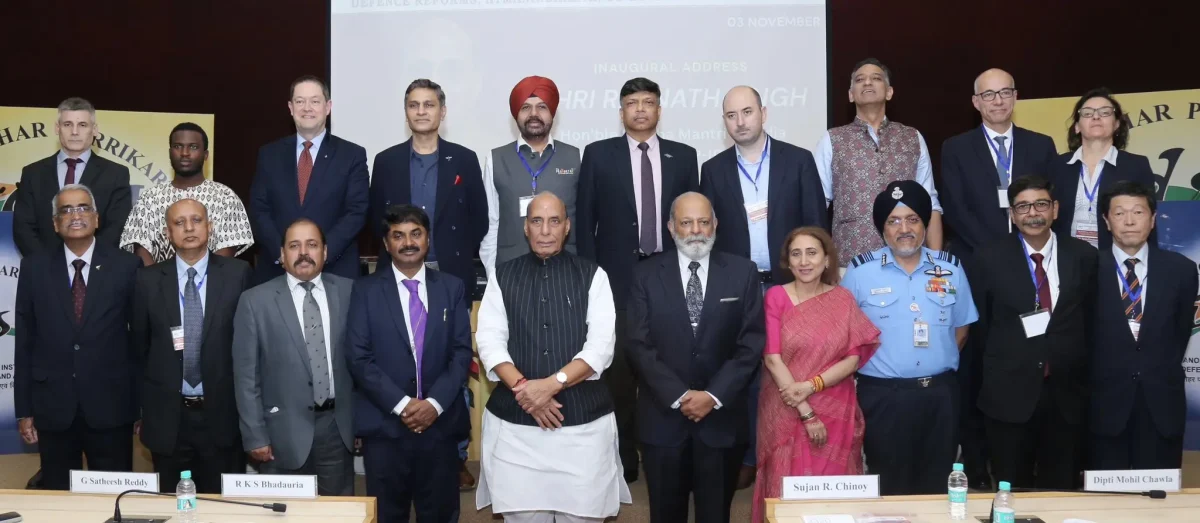
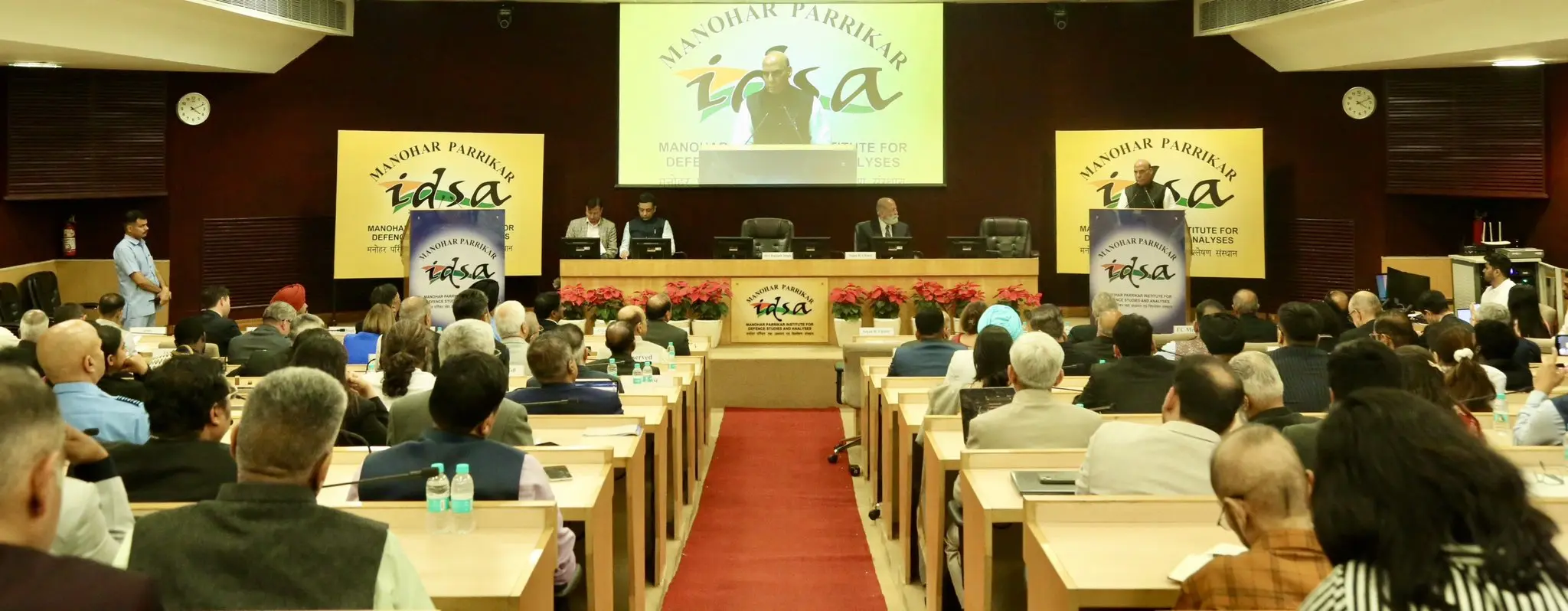
Defence Minister Rajnath Singh used the Delhi Defence Dialogue 2026 to underline a broader message: India’s security future, he said on November 3, 2026, will depend not only on buying weapons, but on building the capacity to design, produce, improve and sustain them on its own. Speaking at the third edition of the event at the Manohar Parrikar Institute for Defence Studies and Analyses (MP-IDSA), he linked indigenous production, technological sovereignty and industrial strength to the country’s long-term military preparedness.
In his remarks on the theme ‘Defence Reforms, Aatmanirbharta, Collaborations and Exports’, the Raksha Mantri described the four ideas as connected pillars of India’s aim to become a developed nation by 2047. He said reforms should create an enabling institutional environment, self-reliance should deepen domestic technological capability, international collaborations should open access to advanced technologies and co-development, and exports should provide the scale needed for a resilient defence industry.
Singh said these priorities must move together rather than in isolation. He presented reforms as India’s willingness to change, Aatmanirbharta as its determination to create, collaborations as its confidence to engage with the world and exports as its readiness to compete globally. In his view, self-reliance without reform, partnerships and market access could limit both technological reach and industrial competitiveness.
Why self-reliance, in his view, goes beyond manufacturing
The Defence Minister stressed that real self-reliance in defence requires more than local assembly or production. He said it involves the ability to design a platform, manufacture it, own the intellectual property needed to upgrade it and sustain it independently over time. He warned against keeping essential defence requirements tied to external dependencies, especially where national security and operational readiness are concerned.
He also pointed to the changing nature of warfare, saying recent conflicts had shown that military operations now stretch beyond land, sea and air into space, cyberspace and the digital domain. The divide between conventional and unconventional warfare, he noted, is becoming harder to define, which means armed forces and defence industries must adapt quickly to new technological realities.
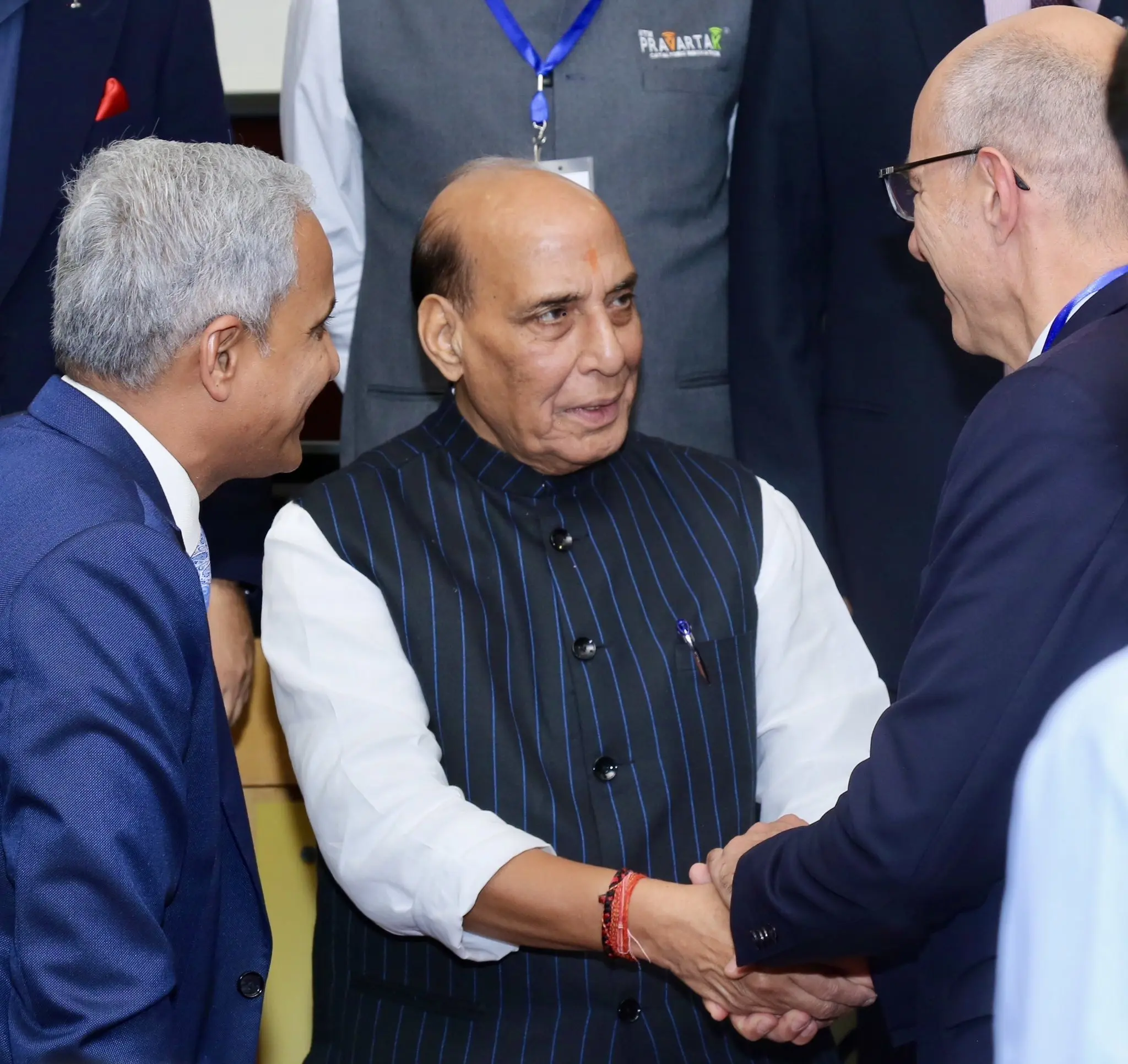
Singh said relatively inexpensive drones and autonomous systems are increasingly challenging sophisticated and costly military platforms. In that setting, the ability to innovate quickly, produce at scale and replenish capabilities has become as important as having advanced weapon systems. According to him, technological adaptability and industrial resilience are now central to military preparedness.
Industrial base, private sector role and exports
The minister highlighted steps taken over the past decade to strengthen India’s domestic defence industrial base. He referred to progressive policy measures, faster institutional processes and a more supportive environment for technological development, including the establishment of Defence Industrial Corridors and the corporatisation of the erstwhile Ordnance Factory Board into seven Defence Public Sector Undertakings. He said these reforms were aimed at improving autonomy, efficiency and competitiveness in manufacturing.
He also reiterated the government’s push for greater private-sector participation in advanced defence systems. Singh identified programmes such as the Advanced Medium Combat Aircraft, propulsion systems, Advanced Towed Artillery Gun System (ATAGS), artillery ammunition and shipbuilding as major opportunities for private industry.
According to him, wider involvement of private companies, micro, small and medium enterprises, start-ups and academic institutions would broaden indigenous development, raise production capacity and improve India’s standing in the international defence market. He said stronger cooperation between public and private entities is necessary to build an ecosystem capable of supporting complex defence programmes.
Referring to 2025 as the Year of Reforms in the Ministry of Defence, Singh said the focus had been on jointness, integration, emerging technologies, innovation and strengthening the domestic defence ecosystem. He said reforms in policy, institutional structures, technology development, acquisition procedures and ease of doing business were already producing positive results.
He said India’s defence production had reached a record level of approximately Rs 1.78 lakh crore in the financial year 2025–26, while defence exports had risen to Rs 38,424 crore. Indian defence products, he added, were now reaching more than 80 countries, with support from defence public sector enterprises, private manufacturers, MSMEs and start-ups.
Singh described defence exports as an important sign of the maturity and competitiveness of India’s industrial ecosystem. He said exports reflect the confidence of international partners in Indian technologies and manufacturing capabilities. He added that policy liberalisation, simplification and standardisation had helped Indian manufacturers, especially MSMEs, respond more effectively to overseas opportunities.
He called for exports to go beyond the supply of equipment and include maintenance, repair, training, logistics and technology cooperation. In his words, every successful defence export should become the basis for a long-term strategic partnership between India and the recipient country.
Targets for 2029 and the role of R&D
Reiterating the government’s targets, Rajnath Singh said India aims to achieve defence production worth Rs 3 lakh crore and defence exports worth Rs 50,000 crore by 2029. He said meeting those goals would require domestic industry to expand capacity, maintain high quality standards and improve competitiveness in global markets.
A major section of his address focused on the relationship between operational needs and defence research and development. He said the Defence Forces must remain important stakeholders in the R&D process because their battlefield experience can help identify research priorities and assess whether new technologies are practically useful.
At the same time, he cautioned against allowing research to be driven only by immediate operational requirements. If research stays too closely tied to current user perceptions, he said, it may solve only already recognised problems and leave little room for ideas and technologies that have not yet been imagined.
Singh argued for a balance in which operational requirements guide research priorities while scientists and researchers retain the freedom to explore unconventional ideas. He said research institutions must have space to question assumptions, try new approaches and develop technologies whose eventual uses may not be obvious at first.
He added that innovation should not remain limited to laboratories and prototypes. Research outcomes, he said, must be translated into production and operational induction through sustained investment, institutional support and effective coordination among the Defence Forces, research organisations and industry.
Global partnerships and future cooperation
On international defence cooperation, the Raksha Mantri said India’s pursuit of self-reliance does not mean withdrawal from global engagement. Instead, he said, a technologically capable and self-reliant India would be better placed to participate in collaborations on equal terms.
He noted that earlier defence partnerships based on procurement, licensed manufacturing and transfer of technology had helped build India’s industrial capabilities. Future cooperation, he said, should move towards co-development, co-production and shared innovation.
Such arrangements, according to him, should include meaningful Indian participation in design and development, access to critical technologies, appropriate sharing of intellectual property and opportunities for Indian companies to enter global supply chains. He also pointed to India’s large domestic market, expanding industrial base and pool of scientific and engineering talent as advantages for international companies seeking partnerships in India.
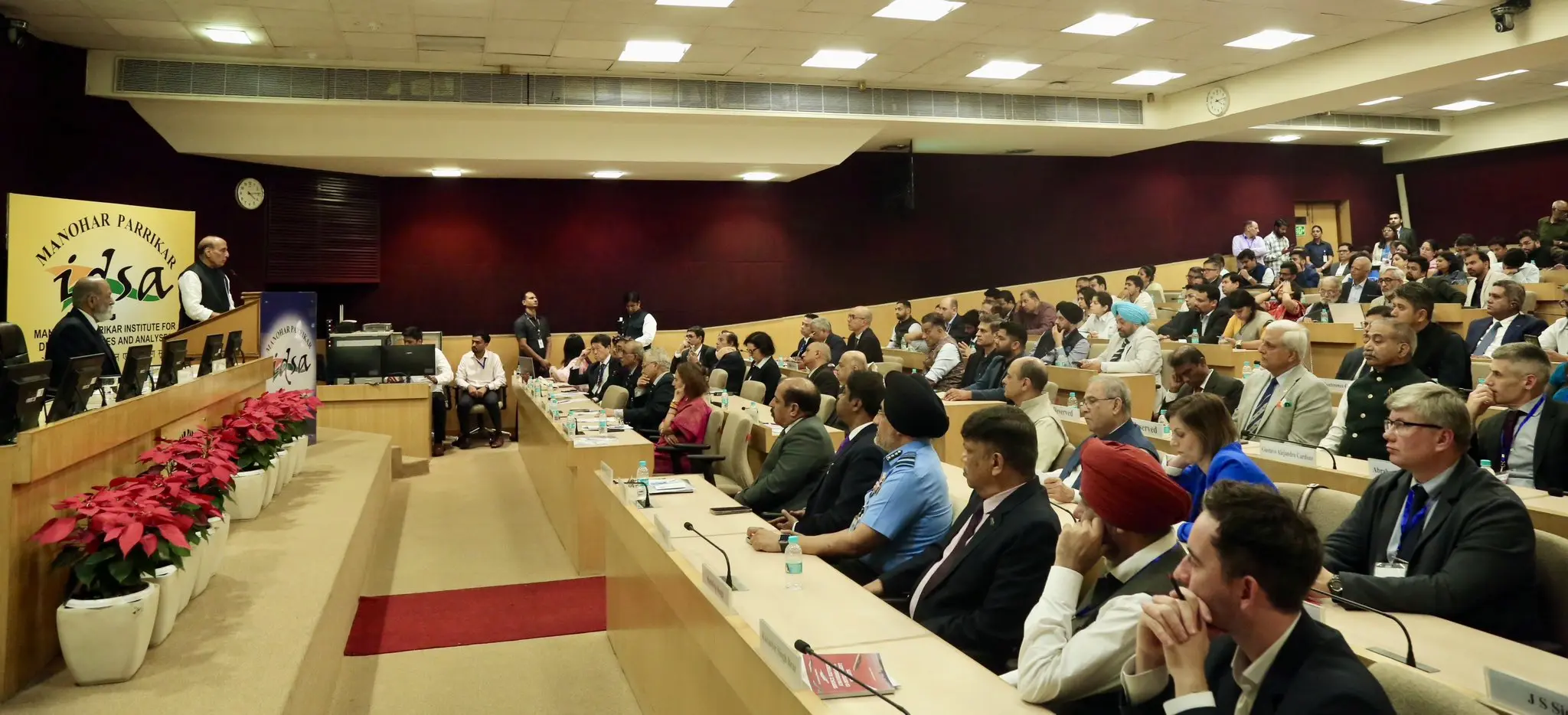
Concluding his address, Singh called for a collective effort by the Defence Forces, civil servants, scientists, industry, academia and international partners to realise India’s defence goals. He said the country must move from buying defence technologies to creating them, from meeting domestic demand to competing in global markets, and from taking part in defence partnerships to contributing meaningfully to the future of global defence technology.
He said he was confident that the Delhi Defence Dialogue would generate useful ideas and actionable recommendations to strengthen India’s defence preparedness, technological capability and strategic autonomy.
In his welcome remarks, MP-IDSA Director General Ambassador Sujan R Chinoy said the Delhi Defence Dialogue 2026 would provide a platform for exchanging views on defence reforms, indigenous capabilities, international collaborations and defence exports. He also referred to two preparatory roundtables organised by the institute on propulsion systems and defence exports, as well as the inaugural ASEAN-India Defence Think Tank Forum, which he said had further strengthened MP-IDSA’s international engagement.
CISC Air Marshal Tejinder Singh, Additional Secretary Dipti Mohil Chawla, senior serving and retired officials, and foreign dignitaries were present on the occasion.
The two-day Delhi Defence Dialogue, organised by MP-IDSA on November 3 and 4, 2026, brought together policymakers, representatives of the Defence Forces, defence industry, academia, think tanks and strategic experts from India and abroad. The discussions were aimed at examining India’s evolving defence priorities, strengthening indigenous technological capabilities and identifying opportunities for international cooperation.
The dialogue also sought to deepen engagement among the government, industry, original equipment manufacturers, MSMEs, start-ups and research institutions, with the objective of generating actionable policy recommendations for a self-reliant and technologically advanced Indian defence ecosystem.