


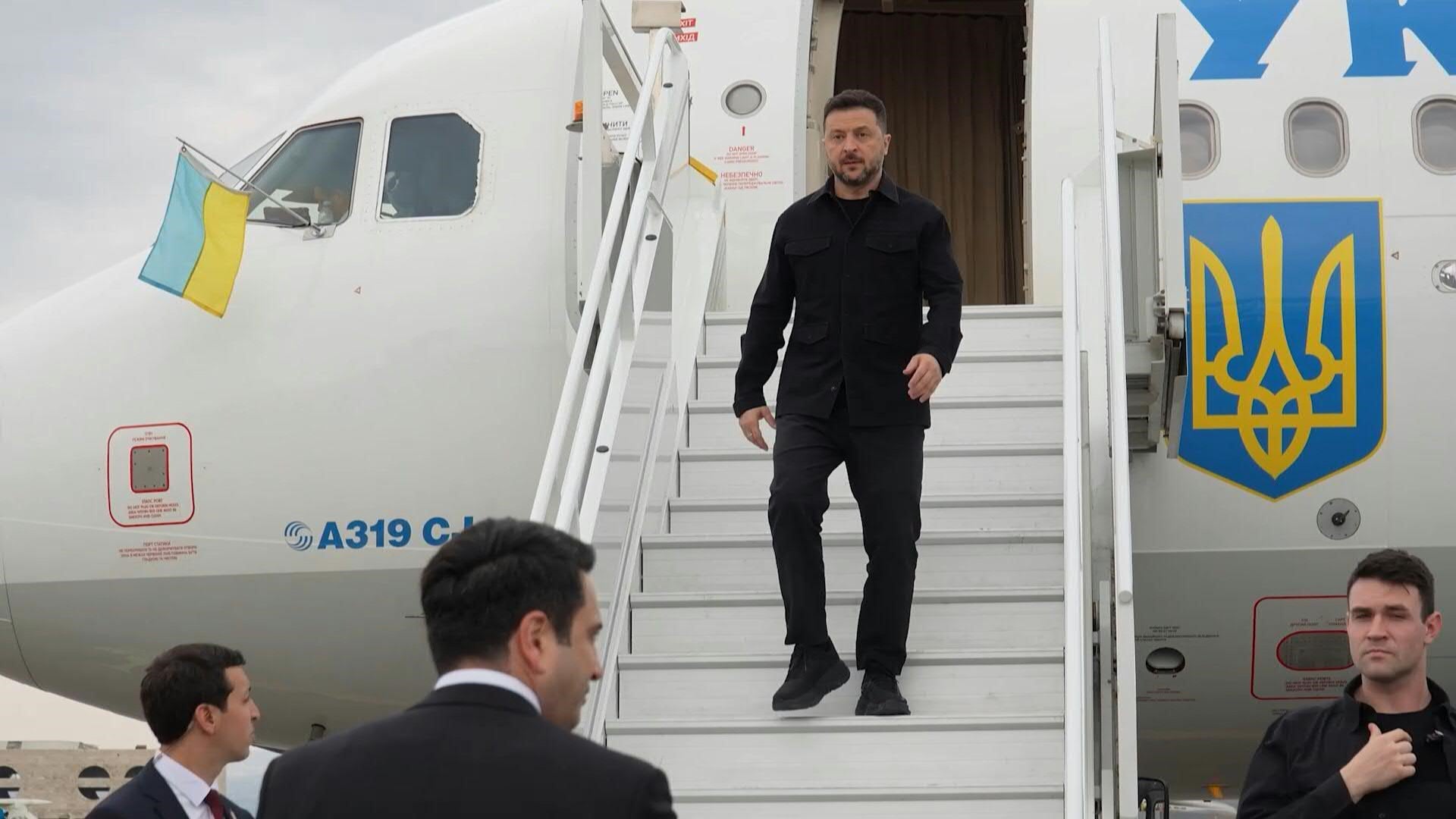
Russia expressed significant discontent on Thursday regarding Armenia’s recent hosting of Ukrainian President Volodymyr Zelensky for a European summit. The Russian Foreign Ministry summoned Armenia’s envoy, signaling escalating tensions between the two nations, once seen as allies.
Moscow reacted strongly, denouncing Armenia’s role as a “platform” for Zelensky during the EU-sponsored events, labeling the action as “categorically unacceptable.” The ministry emphasized its indignation, stating that such moves by Armenia would have repercussions, especially amid ongoing efforts by Yerevan to strengthen ties with the European Union.
Maria Zakharova, spokesperson for the Russian Foreign Ministry, articulated the depth of Russia’s frustrations, noting that citizens had been taken aback by Armenia’s actions. She referred to Zelensky in strong terms, framing him as a “terrorist” and questioning Armenia’s loyalty and historical alignment.
This incident highlights the deteriorating relationship between Armenia and Russia, a former imperial power. Armenia has indicated its frustration with Russian support, particularly following the conflict with Azerbaijan, which led the former Soviet republic to freeze its membership in the Russian-led CSTO military alliance in 2024. Additionally, Armenia’s interest in EU membership has further aggravated Moscow.
Amid the diplomatic tensions, Armenian Prime Minister Nikol Pashinyan reiterated that Armenia does not consider itself an ally of Russia regarding the Ukraine issue. He framed the current geopolitical situation as a departure from past allegiances, emphasizing a shift towards European integration.
The joint declaration signed between Armenia and the European Union at the recent summit marks a significant step toward deeper cooperation in economic and security realms. Zakharova criticized this development, warning that Armenia’s trajectory towards EU membership could result in irreversible ties to an anti-Russian stance, carrying potential political and economic ramifications for the small Caucasian nation.
Last year, Armenia formally advanced its EU aspirations by passing a law aimed at applying for membership, further distancing itself from Moscow. Russian President Vladimir Putin previously cautioned Pashinyan about the impossibility of simultaneously pursuing EU membership and remaining part of the Russian-led customs union, highlighting the precarious position that Armenia finds itself in amidst shifting alliances.