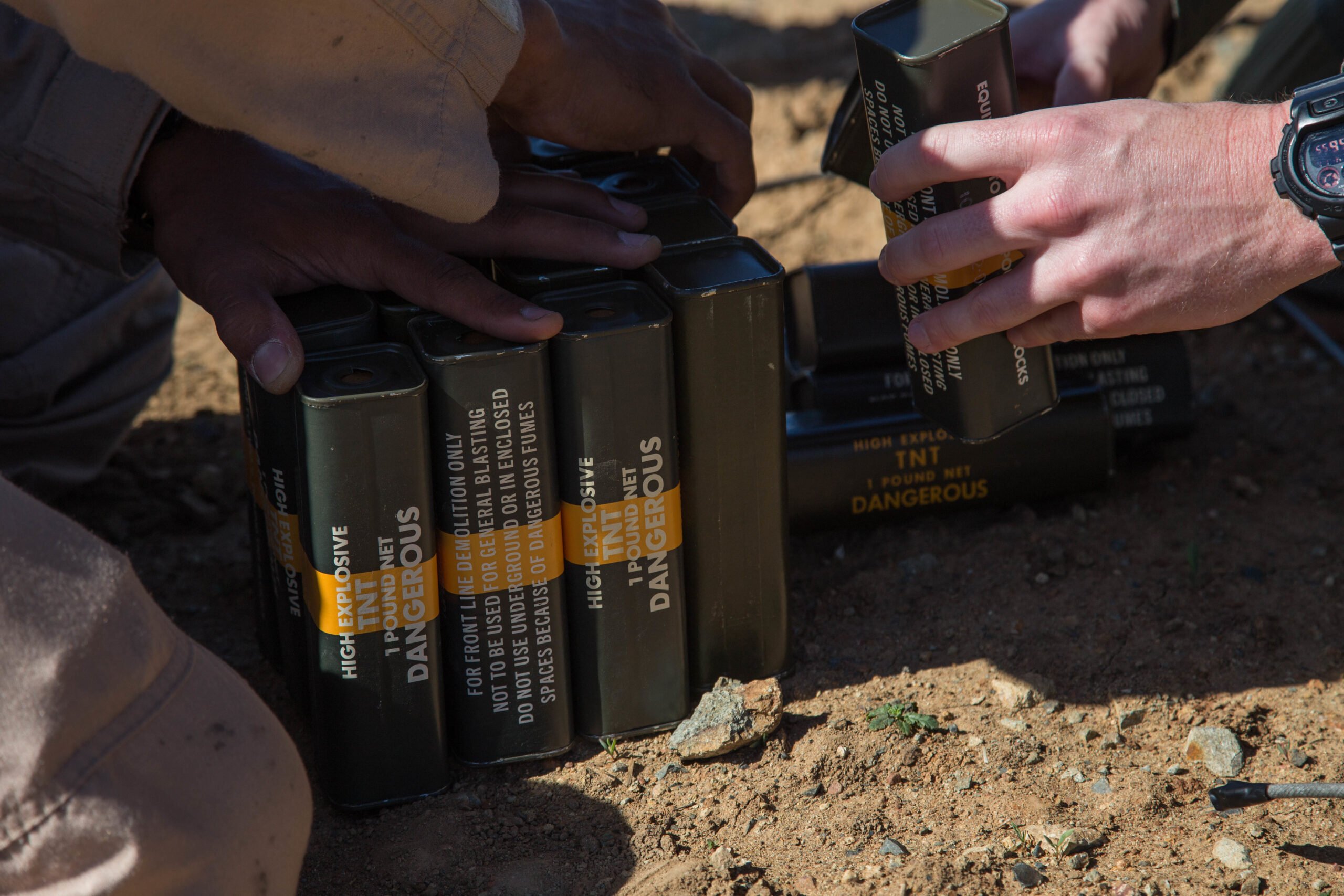
In a landmark decision, Sweden’s Land and Environmental Court has approved a permit for Sweden Ballistics (SWEBAL) to construct a state-of-the-art TNT production facility in Nora, marking the first new TNT plant in Europe since the Cold War era. The groundbreaking for the facility is scheduled for 2026, with full-scale production anticipated to reach 4,500 metric tons of TNT annually by 2028.
The planned factory will occupy approximately 3 acres (1.21 hectares), with SWEBAL having the option to acquire an additional 60 acres (24 hectares) of the surrounding forest. This move aims to minimize the impact of noise and potential accidental blasts on nearby residents, according to the company’s construction manager, Sebastian Reismer.
Set to operate around the clock, the facility will utilize a “continuous nitration” production process and optimize its supply chain by sourcing materials and equipment from within a 550-kilometer (311-mile) radius of the Baltic Sea. SWEBAL’s co-founder and CEO, Joakim Sjöblom, emphasized the significance of this approval, describing it as a transformative step in fortifying Europe’s defense supply chain. He stated, “To achieve true security of supply, we must bring every part of the chain – not just assembly – back inside Europe and inside NATO territory.”
This development comes in the wake of a substantial funding boost, with 3 million euros ($3.45 million) raised to expedite the construction process. The initiative enjoys the backing of notable figures, including Sweden’s former army chief Major General Karl Engelbrektson, e-commerce entrepreneur Pär Svärdson, and Thomas von Koch, a founding member and former CEO of private equity firm EQT.
The urgency for domestic TNT production has escalated in light of increasing military needs driven by the ongoing war in Ukraine. Currently, Poland’s Nitro-Chem holds a dominant position in European TNT production, while other supplies largely come from Asian manufacturers such as India and China. The dangers associated with producing NATO-standard TNT — including high toxicity and the risk of accidental detonation — have been significant deterrents to widespread manufacturing in Europe.
To address safety concerns for employees at the SWEBAL facility, the company plans to restrict human presence to specific areas, namely the final product testing laboratory and a fortified control room. Further enhancing safety measures, Sjöblom indicated that the manufacturing process is designed to be “completely automated.”
Once it becomes operational, SWEBAL’s facility is poised to significantly mitigate the continent’s reliance on external sources for explosives, complementing similar initiatives in the region, including a TNT production site planned in Finland and a joint venture factory between the Czech Republic and Greece.