




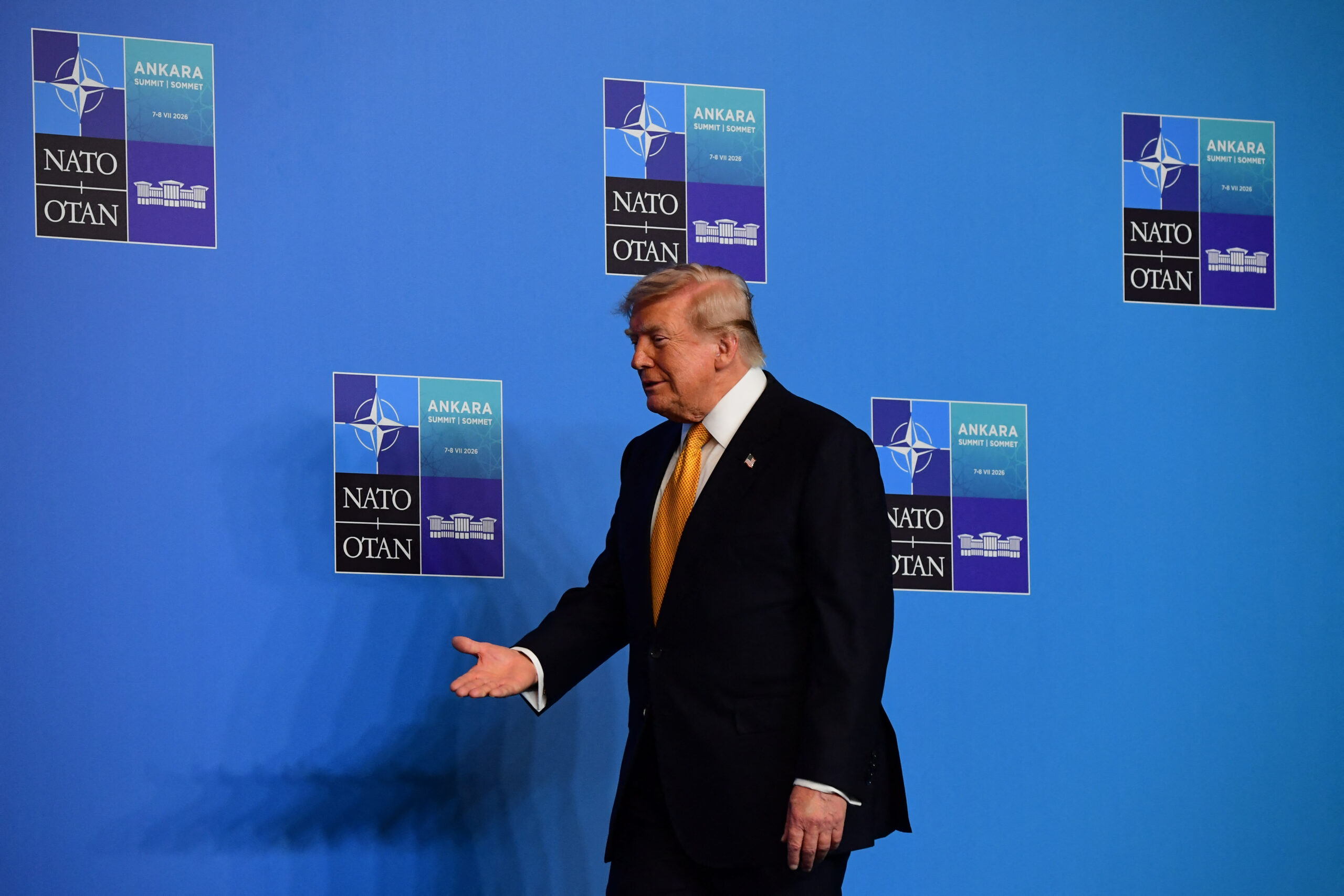
In a significant escalation of tensions between the United States and Iran, President Donald Trump declared that the ceasefire between the two nations is effectively “over.” His comments, made during a NATO summit in Turkey, followed a series of Iranian attacks on vessels navigating the critical Strait of Hormuz, which has become a central point of conflict in the ongoing regional strife that erupted in late February.
The Strait of Hormuz is a vital international shipping route, with Iran asserting control and stipulating that it will impose fees for passage. Tehran has threatened retaliation against any vessels straying from its designated paths. Recent military operations have seen Iran targeting at least three ships, which prompted a robust response from the U.S. with airstrikes against Iranian positions on Tuesday. These U.S. actions were met with retaliatory strikes from Iran aimed at Gulf nations, further destabilizing the region.
Trump’s remarks came as oil prices surged, already at their highest levels in two weeks, with a reported increase of five percent following his statement that engagement with Iran was a “waste of time.” While he expressed a willingness for negotiators to continue talks, his disdain for the Iranian leadership was unmistakable.
Reports from Iranian state media indicated a number of explosions in areas around the Strait, notably in Qeshm, Sirik, and Bandar Abbas, a key port city. Tehran reported fatalities among its military personnel and asserts it has carried out multiple strikes against sites used for monitoring and observation along its southern coast.
The U.S. Central Command highlighted that American forces targeted over 80 positions linked to the Iranian military, aiming to weaken Iran’s capabilities to disrupt maritime commerce. NATO’s secretary-general backed these strikes, labeling them as necessary measures to maintain regional stability.
In a swift response, Iran claimed to have hit U.S. military facilities in Kuwait and Bahrain, leading to reports of intercepted ballistic missiles and drones from Kuwait. This backdrop of escalating military operations has instilled a renewed anxiety in the local population, with civilians expressing their fears of a return to war. Analysts observe that Iran targets nations like Bahrain and Kuwait, viewing them as accessible leverage against U.S. and Gulf Cooperation Council (GCC) interests.
Meanwhile, Oman has condemned the attacks while maintaining a neutral stance throughout the conflict, balancing potential mediation efforts with Tehran against the backdrop of its own interests in the strait.
The tentative resumption of maritime activities following last month’s tentative agreement between Washington and Tehran appears fragile, as Iran has made clear that it will not revert to allowing unimpeded passage through its waters. The International Maritime Organization has reported that nearly 6,000 seafarers remain stranded in the volatile area.
Experts suggest that the consequences of a full-scale war would be dire for both nations, noting that the heavy economic and military toll could compel both sides to re-examine their positions. “Trump’s rhetoric is, as usual, hyperbolic,” said an analyst, stressing that ongoing negotiations are likely masked by these aggressive maneuvers as both nations seek to clarify the ambiguous aspects of their most recent agreement. As tensions heighten, the future of the Strait remains uncertain, with Iran steadfastly committed to asserting its control, viewing it as a crucial achievement in the ongoing conflict.


