




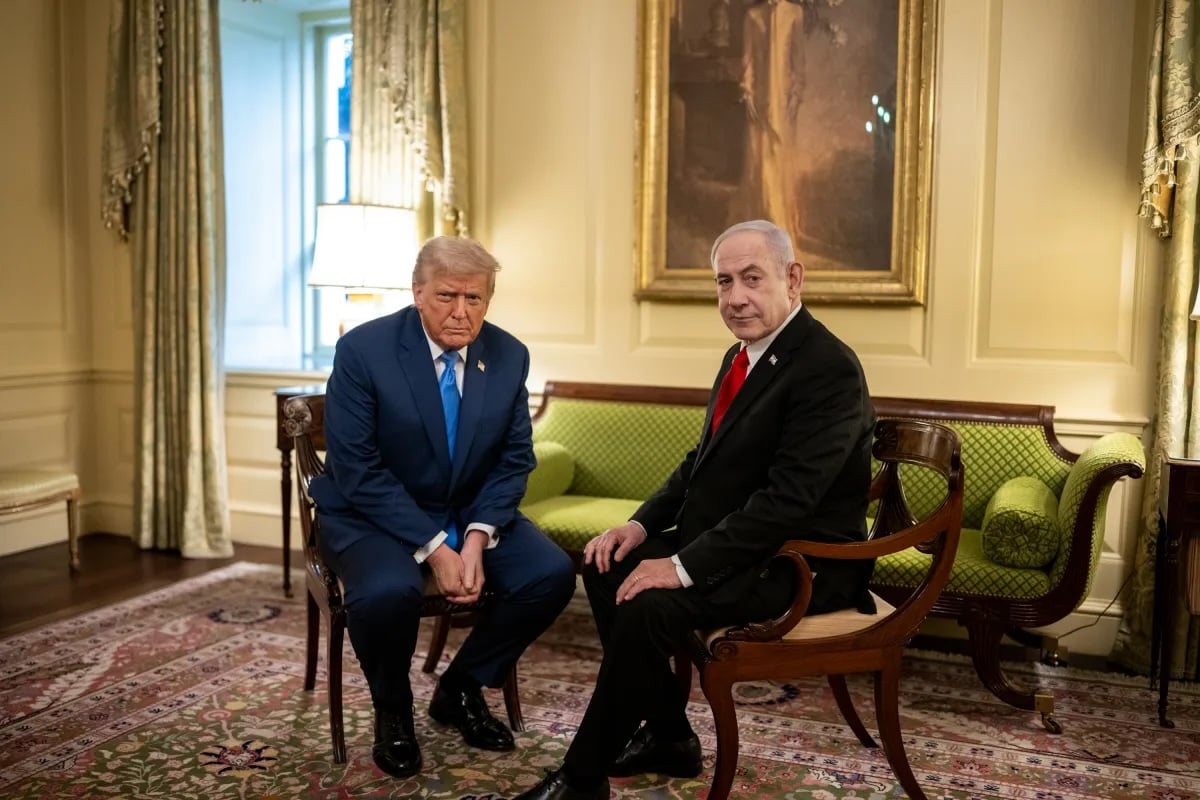
Israeli Prime Minister Benjamin Netanyahu is set to meet with US President Donald Trump at the White House for the first time since the onset of the Iran war, a conflict that has highlighted diverging views between the two leaders. Their relationship has shown signs of strain in recent months, though both appear motivated to downplay tensions ahead of this significant meeting.
This encounter marks the eighth official dialogue between Netanyahu and Trump since the latter returned to office last year. However, it carries additional weight as it coincides with ongoing military engagements following a series of US-Israeli strikes on Iran that commenced in late February. Nevertheless, Israel has refrained from directly engaging in recent hostilities, which intensified earlier this month when a ceasefire established in April collapsed.
Prior to his departure from Israel, Netanyahu emphasized the importance of the upcoming discussions, stating, “This is a great privilege, but it is also a great responsibility.” He underscored that their discussions would primarily focus on Iran and that their overarching goal is to bolster Israeli security while striving to enhance diplomatic relations within the region.
Upon arriving in Washington, Netanyahu participated in a private memorial dinner honoring the late Senator Lindsey Graham and is also slated to attend a memorial service for him. This aspect of his visit adds a personal touch amid the heavy political backdrop.
The relationship between Trump and Netanyahu experienced a significant low point in April during tense negotiations regarding the ceasefire with Iran, during which Trump reportedly expressed frustration at his Israeli counterpart. Trump described Netanyahu in a candid interview as “a very difficult guy.” Nonetheless, Netanyahu has characterized these exchanges as minor tactical disagreements, affirming their alignment on broader strategic goals.
During their meeting, Netanyahu and Trump are expected to delve into the implementation of a recently brokered US-sponsored framework agreement between Israel and Lebanon, although practical challenges are hindering its execution. Discussions will also likely involve the Gaza Strip, where diplomatic efforts to facilitate reconstruction have stalled since the onset of hostilities nearly three years ago. The humanitarian crisis in Gaza remains critical, with Israel continuing to target individuals identified as militants by its military.
International relations expert Yonatan Freeman from the Hebrew University of Jerusalem notes that the primary focus of Netanyahu’s visit is to dispel rumors of deteriorating ties between the two nations. He remarked, “There’s more in agreement between the two leaders than disagreement,” emphasizing that their differences lie more in tactics than overarching objectives.
Freeman also highlighted Trump’s interest in two significant regional priorities: addressing Iran and expanding the Abraham Accords— a series of normalization agreements that have established diplomatic relations between Israel and several Arab nations. However, it is anticipated that Gaza may not be a primary focus during the talks, reflecting Trump’s strategic priorities.
Conversely, some analysts speculate that the discussions might explore the potential reduction of Israel’s military footprint in regions like Lebanon, Syria, or Gaza.
This meeting comes at a critical juncture for Netanyahu, who is campaigning for another term ahead of Israel’s national elections. Polls indicate that he currently trails in public approval, with significant backlash lingering over his government’s inability to thwart Hamas’ attack on October 7, 2023, which escalated the ongoing Gaza conflict.


