




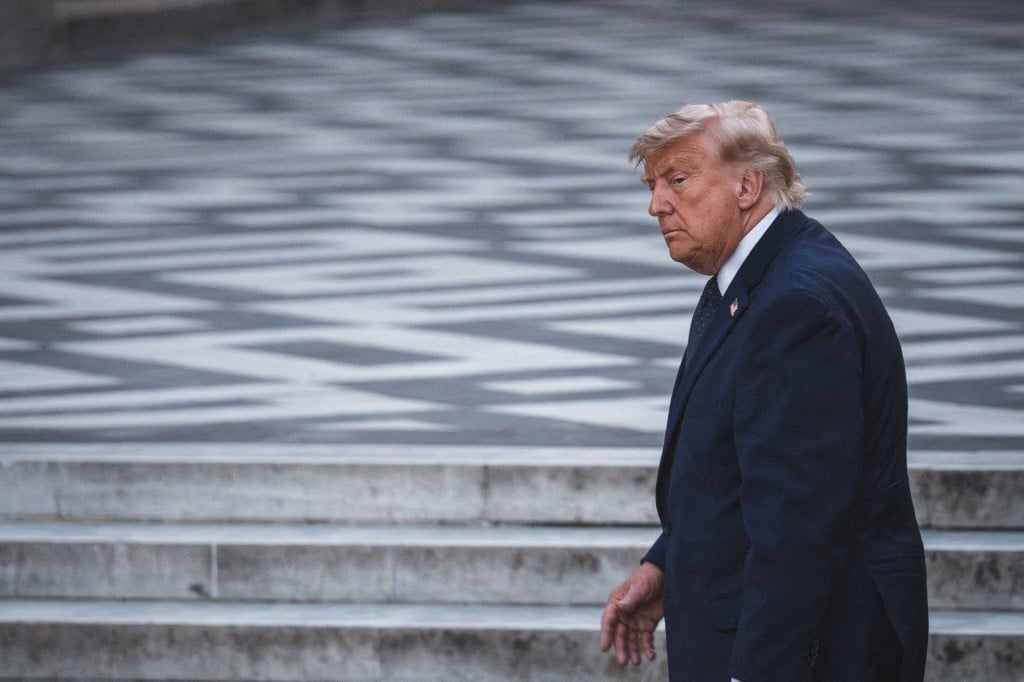
US President Donald Trump expressed optimism on Wednesday regarding the impending signing of an accord with Iran aimed at resolving the ongoing conflict in the Middle East. Speaking at a press conference during the G7 summit, Trump indicated that the agreement, reached on Sunday, could be formalized soon—potentially as early as Thursday or Friday. Despite this optimistic outlook, he refrained from confirming an exact date for the signing event, which is expected to take place in Switzerland with Vice President JD Vance representing the United States.
“I am confident we are going to most likely sign a deal,” Trump stated, while also conveying the seriousness of the situation. He warned that if Iran were to violate the terms of the agreement, military action could again be on the table. “If they are not behaving they will be hit again,” he asserted, adding that Iran does not desire further conflict.
While discussing the specifics of the signing, Trump hinted at the possibility of remaining in Europe for the event but indicated that the nature of the document, described as a memorandum of understanding, might not warrant his personal signature. When questioned about the implications of sending Vance instead of attending himself, Trump quipped, “I like that idea,” suggesting a strategic approach to potential blame if the agreement does not yield the desired outcomes.
He noted, “If it works out I am going to take the credit; if it doesn’t work out, I’m blaming JD! You better be careful, JD! He is going to turn his plane around and get the hell out of here!”
Amid tensions with Israeli Prime Minister Benjamin Netanyahu, Trump confirmed that the United States had shared a copy of the accord with Israel. This comment came in the context of previous exchanges where Trump had emphasized a partnership with Netanyahu.
Reflecting on his history with Iran, Trump recounted his controversial decision in 2020 to order the assassination of Qassem Soleimani, leader of foreign operations for the Revolutionary Guards, whom Trump termed a “mad genius.” He also referred to a coordinated airstrike that resulted in the death of Iran’s supreme leader, Ayatollah Ali Khamenei, and other senior officials, describing them as “having breakfast” at the time.
When asked about a tragic incident involving a U.S. missile strike on an Iranian school in Minab that claimed 155 lives on the conflict’s opening day, Trump initially deemed the question “strange,” but acknowledged the inherent chaos of war, stating, “Mistakes are made, war is nasty.” He directed further inquiries about the incident to Defense Secretary Pete Hegseth, noting that it was under investigation. Preliminary findings from a U.S. military probe indicated that a Tomahawk cruise missile had struck the school due to targeting errors.
In closing, Trump expressed gratitude to both Russian President Vladimir Putin and Chinese President Xi Jinping for maintaining a neutral stance amid the conflict, underscoring the complexity of international relations in the context of the Middle East crisis.


