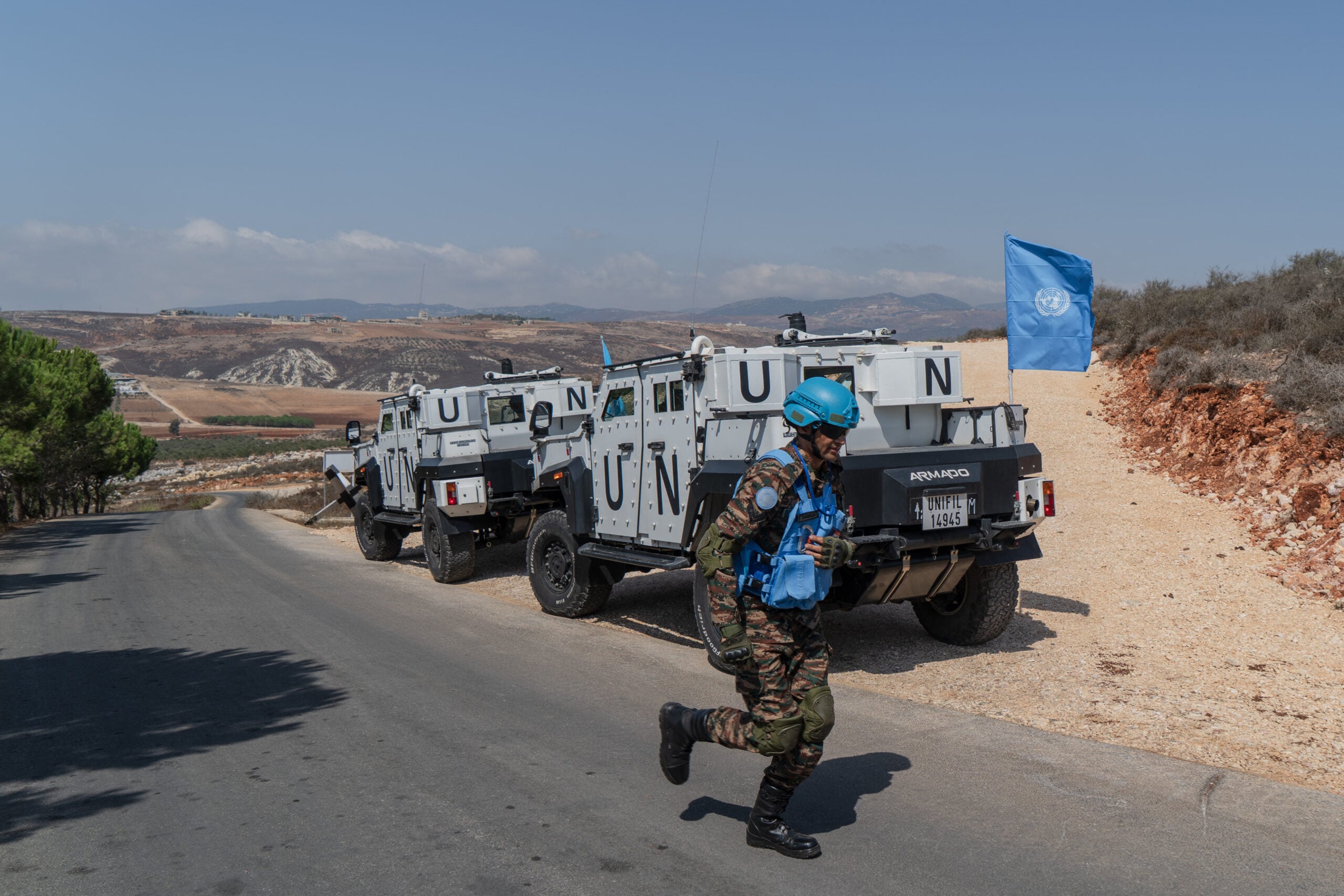
The United Nations Interim Force in Lebanon (UNIFIL) has expressed growing concern over incidents involving gunfire from Israeli positions that have come perilously close to its peacekeeping personnel. On Friday, two separate instances of gunfire were reported by UNIFIL, although no casualties resulted from these encounters.
In its statement, UNIFIL revealed that patrols in southern Lebanon encountered 15 rounds of small arms fire, landing within 50 meters of their location. Shortly thereafter, a second patrol reported around 100 rounds of machine-gun fire, also within the same proximity, again without resulting damage or injuries.
UNIFIL determined that both incidents originated from an Israeli Defense Forces (IDF) position located south of the Blue Line, which marks the de facto border between Israel and Lebanon. Following the incidents, UNIFIL officials dispatched a ‘stop fire’ request through established liaison channels to the Israeli army. It was also noted that the peacekeeping force had previously informed the Israeli army of their patrol routes.
The recurring nature of these incidents has alarmed UNIFIL, prompting them to label this trend as “concerning.” They emphasized the need for the IDF to cease what they characterized as aggressive behavior towards peacekeepers who are working to maintain stability along the Blue Line.
UNIFIL plays a crucial role as a buffer between Israel and Lebanon, having been in place for decades to support peace efforts, including a truce that saw the withdrawal of Israeli forces from Lebanon in 2000. More recently, the force has collaborated with the Lebanese army to reinforce a ceasefire with the militant group Hezbollah, which has persisted for over a year.
In its statement, UNIFIL reiterated that attacks on or near peacekeepers are serious violations of a 2006 United Nations Security Council resolution that underpins the current ceasefire. The situation remains tense, as Israel has maintained a military presence in southern Lebanon in strategic areas, conducting regular operations primarily targeting Hezbollah positions.
Amid increasing U.S. pressure and fears of wider conflict, Lebanon has committed to efforts aimed at disarming Hezbollah, starting in the southern region near the border. The geopolitical landscape is further complicated by a recent UN Security Council decision, which has set a timeline for the potential withdrawal of peacekeepers from Lebanon by 2027.