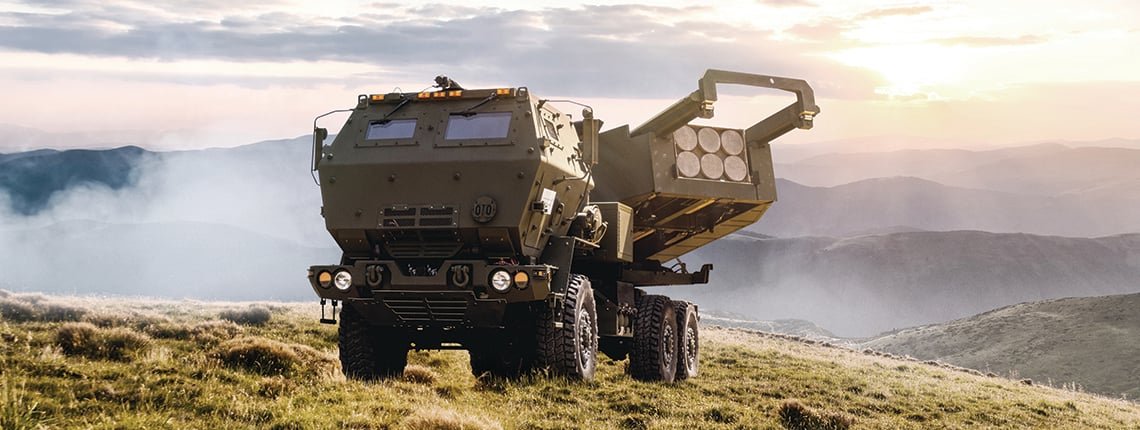
The U.S. Army is actively seeking industry partnerships to develop an autonomous vehicle intended for the transport, loading, and unloading of heavy missile payloads as part of its new Common Autonomous Multi-Domain Launcher (CAML) program. This initiative marks a strategic pivot toward enhancing the mobility and flexibility of logistics and launcher systems, aiming to minimize manpower needs in complex, contested operational environments.
Through a recent Request for Information (RFI), the Army invites companies to demonstrate their capabilities in designing, constructing, and delivering both an autonomous mobility platform for the CAML as well as a convoy leader vehicle, accompanied by a command-and-control system. The timeline for these developments is set at 12 to 18 months, indicating a pressing timeline for innovation and implementation.
CAML is positioned as a significant enhancement in military logistics, focusing on highly mobile and optionally crewed systems. These advancements are designed to optimize operations in dispersed battlefields, responding to the evolving nature of modern warfare.
To further clarify specifications and gather insights from industry experts, the Army plans to host an industry day in January 2026. This event will serve as a platform for participants to discuss requirements and expectations in detail, culminating in a field demonstration of autonomous movement and payload handling techniques scheduled for late 2026.
The specifications for the vehicles involved in this initiative are rigorous. They must operate in multiple modes, including autonomous convoy, waypoint navigation, and optionally piloted manual operation. Additionally, these vehicles must be capable of handling heavy, palletized payloads ranging from 40,000 to 60,000 pounds without relying on trailers. An integrated reloading and unloading system is required, featuring an onboard 120 kW power supply for handling payloads. Furthermore, vehicles must adhere to strict transport dimensions, measuring no more than 12 feet in height and 8 feet in width.
Companies interested in contributing to the CAML program are requested to submit capability statements, which should outline their previous experience, manufacturing capacities, supply chain logistics, and potential subcontractor arrangements. The Army is particularly keen on including both traditional defense contractors and non-traditional suppliers from the commercial sector, broadening the scope of expertise available for this ambitious project.
Globally, developments in autonomous launcher systems are already in progress, reflecting a growing interest in capabilities similar to those envisioned by CAML. For instance, Poland has recently upgraded its rocket artillery capabilities with the K239 Chunmoo, deployed on a Jelcz 8×8 chassis and equipped with Polish Topaz fire-control systems. This local industry participation in assembly aligns with the Army’s encouragement of commercial and non-traditional stakeholders.
In the United States, Lockheed Martin has showcased an uncrewed version of the M142 HIMARS launcher, demonstrating autonomous navigation and firing using integrated onboard sensors. Additionally, General Dynamics Land Systems has developed semi-autonomous vehicles for logistics and reconnaissance purposes, proving that defense companies are capable of providing unmanned platforms that meet the mobility and payload handling criteria similar to those outlined in the CAML specifications.
This initiative underscores the U.S. Army’s commitment to revolutionizing its logistics and operational capabilities through cutting-edge technology and collaborative industry partnerships.