The US Marine Corps has entered into a contract with Mack Defense for the development of two mock-up vehicles as part of its Medium Tactical Truck (MTT) program. This initiative is designed to replace the aging Oshkosh-made medium tactical fleet that has been in operation since the early 2000s, which includes various systems such as cargo transport, re-supply, tractors, dump trucks, and wreckers used for combat support.
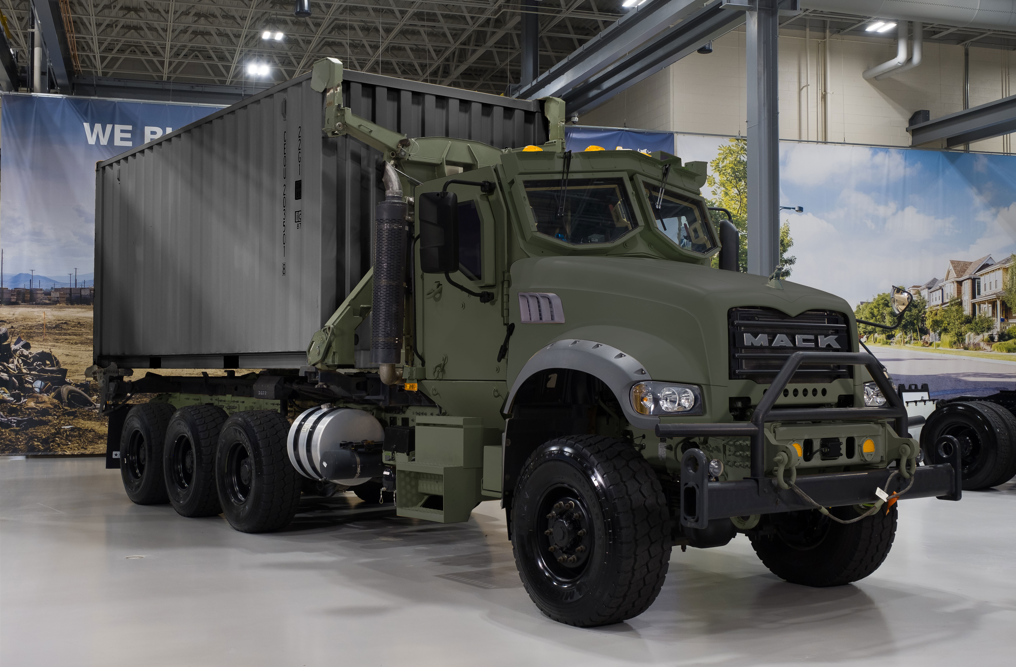
Mack Defense’s prototypes will consist of a 4×4 variant equipped with a 10-foot cargo bed and a 6×6 variant with a 20-foot cargo bed. These vehicles will be modeled after the company’s renowned Granite heavy-duty conventional straight truck, incorporating specific features tailored to meet the Marine Corps’ operational requirements.
The new vehicles are set to come equipped with a range of modern safety and performance technologies. These will include collision avoidance sensors, blind spot detectors, dynamic traction control, and anti-lock braking systems, enhancing the safety and overall operational capability of the trucks. Work on the contract is expected to commence in the third quarter of 2025, with completion projected for early autumn. Following their completion, the prototypes will be sent to the Nevada Automotive Test Center for comprehensive contractor performance trials during the first half of 2026 before being delivered to military personnel.
David Hartzell, President of Mack Defense, emphasized the significance of these prototypes, stating, “These prototypes represent the next generation of purpose-built, specialty vehicles for the Marine Corps.” He noted that by leveraging the company’s expertise in commercial vehicle technology, they aim to deliver a robust platform capable of performing in challenging terrains, while also incorporating advanced safety features and hybrid propulsion systems that align with the Marine Corps’ demanding mission requirements.
The MTT program builds upon a preliminary 12-month development phase contract awarded to Mack Defense in 2024, which involved planning for three different MTT variants with cargo bed lengths of 10, 15, and 20 feet. Vehicles developed through this initiative are designed to optimize weight and significantly enhance payload capacity. Additionally, the trucks will employ hybrid-electric technology to improve fuel efficiency, extend operational range, and reduce noise levels—critical features for covert missions.
Another noteworthy aspect of the new trucks is their open systems architecture, which is intended to adapt to evolving requirements and integrate future autonomous capabilities. The vehicles are also designed to support interchangeable profiles for expeditionary deployments, a feature that facilitates operations in diverse environments, including traversing deep water tracks.