




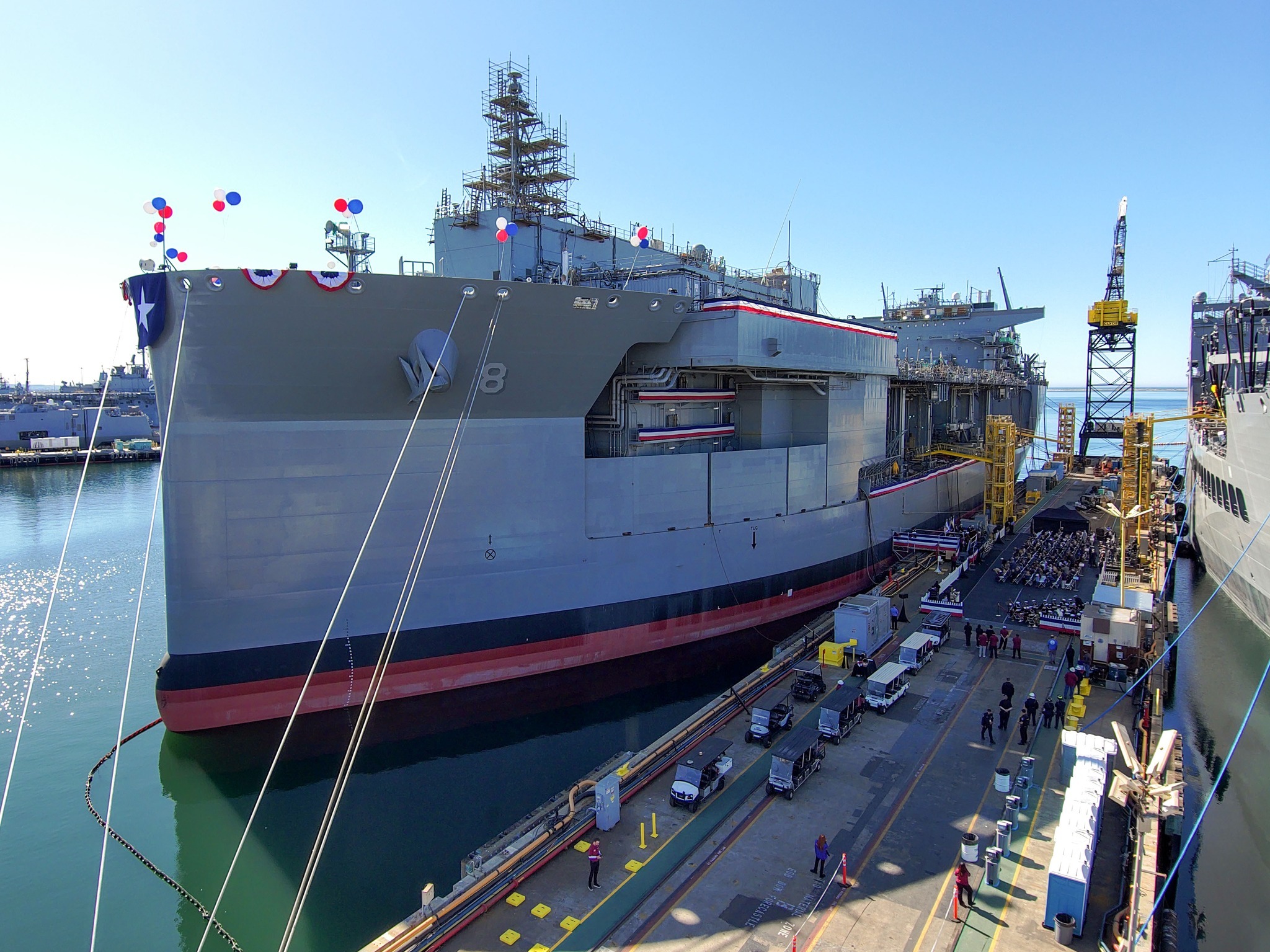
The US Navy has successfully completed acceptance trials for its sixth and final Expeditionary Sea Base (ESB) vessel, the USNS Hector A. Cafferata Jr. (ESB 8), ahead of its scheduled delivery this summer. These evaluations took place over three days in Southern California, assessing the vessel’s major systems and overall capabilities to operate effectively across various theaters.
The ship was officially christened by Washington last March, following a four-year development collaboration with General Dynamics. Once commissioned, the ESB will integrate into the Navy’s Military Sealift Command, which plays a crucial role in refueling warships, transporting troops and materiel, and providing hospital-level medical care in support of operations.
Jon Thomas, acting program manager of the Navy’s Strategic and Theater Sealift Office, emphasized the operational importance of the ESB vessels. He noted that as the last ship in this class, the ESB 8 showcased its comprehensive capabilities and is prepared for delivery to fleet operations.
In terms of specifications, the ESB vessel is inspired by General Dynamics’ Alaska-class commercial crude oil tanker design. It boasts a modified hull that stretches 785 feet (239 meters) in length and has a beam of 164 feet (50 meters). The vessel can accommodate up to 250 personnel and has provisions for carrying up to three landing craft and air cushion boats.
Moreover, the ship features a substantial 52,000-square-foot (4,830-square-meter) flight deck, suitable for maritime helicopters and vertical takeoff and landing aircraft. The ESB is equipped with twin diesel-electric engines that allow it to reach speeds exceeding 15 knots (28 kilometers or 17 miles per hour) and cover a distance of 9,500 nautical miles (17,600 kilometers or 10,900 miles). With the completion of the acceptance trials, the ESB 8 is poised to enhance the Navy’s operational readiness and versatility.


