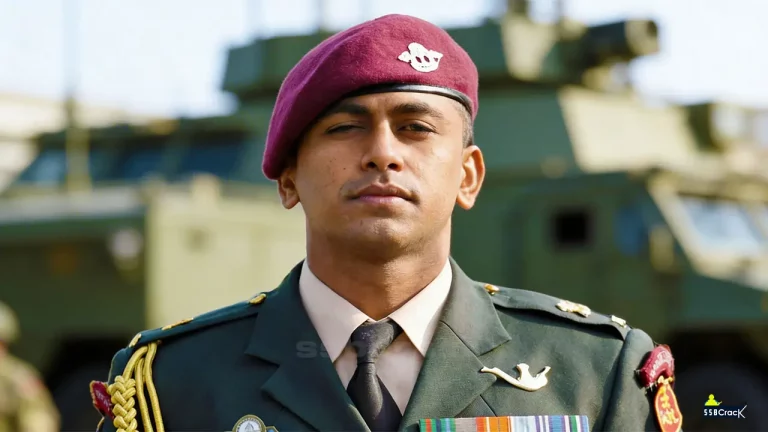
Major Sharyf Bhonsle, a distinguished officer in the Indian Army’s elite Para Special Forces, vanished under mysterious circumstances in 2014, leaving behind a trail of unanswered questions that has perplexed military authorities, his family, and the public for over a decade. Commissioned in 2009, Bhonsle was known for his exemplary service record and passion for adventure sports, particularly para-jumping and BASE jumping. His disappearance during an unauthorized overseas trip has led to extensive investigations, declarations of desertion, and, most recently, formal dismissal proceedings by the Army in 2026. This article examines the details of his background, the events surrounding his vanishing, the subsequent inquiries, prevailing speculations, and the latest developments.
Background and Military Career
Major Sharyf Bhonsle, also referred to in some records as Sharyfsinh Titwekar Bhonsle, was born in the Aundh area of Pune, Maharashtra, a region with a rich military heritage. He pursued his education at the prestigious National Defence Academy (NDA), where he honed his skills and discipline in preparation for a career in the armed forces. Upon graduation, he was commissioned into the Indian Army in 2009 and assigned to the 2nd Battalion of the Parachute Regiment (Special Forces), based in Bengaluru. This elite unit is renowned for its expertise in airborne operations, counter-terrorism, counter-insurgency, and high-risk covert missions.
Bhonsle’s military career was characterized by excellence and dedication. He underwent rigorous training in parachuting, survival techniques, and unconventional warfare, aligning with the demanding standards of the Para Special Forces. By 2013, he had advanced to a sensitive and prestigious role as Aide-de-Camp (ADC) to Lieutenant General (Retired) Nirbhay Sharma, who served as the Governor of Arunachal Pradesh—a strategically important border state adjacent to China. In this capacity, Bhonsle managed protocol, security arrangements, and administrative responsibilities, maintaining a clean service record devoid of any prior disciplinary infractions.
Beyond his professional duties, Bhonsle harbored a deep passion for adventure sports. His expertise in para-jumping extended to BASE jumping—an extreme activity involving parachuting from fixed structures such as buildings, antennas, spans, or earth formations. This interest, while complementary to his Special Forces training, would later become central to the circumstances of his disappearance.
The Disappearance in 2014
The sequence of events leading to Major Bhonsle’s disappearance began on June 23, 2014, when he commenced his approved annual leave from his posting in Itanagar, Arunachal Pradesh. He was scheduled to report back to duty on August 18, 2014. However, investigations later revealed that Bhonsle had traveled abroad without obtaining the mandatory clearance from the Military Intelligence Directorate, a required protocol for serving officers, especially those in sensitive positions.
His itinerary included a departure from India to Paris on July 1, 2014, followed by a trip to Spain to participate in a six-day international para-jumping festival in mid-July. Subsequently, he proceeded to Norway, where he engaged in BASE jumping activities in Lysebotn from July 18 to 27. There are indications that he may have attempted another jump in the Romsdal area around August 21. His last known social media update was posted on August 15, 2014, from Norway, after which all communication ceased. Bhonsle held Indian Passport No. G8620998, issued in Pune on May 6, 2008.
When Bhonsle failed to rejoin his duties on the designated date, his unit initiated contact attempts, but he remained unresponsive to his superiors, family, and colleagues. This abrupt silence marked the beginning of one of the most protracted unresolved absence cases involving a serving Indian Army officer in recent history.
Investigations and Official Declarations
In response to his absence, the Indian Army convened a Court of Inquiry at the Para Regimental Centre in Bengaluru in September-October 2014. The inquiry involved coordination with Indian embassies in Madrid and Oslo, circulation of his passport details, and outreach to international BASE jumping communities. Despite these efforts, no definitive leads emerged regarding his whereabouts.
In October 2014, the Court of Inquiry declared Major Bhonsle a deserter under Army regulations, citing prolonged unauthorized absence and violation of travel protocols. This declaration allowed for potential court-martial proceedings if he were ever located. An Apprehension Roll was issued in 2016 to facilitate his detention upon discovery.
The Embassy of India in Oslo sought assistance from local authorities and BASE jumping networks, including a direct inquiry to a Norwegian contact. Responses included unverified rumors, such as sightings of Bhonsle leaving Norway unharmed and possibly traveling to Munich with friends. However, these claims could not be substantiated.
Speculations and Theories
The absence of concrete evidence has fueled numerous speculations about Major Bhonsle’s fate. One prominent theory posits a fatal accident during BASE jumping in Norway’s challenging terrain, such as the fjords of Lysebotn or Romsdal. Factors like equipment malfunction, adverse weather, or a medical event mid-jump could explain his vanishing, especially given the remote and hazardous nature of these locations. Online forums among BASE jumpers have discussed an inexperienced jumper—potentially Bhonsle—who may have misrepresented his qualifications and alluded to going absent without leave (AWOL) from the military.
Alternative hypotheses suggest voluntary desertion, possibly driven by professional frustrations, such as dissatisfaction with performance evaluations or career stagnation. His Special Forces training could have equipped him to evade detection and start a new life abroad. Unsubstantiated rumors include involvement with private military contractors (PMCs) like the Wagner Group or illegal immigration. Comparisons have been drawn to similar cases, such as a Russian skydiver found deceased months after a jump due to an unopened parachute.
Despite these theories, no verifiable proof has surfaced to confirm any scenario, underscoring the challenges in tracing individuals in international adventure sports communities lacking geo-tagging or formal oversight.
Recent Developments in 2026
After more than a decade of unsuccessful searches, the Indian Army escalated actions in 2026. In October 2025, a Show Cause Notice was issued to Bhonsle’s registered address in Pune under Section 19 of the Army Act, 1950, highlighting misconduct and his undesirability for continued service. With no response received within the 30-day period, formal termination proceedings commenced in February 2026. This process will result in the ex-parte dismissal of his commission, revoking his rank, benefits, and service entitlements.
These developments reflect the Army’s commitment to maintaining discipline and resolving long-standing cases, even in the absence of closure regarding Bhonsle’s fate. Social media discussions in 2026 continue to express intrigue, but no new evidence has materialized.
Conclusion
The case of Major Sharyf Bhonsle exemplifies the intersection of personal pursuits and military obligations, highlighting the risks associated with unauthorized high-adventure activities and the procedural lapses that can complicate resolutions. Over ten years later, his disappearance remains an enigma, serving as a cautionary tale within the armed forces about adherence to protocols. While the Army proceeds with administrative closure, the true circumstances of his vanishing may forever elude definitive explanation, leaving a void in the annals of Indian military history.