




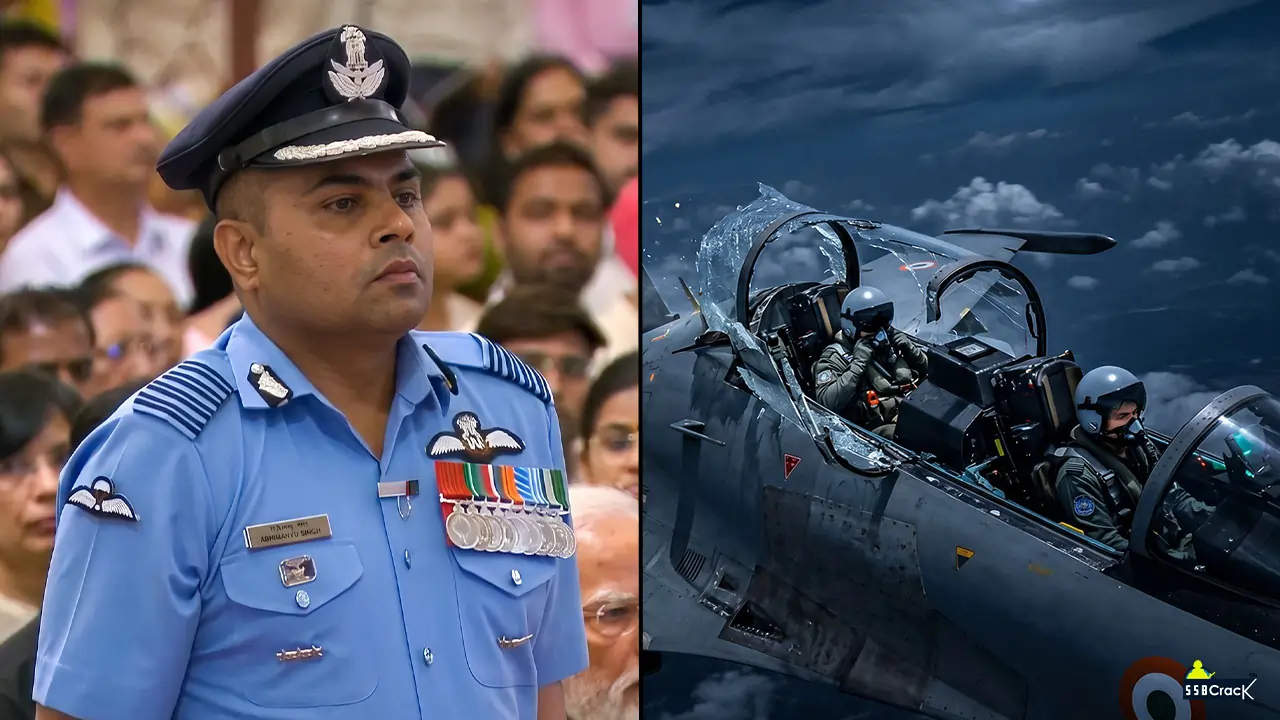
In a remarkable incident highlighting the inherent risks of military aviation, Wing Commander Abhimanyu Singh, recently promoted to Group Captain, exhibited extraordinary bravery and skill during a critical emergency on the night of 21 November 2024. While piloting a Su-30MKI fighter aircraft of the Indian Air Force during a night training sortie, an unexpected malfunction led to severe consequences.
The aim of the training mission was to assess a trainee pilot’s capabilities. However, the situation took a perilous turn when the rear canopy of the aircraft fractured mid-flight, resulting in explosive decompression within the cockpit. This sudden breakdown not only created an immediate threat to both pilots onboard but also posed a risk of potential disaster in the airspace below.
Compounding the seriousness of the incident was the fact that Wing Commander Singh sustained injuries from flying shards of the canopy, causing him to bleed and endure physical trauma. The cockpit environment became chaotic, requiring him to employ a combination of technical knowledge, flying experience, and situational awareness to manage the crisis.
Despite the intense pressure and sharp pain from his injuries, Wing Commander Singh maintained his composure and decisively took manual control of the aircraft. His immediate priority was the safety of both himself and the trainee pilot. He focused on stabilizing the fighter, assessing its condition, and preparing for an emergency landing.
The challenge of maneuvering a damaged fighter aircraft demands exceptional skill and judgment, particularly under such harrowing circumstances. With the integrity of the aircraft compromised and as the operational complexities increased, Wing Commander Singh managed to assess the aircraft’s handling characteristics while simultaneously mitigating the risks posed to civilians on the ground.
Thanks to his swift and skilled response, the situation was deftly controlled, leading to a successful recovery of the damaged Su-30MKI. By averting a possible loss of life and preventing the potential destruction of valuable military equipment, his actions underscored the importance of situational awareness and quick thinking in the face of adversities.
For his remarkable display of courage, flying skill, and unwavering commitment to duty, he was honored with the Shaurya Chakra, India’s third-highest peacetime gallantry award. This prestigious honor was granted in recognition of his exemplary nature of duty and bravery under life-threatening circumstances.
The citation for his Shaurya Chakra noted his calmness in a dire situation, affirming the critical importance of staying focused and applying training even amidst chaos. His deed not only benefited his own team but serves as a model of professionalism and responsibility for future officers and cadets entering the armed forces.
The incident serves as a powerful reminder of the high stakes involved in military aviation, particularly during night operations, where visibility and environmental conditions can complicate emergency responses. Wing Commander Abhimanyu Singh’s handling of this crisis stands out as an exemplary case of how rigorous training and fortitude can lead to effective decision-making in dire moments.
His achievement offers a significant lesson for aspiring officers within the defense community, underscoring the notion that bravery extends beyond frontline combat and manifests profoundly during critical emergencies. Group Captain Singh’s story is a testament to the ethos of the Indian Air Force, showcasing that the essence of duty, courage, and skill can indeed change the outcome of life-threatening situations.


