




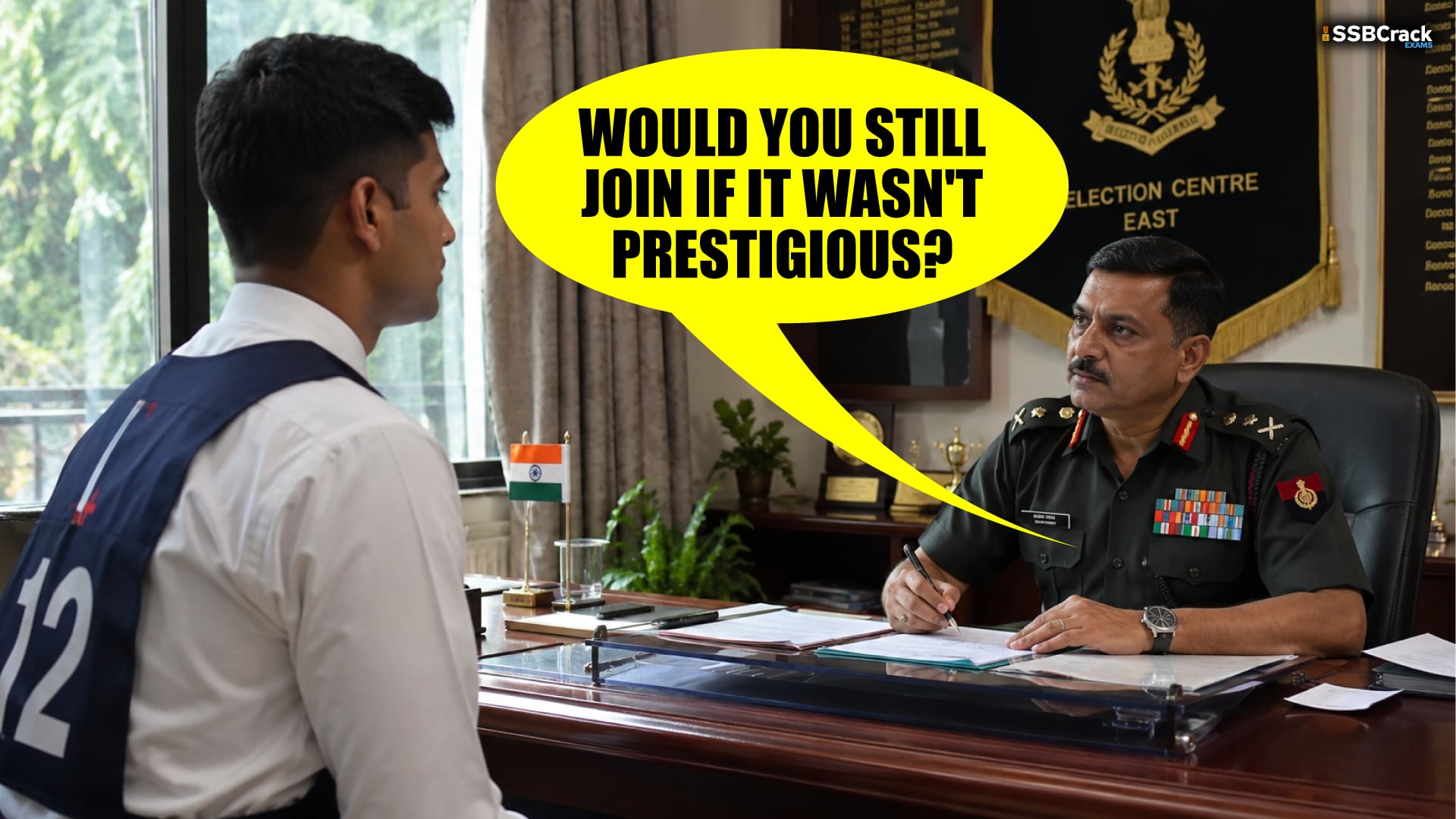
Many aspirants believe that the SSB Interview for 10+2 entry candidates is easier because of their age. In reality, the interview is designed to assess your maturity, leadership potential, sense of responsibility, and suitability for officer training. Since candidates are usually 17 to 19 years old, interviewers focus heavily on school life, family background, decision-making ability, and future aspirations.
Here are 20 important SSB Interview questions frequently asked to 10+2 entry candidates, along with why they are asked, how to answer them, and sample responses.
1. You are only 17-18 years old. Why do you think you are ready for officer training?
Why It Is Asked:
To assess maturity, self-awareness, and readiness for military life at a young age.
How to Answer:
Focus on your discipline, sense of responsibility, willingness to learn, and ability to adapt.
Sample Answer:
“Sir, I understand that I am still young and have a lot to learn. However, I believe my discipline, adaptability, and eagerness to take responsibility make me ready for officer training. NDA will provide me with the right environment to develop into a capable military leader.”
2. Most students are preparing for engineering or medical careers. Why are you choosing the Armed Forces?
Why It Is Asked:
To evaluate your motivation and clarity of career goals.
How to Answer:
Explain what attracts you to military life without criticizing other professions.
Sample Answer:
“Sir, engineering and medicine are highly respected professions, but I am more inspired by leadership, teamwork, adventure, and service to the nation. The Armed Forces offer a unique opportunity to lead people while contributing directly to national security.”
3. If your parents oppose your decision to join the Armed Forces, what will you do?
Why It Is Asked:
To assess emotional maturity and family values.
How to Answer:
Demonstrate respect, patience, and communication skills.
Sample Answer:
“I would respectfully discuss my aspirations with my parents, explain my reasons for choosing the Armed Forces, and try to address their concerns. Their support is important to me, and I would make every effort to earn their confidence.”
4. What is the biggest lesson your school life has taught you?
Why It Is Asked:
To understand your learning experiences and personal growth.
How to Answer:
Choose a meaningful lesson that reflects maturity.
Sample Answer:
“My school life taught me the importance of consistency. Regular effort and discipline often produce better results than short bursts of hard work.”
5. Tell me about a teacher who influenced your life.
Why It Is Asked:
To understand the qualities you admire and learn from.
How to Answer:
Mention specific traits and their impact on you.
Sample Answer:
“My mathematics teacher greatly influenced me through his dedication and discipline. He taught me that preparation and hard work are more important than relying solely on talent.”
6. Suppose you fail in the NDA written examination after clearing the SSB. What will you do?
Why It Is Asked:
To assess resilience and determination.
How to Answer:
Show a positive attitude toward setbacks.
Sample Answer:
“I would analyze my mistakes, improve my preparation, continue my education, and attempt the examination again with greater determination.”
7. If your best friend gets selected and you do not, how will you react?
Why It Is Asked:
To assess sportsmanship and emotional balance.
How to Answer:
Be positive and mature.
Sample Answer:
“I would sincerely congratulate my friend and learn from his strengths while working on my own shortcomings for future attempts.”
8. What is one habit you developed in school that will help you in the Armed Forces?
Why It Is Asked:
To connect past experiences with future responsibilities.
How to Answer:
Select a habit relevant to military life.
Sample Answer:
“I developed the habit of punctuality. Being on time for classes, sports practice, and examinations has made me disciplined and dependable.”
9. If your school principal asks you to improve one thing about the school, what would it be?
Why It Is Asked:
To assess observation skills and initiative.
How to Answer:
Give a practical and constructive suggestion.
Sample Answer:
“I would encourage more leadership and outdoor activities because they help students develop teamwork, confidence, and decision-making skills.”
10. Which is more important for success: Intelligence or Hard Work?
Why It Is Asked:
To understand your thought process and values.
How to Answer:
Maintain a balanced perspective.
Sample Answer:
“Both are important, but hard work often makes the difference because intelligence can achieve its full potential only when supported by consistent effort.”
11. If your school organized a trip and one student was accidentally left behind, what would you do as the team leader?
Why It Is Asked:
To assess responsibility and crisis management.
How to Answer:
Focus on immediate action and accountability.
Sample Answer:
“I would immediately inform the teachers, establish contact with the student, ensure his safety, and coordinate efforts to bring him back to the group safely.”
12. What is the most difficult decision you have taken so far in life?
Why It Is Asked:
To evaluate decision-making ability.
How to Answer:
Use a genuine example.
Sample Answer:
“I had to balance my preparation for competitive examinations with extracurricular activities. I decided to prioritize academics while continuing only the activities that mattered most to me.”
13. If you had the power to add one subject to the school curriculum, what would it be?
Why It Is Asked:
To assess creativity and awareness.
How to Answer:
Choose something practical and beneficial.
Sample Answer:
“I would introduce financial literacy because students should learn budgeting, saving, investing, and responsible financial management from an early age.”
14. If your younger sibling starts copying bad habits from friends, how would you handle it?
Why It Is Asked:
To assess interpersonal skills and influence.
How to Answer:
Focus on guidance rather than authority.
Sample Answer:
“I would speak to my sibling, understand the reasons behind the behavior, explain the consequences, and encourage more positive alternatives.”
15. If your smartphone was taken away for six months, how would your life change?
Why It Is Asked:
To assess adaptability and dependency on technology.
How to Answer:
Be realistic and positive.
Sample Answer:
“Initially, it would be challenging, but I would spend more time reading, exercising, interacting with people directly, and pursuing productive activities.”
16. If you could spend one day with any military leader from history, whom would you choose and why?
Why It Is Asked:
To assess awareness and inspiration.
How to Answer:
Choose a leader whose qualities you admire.
Sample Answer:
“I would choose Field Marshal Sam Manekshaw because of his exceptional leadership, courage, strategic thinking, and ability to inspire confidence in others.”
17. Imagine your school appoints you Principal for one day. What are your first three decisions?
Why It Is Asked:
To assess leadership and planning ability.
How to Answer:
Suggest realistic improvements.
Sample Answer:
“I would strengthen student feedback mechanisms, encourage greater participation in sports, and organize leadership development workshops.”
18. What is one thing your friends admire about you and one thing they criticize?
Why It Is Asked:
To assess self-awareness.
How to Answer:
Present a balanced view of yourself.
Sample Answer:
“My friends appreciate my reliability and willingness to help others. They sometimes feel that I spend too much time trying to perfect every task.”
19. If you had ₹1 crore to improve your hometown, what would you do?
Why It Is Asked:
To assess social awareness and priorities.
How to Answer:
Focus on long-term community development.
Sample Answer:
“I would invest in education facilities, sports infrastructure, and cleanliness initiatives because these areas contribute significantly to the growth of society.”
20. At your age, what do you think is the biggest challenge faced by today’s youth?
Why It Is Asked:
To evaluate awareness and maturity.
How to Answer:
Discuss a genuine challenge and its impact.
Sample Answer:
“I believe excessive dependence on social media is one of the biggest challenges today because it can affect concentration, productivity, and real-world interactions.”
Bonus Out-of-the-Box Questions Frequently Asked to 10+2 Candidates
If your marks disappear tomorrow, how would you prove your worth?
Focus on your skills, character, achievements, and attitude rather than academic scores alone.
What would your school watchman say about you?
This question reveals how you treat people regardless of their position.
If your life were a movie, what would its title be?
It assesses self-perception, creativity, and personality.
Which is harder: Scoring 95% marks or earning respect?
This explores your values and understanding of success.
If your classroom were a military unit, what role would you play?
This helps the interviewer understand your leadership style and self-assessment.
Special Tips for 10+2 Candidates
- Do not exaggerate achievements or experiences.
- Draw examples from school, sports, family, and daily life.
- Focus on your potential and willingness to learn.
- Demonstrate curiosity, positivity, and adaptability.
- Remain confident without sounding overconfident.
- Show maturity appropriate to your age.
- Be genuine, honest, and natural throughout the interview.
Closing Statement
The SSB Interview is not looking for a perfect candidate; it is looking for a future officer. As a 10+2 aspirant, you are not expected to have years of experience or extraordinary achievements. What matters is your potential to lead, learn, take responsibility, and grow into an officer of the Armed Forces. Stay honest, think independently, and let your personality reflect the officer-like qualities that the assessors are seeking. Prepare sincerely, remain confident, and give your best. Jai Hind!


