




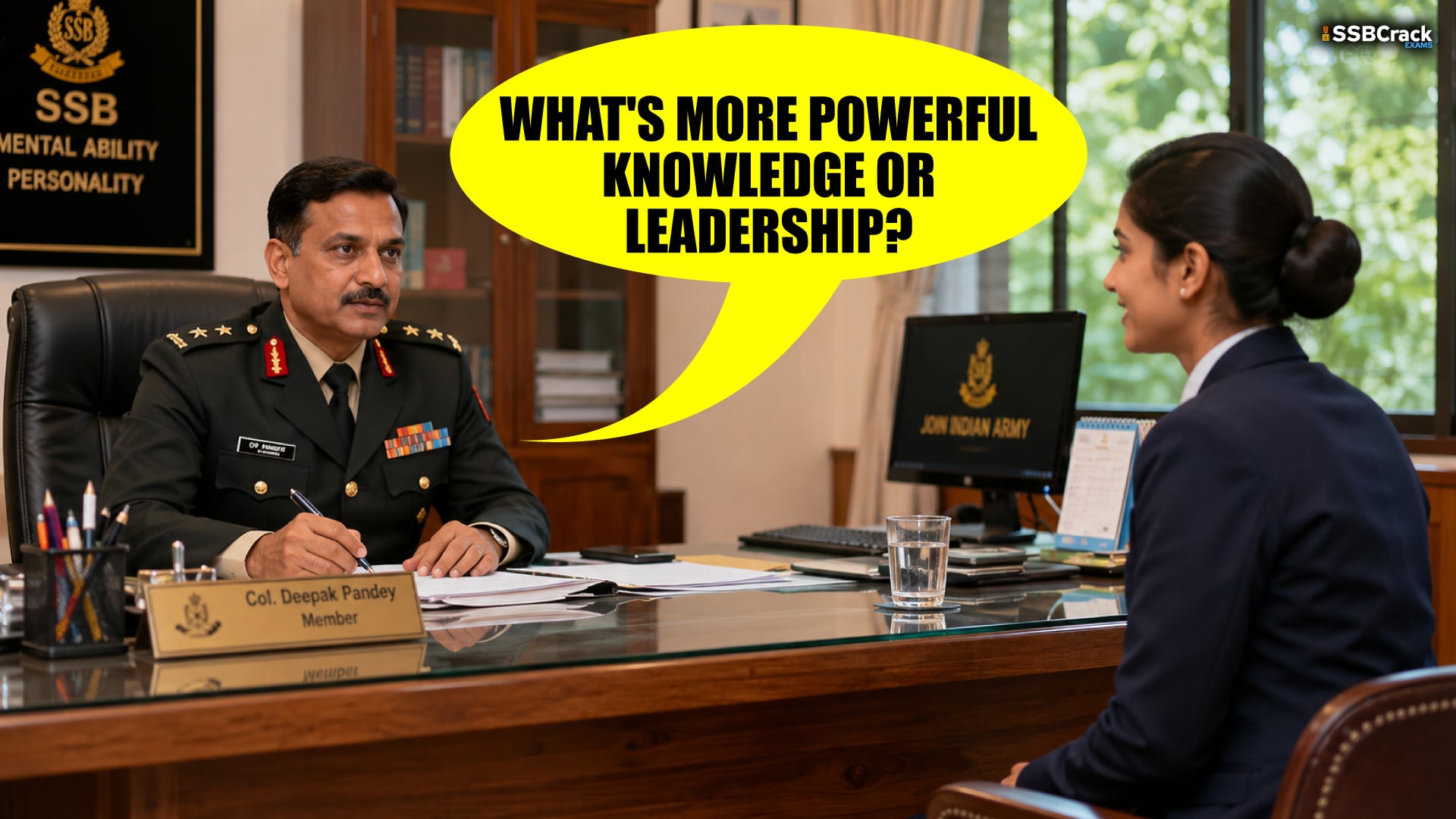
Many B.A. graduates preparing for the SSB Interview often wonder whether candidates from technical or professional backgrounds have an advantage. The reality is that the Services Selection Board does not assess candidates based on their academic stream alone. Instead, it evaluates personality, leadership potential, communication skills, social awareness, decision-making ability, and Officer Like Qualities (OLQs). A B.A. degree often provides a strong foundation in understanding society, human behavior, history, governance, culture, and communication, all of which can become valuable assets during the SSB Interview.
The following questions are designed to help B.A. graduates understand the intent behind common interview questions and prepare confident, thoughtful responses.
1. Why did you choose B.A. as your graduation course?
Why It Is Asked
To understand your academic interests, decision-making ability, and whether you made a conscious choice regarding your education.
How to Answer
Explain your genuine interest in the subjects you studied and how they aligned with your strengths and aspirations.
Sample Answer
“Sir, I chose B.A. because I have always been interested in understanding society, history, and human behavior. The course allowed me to develop analytical thinking, communication skills, and a broader perspective on various social and national issues.”
2. Many people consider B.A. less career-oriented than professional courses. What is your view?
Why It Is Asked
To assess your confidence, maturity, and ability to defend your choices logically.
How to Answer
Respect all academic streams while highlighting the strengths of humanities education.
Sample Answer
“Sir, every academic discipline contributes differently to society. While professional courses focus on technical expertise, B.A. develops communication skills, critical thinking, social awareness, and analytical abilities that are valuable in leadership and public service roles.”
3. How has your graduation helped you prepare for becoming an officer?
Why It Is Asked
To evaluate how you connect your education with your career aspirations.
How to Answer
Link your academic experiences to officer-like qualities.
Sample Answer
“My graduation has enhanced my communication skills, understanding of society, awareness of current affairs, and ability to analyze situations from multiple perspectives. These qualities are important for effective leadership in the Armed Forces.”
4. Which subject in your B.A. course influenced your thinking the most?
Why It Is Asked
To understand your intellectual interests and learning experiences.
How to Answer
Choose a subject that genuinely impacted your thinking and explain why.
Sample Answer
“Political Science influenced me the most because it helped me understand governance, leadership, decision-making processes, and the functioning of institutions that shape society.”
5. If you could remove one misconception people have about humanities students, what would it be?
Why It Is Asked
To assess confidence and self-awareness.
How to Answer
Address stereotypes positively and constructively.
Sample Answer
“I would remove the misconception that humanities students only deal with opinions. Our subjects require extensive research, analysis, interpretation, and evidence-based reasoning.”
6. Why do you want to join the Armed Forces instead of pursuing higher studies or teaching?
Why It Is Asked
To assess your motivation and commitment toward the Armed Forces.
How to Answer
Focus on service, leadership, responsibility, and personal aspirations.
Sample Answer
“Sir, I am drawn toward the Armed Forces because of the opportunity to lead, take responsibility, serve the nation, and continuously challenge myself in a dynamic environment.”
7. If you could spend one day with any historical leader, whom would you choose and why?
Why It Is Asked
To understand your values, interests, and role models.
How to Answer
Choose a leader whose qualities you admire and explain your reasoning.
Sample Answer
“I would choose Netaji Subhas Chandra Bose because of his courage, vision, determination, and ability to inspire people toward a common national objective.”
8. Which is more important for a leader: Knowledge of people or Knowledge of technology?
Why It Is Asked
To assess judgment and leadership understanding.
How to Answer
Maintain a balanced perspective.
Sample Answer
“Both are important, but knowledge of people is fundamental because leadership ultimately revolves around motivating, understanding, and guiding individuals toward a shared goal.”
9. What is one social issue in India that concerns you the most?
Why It Is Asked
To assess social awareness and civic responsibility.
How to Answer
Choose an issue you understand and explain its significance.
Sample Answer
“I am concerned about educational inequality because access to quality education directly impacts opportunities, social mobility, and national development.”
10. How would your favorite author describe you as a character?
Why It Is Asked
To assess creativity and self-perception.
How to Answer
Describe yourself honestly through an imaginative lens.
Sample Answer
“My favorite author would probably describe me as a curious, determined, and reflective individual who constantly seeks to learn and improve.”
11. If you were given the responsibility to improve one aspect of Indian society, what would it be?
Why It Is Asked
To assess vision and problem-solving orientation.
How to Answer
Focus on a realistic area where change can create positive impact.
Sample Answer
“I would focus on improving civic awareness and public responsibility because active citizen participation is essential for sustainable social progress.”
12. What is one lesson from history that modern leaders often ignore?
Why It Is Asked
To assess historical understanding and analytical thinking.
How to Answer
Provide a thoughtful and relevant observation.
Sample Answer
“History shows that leaders who fail to listen to people’s concerns and adapt to changing circumstances often face significant challenges.”
13. If two of your close friends have completely opposite opinions on an issue, how would you handle the situation?
Why It Is Asked
To assess conflict-resolution and interpersonal skills.
How to Answer
Highlight listening, empathy, and balanced judgment.
Sample Answer
“I would encourage respectful discussion, listen to both viewpoints, and help them identify common ground rather than focusing only on disagreements.”
14. What is more difficult: Changing a law or Changing a mindset?
Why It Is Asked
To assess depth of thinking and reasoning ability.
How to Answer
Support your view logically.
Sample Answer
“Changing a mindset is often more difficult because laws can be implemented relatively quickly, whereas changing attitudes and beliefs requires sustained effort over time.”
15. Which personality trait do you think is most important in an officer?
Why It Is Asked
To assess your understanding of leadership.
How to Answer
Choose a trait and justify it clearly.
Sample Answer
“I believe integrity is the most important trait because trust forms the foundation of leadership, teamwork, and effective decision-making.”
16. Suppose you are asked to address a group of students on patriotism. What would be your key message?
Why It Is Asked
To assess communication skills and value systems.
How to Answer
Keep your response practical and meaningful.
Sample Answer
“I would emphasize that patriotism is reflected not only through emotions but also through responsible citizenship, discipline, honesty, and contribution to society.”
17. If your entire academic record disappeared tomorrow, what would still make you valuable?
Why It Is Asked
To assess confidence beyond academic achievements.
How to Answer
Focus on personal strengths and qualities.
Sample Answer
“My communication skills, adaptability, teamwork, leadership experiences, and willingness to learn would continue to make me valuable.”
18. If you were the District Magistrate of your hometown for one week, what would be your first priority?
Why It Is Asked
To assess administrative thinking and practical awareness.
How to Answer
Choose a realistic and locally relevant issue.
Sample Answer
“I would review public services, identify urgent local issues, and strengthen communication between citizens and the administration to ensure effective problem-solving.”
19. What does leadership mean to you?
Why It Is Asked
To understand your perception of leadership.
How to Answer
Focus on responsibility, influence, and teamwork.
Sample Answer
“Leadership means setting a positive example, taking responsibility, inspiring others, and guiding a team toward achieving common objectives.”
20. Why should we recommend you as an officer candidate?
Why It Is Asked
To assess confidence, self-awareness, and suitability for the Armed Forces.
How to Answer
Summarize your strengths honestly and confidently.
Sample Answer
“Sir, I believe I possess communication skills, adaptability, social awareness, responsibility, and a strong desire to serve the nation. I am committed to learning, improving, and contributing positively as a future officer.”
Bonus Out-of-the-Box Questions for B.A. Graduates
If your life were a chapter in a history book, what would its title be?
What It Reveals: Self-perception, ambition, and personal values.
If you could add one new Fundamental Duty to the Constitution, what would it be?
What It Reveals: Civic awareness, creativity, and sense of responsibility.
Which fictional character would make the best military officer and why?
What It Reveals: Observation skills and understanding of leadership qualities.
If society were a classroom, which role would you naturally play?
What It Reveals: Social adaptability and self-awareness.
Which is harder to win: A war, an election, or people’s trust?
What It Reveals: Values, judgment, and maturity.
Conclusion
Your academic background does not determine your success in the SSB Interview—your personality, character, and officer-like qualities do. As a B.A. graduate, you possess strengths such as communication skills, social awareness, critical thinking, and an understanding of people and society. Use these strengths effectively during your interview. Stay informed about current affairs, be confident in your academic choices, answer honestly, and focus on demonstrating leadership potential. Remember, the Armed Forces are not searching for a particular degree; they are searching for future leaders capable of serving the nation with integrity, responsibility, and courage. Jai Hind!


