




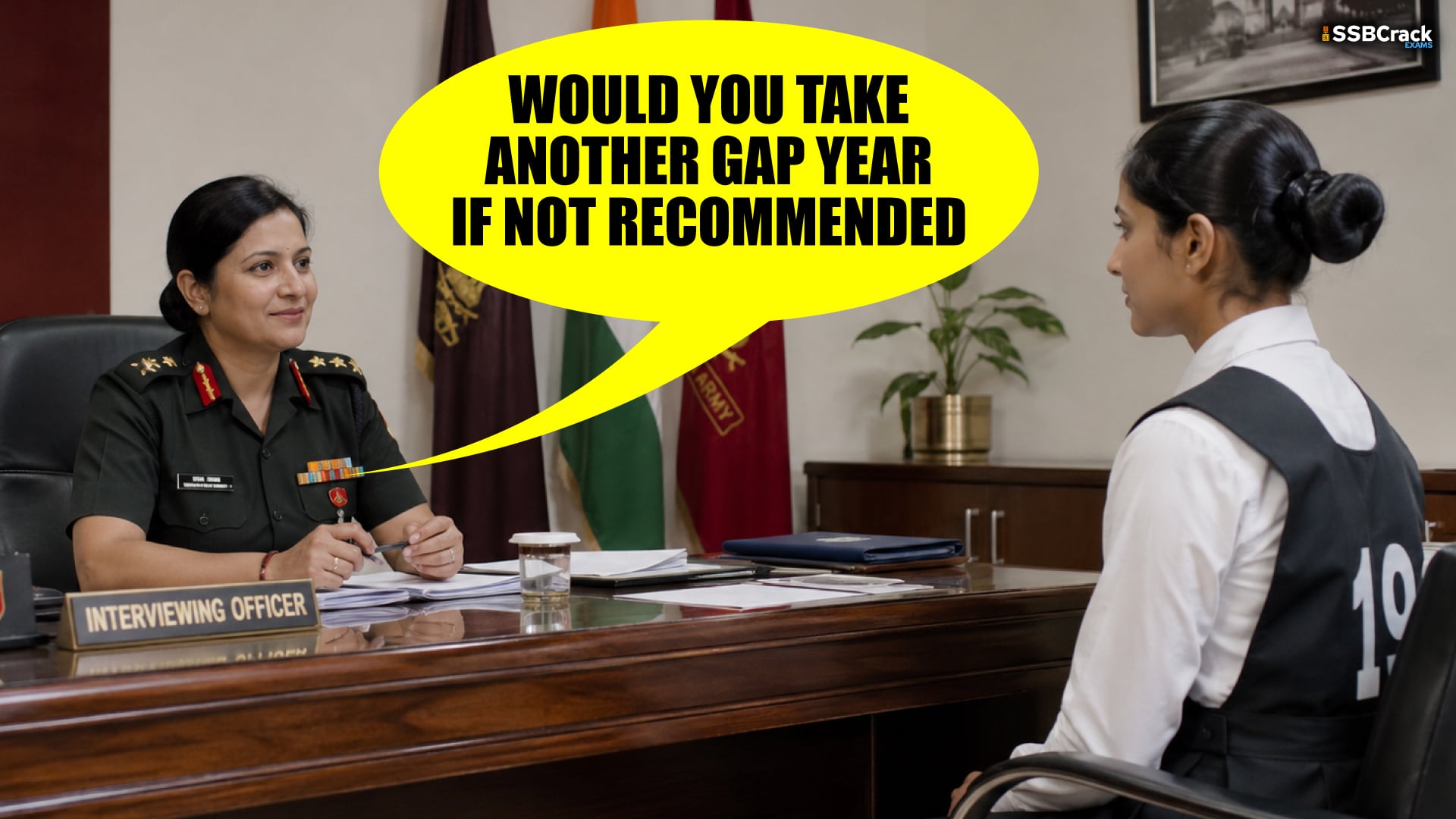
One of the most common concerns among candidates appearing for the SSB Interview is having a gap year in their academic or professional journey. Many aspirants worry that the Interviewing Officer may view this negatively. However, in reality, a gap year is not a disadvantage if you have utilized the period productively and can explain your journey with honesty and confidence.
The Interviewing Officer is not merely interested in the gap itself but in understanding how you managed your time, handled challenges, made decisions, and developed yourself during that period. Your answers reveal your maturity, responsibility, self-awareness, and Officer Like Qualities.
In this session, we will discuss 20 different, unique, and interesting SSB Interview questions specifically designed for candidates with a gap year. For each question, we will understand why it is asked, how you should answer it, and review a sample response.
Question 1: If your gap year were a book, what would its title be?
Why is it asked?
To assess self-awareness, creativity, and your perspective on the period.
How to answer:
Choose a title that reflects growth, learning, or transformation.
Sample Answer:
“I would call it ‘The Year of Preparation and Discovery’ because it helped me understand myself better, develop new skills, and prepare seriously for my future goals.”
Question 2: What is one misconception people have about your gap year?
Why is it asked?
To evaluate confidence and your ability to handle judgments.
How to answer:
Address a common assumption and explain the reality.
Sample Answer:
“Many people assume a gap year means wasting time, but for me it was a period of focused preparation, self-improvement, and goal clarification.”
Question 3: What was the most productive day of your gap year?
Why is it asked?
To understand your priorities and achievements.
How to answer:
Describe a specific day and its significance.
Sample Answer:
“The most productive day was when I completed an important certification course while also achieving my weekly fitness target. It gave me confidence that disciplined effort produces results.”
Question 4: What was the biggest risk you took during your gap year?
Why is it asked?
To assess courage, initiative, and decision-making.
How to answer:
Discuss a calculated risk and the lessons learned.
Sample Answer:
“I decided to dedicate a year entirely to preparing for my career goals instead of immediately accepting a job. It taught me commitment and responsibility for my choices.”
Question 5: What habit did you develop during your gap year that you wish you had learned earlier?
Why is it asked?
To assess personal growth and reflection.
How to answer:
Mention a meaningful habit and its impact.
Sample Answer:
“I developed the habit of maintaining a daily planner. It improved my productivity and helped me manage time more effectively.”
Question 6: If you could remove one mistake from your gap year, what would it be?
Why is it asked?
To evaluate honesty and learning from failures.
How to answer:
Accept responsibility and focus on improvement.
Sample Answer:
“I spent too much time initially exploring multiple options instead of focusing on one goal. However, that experience taught me the importance of prioritization.”
Question 7: What surprised you the most about yourself during the gap year?
Why is it asked?
To assess self-discovery and confidence.
How to answer:
Highlight a positive realization.
Sample Answer:
“I discovered that I am more disciplined than I previously believed. Once I set a clear routine, I was able to follow it consistently.”
Question 8: How did your gap year change your definition of success?
Why is it asked?
To understand your values and maturity.
How to answer:
Discuss how your outlook evolved.
Sample Answer:
“Earlier, I associated success only with results. Now I understand that consistent effort, learning, and personal growth are equally important.”
Question 9: What was the most difficult decision you made during your gap year?
Why is it asked?
To evaluate decision-making skills.
How to answer:
Explain the situation and your reasoning.
Sample Answer:
“The toughest decision was choosing to continue pursuing my defence aspirations despite setbacks. I made the decision after carefully assessing my strengths and long-term goals.”
Question 10: How did you stay accountable when nobody was monitoring you?
Why is it asked?
To assess self-discipline.
How to answer:
Explain your methods of self-management.
Sample Answer:
“I set daily targets, reviewed my progress every evening, and maintained a study and fitness tracker.”
Question 11: What did your gap year teach you about failure?
Why is it asked?
To assess resilience and emotional stability.
How to answer:
Focus on lessons rather than disappointments.
Sample Answer:
“It taught me that failure is feedback rather than a final result. Every setback helped me identify areas where I needed improvement.”
Question 12: Which person influenced you the most during your gap year?
Why is it asked?
To understand your role models and influences.
How to answer:
Mention someone who positively impacted your development.
Sample Answer:
“My father influenced me the most through his discipline and perseverance, which motivated me to remain focused on my goals.”
Question 13: What skill did you intentionally work on that is not related to academics?
Why is it asked?
To assess holistic development.
How to answer:
Mention a practical skill and its benefits.
Sample Answer:
“I worked on public speaking by participating in online discussions and presentations, which improved my confidence and communication abilities.”
Question 14: If your best friend described your gap year, what would they say?
Why is it asked?
To evaluate self-perception and social awareness.
How to answer:
Give a balanced and realistic answer.
Sample Answer:
“They would probably say that I became more disciplined, focused, and determined during that period.”
Question 15: What was the most meaningful achievement that does not appear on your resume?
Why is it asked?
To uncover personal accomplishments and values.
How to answer:
Discuss achievements beyond certificates and marks.
Sample Answer:
“I helped my younger cousin prepare for examinations, and seeing their improvement was personally very satisfying.”
Question 16: Did your gap year ever make you doubt yourself?
Why is it asked?
To assess emotional maturity and resilience.
How to answer:
Acknowledge doubts but emphasize recovery.
Sample Answer:
“Yes, there were moments of uncertainty, but I used them as opportunities to evaluate my progress and strengthen my commitment.”
Question 17: What would you tell another student planning to take a gap year?
Why is it asked?
To assess judgment and experience.
How to answer:
Provide balanced advice.
Sample Answer:
“I would advise them to have a clear purpose, structured plan, and measurable goals before taking a gap year.”
Question 18: What is one thing you did during your gap year that demonstrates leadership?
Why is it asked?
To identify leadership qualities.
How to answer:
Share a specific example.
Sample Answer:
“I organized a community cleanliness drive in my locality, coordinated volunteers, and ensured the event was completed successfully.”
Question 19: How would your gap year help you perform better as an officer?
Why is it asked?
To connect your experiences with military life.
How to answer:
Relate your learning to OLQs.
Sample Answer:
“My gap year improved my discipline, resilience, self-management, and determination, which are essential qualities for an officer.”
Question 20: Looking back, what is the single most valuable lesson from your gap year?
Why is it asked?
To assess reflection and maturity.
How to answer:
Choose a lesson that shaped your personality.
Sample Answer:
“The most valuable lesson was that progress comes from consistency. Small daily efforts over time create significant results.”
So aspirants, these were 20 unique and thought-provoking SSB Interview questions for candidates with a gap year. Remember, the Interviewing Officer is not interested in judging the gap itself. What matters is how you used that time, what you learned, and how you transformed yourself during the process.
Be honest, confident, and reflective in your answers. A gap year can actually become one of the strongest chapters of your life if it demonstrates growth, responsibility, perseverance, and self-improvement. Focus on the lessons learned, the skills acquired, and the maturity gained.
If you found these questions useful, make sure to practice answering them in your own words and relate them to your personal experiences. We wish you all the very best for your SSB Interview and future career in the Armed Forces.
Jai Hind!


