




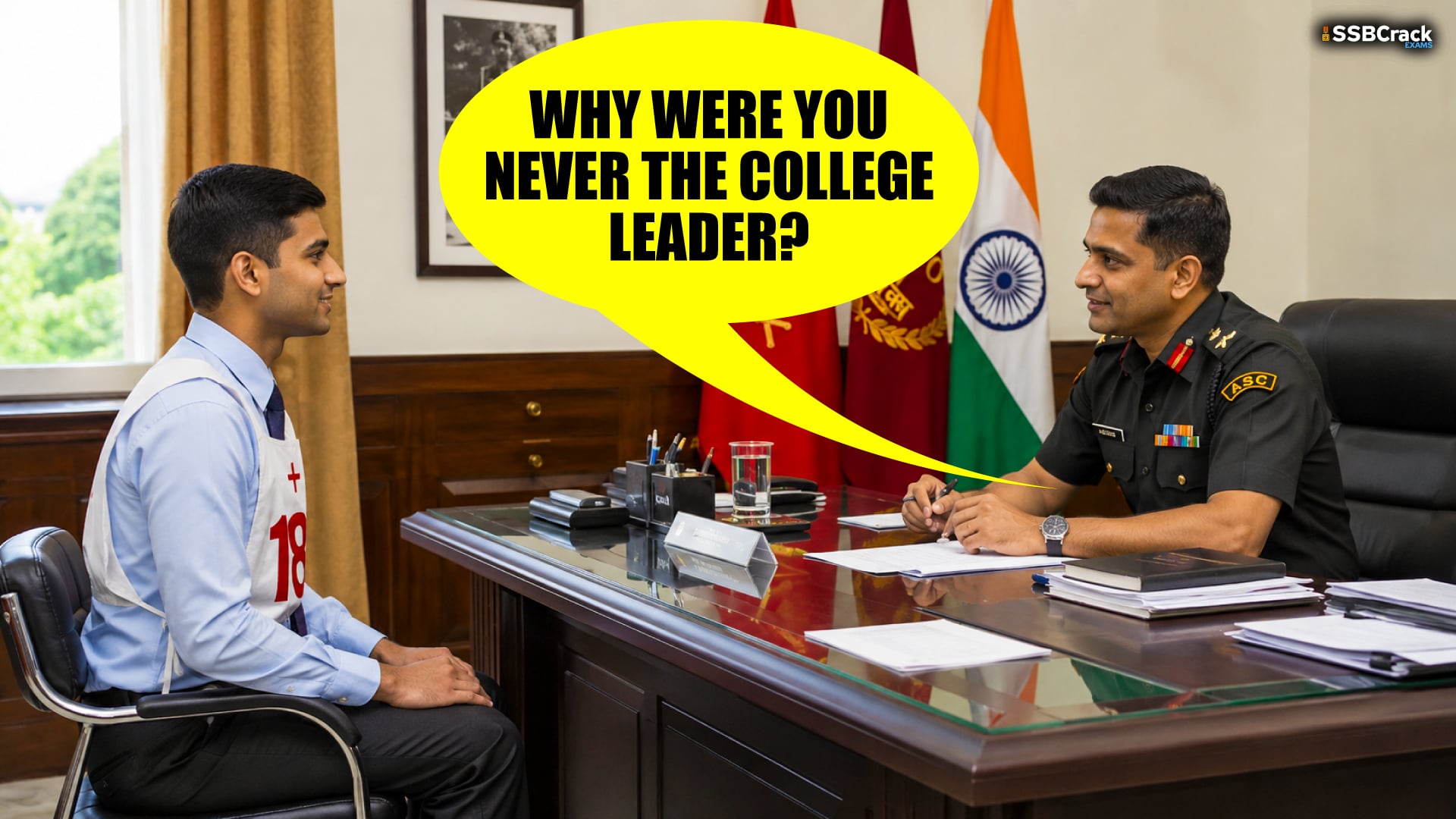
College life is one of the most transformative phases in a person’s life. It is during these years that individuals learn to make independent decisions, work with diverse groups of people, manage responsibilities, and develop their personalities. During the SSB Interview, the Interviewing Officer often explores a candidate’s experiences and learning from college life to assess Officer Like Qualities such as leadership, responsibility, initiative, social adaptability, and effective intelligence.
In this session, we will discuss 20 unique and interesting SSB Interview questions specifically for college students. Along with each question, we will understand why it is asked, how to answer it effectively, and review a sample answer.
Question 1: What is one change you would like to bring to your college and why?
Why is it asked?
To assess your observation skills, problem-solving approach, and concern for the welfare of others.
How to answer:
Identify a genuine issue and suggest a practical solution.
Sample Answer:
“I would like to improve the career guidance facilities in my college. Many students are unaware of the opportunities available after graduation. Regular career counseling sessions and interaction with professionals would help students make informed decisions.”
Question 2: Which college experience has taught you the most about leadership?
Why is it asked?
To understand your leadership experiences and learning.
How to answer:
Describe a specific event and highlight your role.
Sample Answer:
“While organizing our annual cultural festival, I had to coordinate multiple teams and manage unexpected challenges. This experience taught me the importance of communication, delegation, and staying calm under pressure.”
Question 3: If your classmates were asked to describe you in three words, what would they say?
Why is it asked?
To evaluate self-awareness and social perception.
How to answer:
Choose qualities supported by examples.
Sample Answer:
“I believe they would describe me as dependable, cooperative, and disciplined because I regularly assist classmates and actively participate in team activities.”
Question 4: What is the most valuable lesson you have learned outside the classroom?
Why is it asked?
To understand your practical learning and maturity.
How to answer:
Share a meaningful life lesson from college experiences.
Sample Answer:
“I learned the importance of teamwork through sports and group projects. Success often depends on collective effort rather than individual achievement.”
Question 5: Have you ever taken a stand for something unpopular?
Why is it asked?
To assess courage, integrity, and conviction.
How to answer:
Describe the situation and your reasoning.
Sample Answer:
“During a project discussion, I disagreed with the majority because their approach was impractical. I presented my reasoning respectfully, and eventually the team adopted a modified version of my suggestion.”
Question 6: What do you think is the biggest challenge faced by college students today?
Why is it asked?
To assess awareness and analytical thinking.
How to answer:
Discuss a challenge objectively and suggest solutions.
Sample Answer:
“I believe excessive dependence on social media affects productivity and mental focus. Better time management and digital discipline can help students overcome this challenge.”
Question 7: If you became the principal of your college for a day, what would you do first?
Why is it asked?
To evaluate initiative and decision-making.
How to answer:
Focus on student welfare and institutional improvement.
Sample Answer:
“I would organize an open interaction session with students to understand their concerns and gather suggestions for improvement.”
Question 8: What is one mistake you made during college that you would not repeat?
Why is it asked?
To assess self-reflection and learning ability.
How to answer:
Be honest and focus on lessons learned.
Sample Answer:
“I once delayed working on a project because I underestimated the workload. Since then, I have improved my planning and time management.”
Question 9: Which extracurricular activity has contributed most to your personality development?
Why is it asked?
To understand your interests and growth.
How to answer:
Explain how the activity developed specific qualities.
Sample Answer:
“Participation in debates improved my confidence, communication skills, and ability to think critically under pressure.”
Question 10: What motivates you to perform well despite difficulties?
Why is it asked?
To assess determination and resilience.
How to answer:
Discuss your personal sources of motivation.
Sample Answer:
“My long-term goal of serving as an officer motivates me to remain focused and work consistently even during challenging situations.”
Question 11: What would you do if your team members were not cooperating during a project?
Why is it asked?
To evaluate teamwork and conflict management.
How to answer:
Emphasize communication and understanding.
Sample Answer:
“I would discuss the issue openly, understand their concerns, and redistribute responsibilities fairly to ensure everyone remains engaged.”
Question 12: What quality do you admire most in your friends?
Why is it asked?
To understand your values and interpersonal relationships.
How to answer:
Mention a quality that reflects your own values.
Sample Answer:
“I admire honesty because it builds trust and strengthens relationships.”
Question 13: How do you react when your efforts are not appreciated?
Why is it asked?
To assess emotional maturity.
How to answer:
Show professionalism and self-motivation.
Sample Answer:
“I focus on learning and improving rather than seeking recognition. Constructive feedback is more valuable to me than praise.”
Question 14: If given the opportunity, what social issue would you like to address?
Why is it asked?
To evaluate social awareness and responsibility.
How to answer:
Discuss a meaningful issue and practical solutions.
Sample Answer:
“I would like to work towards improving education access in rural areas because education empowers individuals and strengthens communities.”
Question 15: What is more important—talent or hard work?
Why is it asked?
To understand your mindset and values.
How to answer:
Provide a balanced perspective.
Sample Answer:
“Talent provides an advantage, but hard work determines long-term success because it allows continuous improvement and growth.”
Question 16: What has college taught you about dealing with failure?
Why is it asked?
To assess resilience and adaptability.
How to answer:
Share a genuine experience and lesson learned.
Sample Answer:
“College taught me that failure is a learning opportunity. Every setback helps identify weaknesses and improve future performance.”
Question 17: How do you prioritize multiple responsibilities?
Why is it asked?
To assess organizational ability.
How to answer:
Explain your planning methods.
Sample Answer:
“I list tasks according to urgency and importance, set deadlines, and monitor my progress regularly.”
Question 18: What role do you usually play in a group?
Why is it asked?
To understand your natural behavior in teams.
How to answer:
Describe your role honestly.
Sample Answer:
“I often take the role of coordinator because I enjoy organizing tasks and ensuring effective communication among team members.”
Question 19: If you could start a new student club in your college, what would it be?
Why is it asked?
To assess creativity and initiative.
How to answer:
Choose a club that addresses a genuine need.
Sample Answer:
“I would start a leadership and personality development club where students can practice communication, teamwork, and problem-solving skills.”
Question 20: What achievement during college makes you most proud?
Why is it asked?
To understand your accomplishments and priorities.
How to answer:
Choose an achievement that reflects effort and growth.
Sample Answer:
“I am most proud of successfully leading a team during a college event because it improved my confidence and leadership abilities while contributing to the success of the event.”
These questions demonstrate that the SSB Interview is not merely about academics but about understanding your personality, experiences, and potential as a future officer. The Interviewing Officer is interested in your thought process, decision-making ability, leadership qualities, social awareness, and willingness to learn from experiences.
Always answer honestly, support your responses with real-life examples, and remain confident throughout the interview. Authenticity is one of the most important qualities that assessors look for during the SSB selection process.
We hope these unique questions help you prepare effectively for your SSB Interview. Continue developing your Officer Like Qualities, stay physically fit, remain aware of current affairs, and make the most of your college experiences. Every challenge, responsibility, and achievement in college contributes to your growth as a future leader.
We wish you all the very best for your SSB journey. Jai Hind!


