




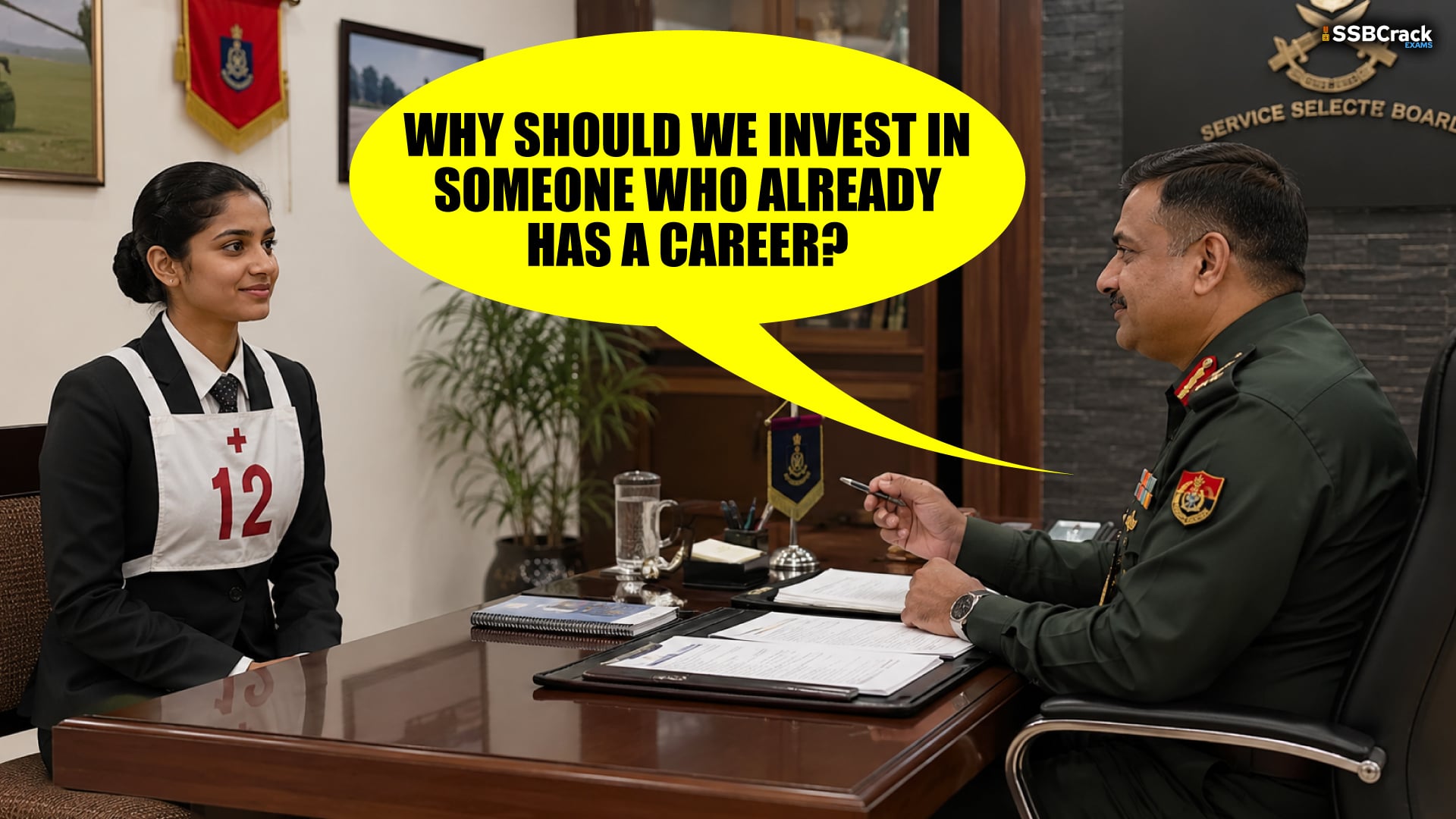
If you are a working professional planning to appear for the SSB Interview, this article is specially for you. Many candidates come to the SSB after spending a few years in corporate jobs, government services, startups, family businesses, or other professional fields. The Interviewing Officer is often interested in understanding how your work experience has shaped your personality, decision-making ability, leadership skills, responsibility, and motivation to join the Armed Forces.
Unlike fresh graduates, working professionals are expected to demonstrate greater maturity, practical problem-solving skills, and a clear understanding of their career choices. Therefore, the questions asked to them are often situational, analytical, and experience-based. In this article, we will discuss 20 different, interesting, and unique SSB Interview questions for working professionals, along with why they are asked, how to answer them, and sample responses.
Question 1: If your manager and your conscience disagree, whom would you follow?
Why is it asked?
To assess integrity, moral courage, and ethical decision-making.
How to answer?
Show respect for authority while emphasizing ethical conduct.
Sample Answer:
“I believe in respecting organizational hierarchy, but if a task conflicts with ethics or rules, I would respectfully communicate my concerns, suggest alternatives, and act according to ethical principles.”
Question 2: What is one workplace mistake that taught you the biggest lesson?
Why is it asked?
To evaluate self-awareness, honesty, and learning attitude.
How to answer?
Discuss a genuine mistake and focus on what you learned.
Sample Answer:
“Early in my career, I underestimated the time required for a project and missed an internal deadline. Since then, I have learned to plan more realistically and build contingency time into every project.”
Question 3: If your team succeeds but you receive all the credit, what would you do?
Why is it asked?
To assess humility and team spirit.
How to answer?
Acknowledge the contribution of others.
Sample Answer:
“I would share the credit with my team because success is rarely the effort of one individual. Recognizing others motivates the team and builds trust.”
Question 4: Have you ever disagreed with a company policy? What did you do?
Why is it asked?
To assess maturity and organizational understanding.
How to answer?
Avoid criticism and explain constructive actions.
Sample Answer:
“Yes, I once felt a process was creating delays. I discussed my concerns with my seniors and suggested improvements through the proper channels rather than simply complaining.”
Question 5: Which is more important: achieving targets or maintaining team morale?
Why is it asked?
To understand leadership priorities.
How to answer?
Balance both aspects.
Sample Answer:
“Both are interconnected. High morale improves performance, and achieving targets boosts morale. A good leader should strive to maintain both simultaneously.”
Question 6: If offered a promotion tomorrow, would you accept it or join the Armed Forces?
Why is it asked?
To assess commitment toward military service.
How to answer?
Clearly explain your priorities.
Sample Answer:
“While a promotion would be professionally rewarding, my long-term aspiration is to serve as an officer. Therefore, I would continue pursuing my goal of joining the Armed Forces.”
Question 7: What is one quality you developed through your job that you lacked in college?
Why is it asked?
To evaluate personal growth.
How to answer?
Highlight a practical skill gained through experience.
Sample Answer:
“I became significantly better at taking responsibility. In college, I focused mainly on personal tasks, but professional life taught me accountability for team outcomes.”
Question 8: Have you ever taken a decision without complete information?
Why is it asked?
To assess decision-making under uncertainty.
How to answer?
Describe a real situation and the outcome.
Sample Answer:
“During a project issue, immediate action was required before all data was available. I analyzed available information, consulted relevant stakeholders, and took a calculated decision that minimized risk.”
Question 9: If your subordinate is more talented than you, how would you handle it?
Why is it asked?
To assess leadership maturity.
How to answer?
Show confidence and team orientation.
Sample Answer:
“I would appreciate their strengths and create opportunities for them to contribute more. A leader’s success comes from maximizing the team’s potential.”
Question 10: What motivates you to perform well even when nobody is watching?
Why is it asked?
To assess self-discipline and internal motivation.
How to answer?
Focus on personal values.
Sample Answer:
“I believe professionalism means maintaining standards regardless of supervision. Personal pride and responsibility motivate me to give my best.”
Question 11: What would your company lose if you resigned today?
Why is it asked?
To assess self-awareness without arrogance.
How to answer?
Discuss contributions objectively.
Sample Answer:
“My organization would need time to replace my experience, project knowledge, and relationships with clients and colleagues, but every organization eventually adapts and moves forward.”
Question 12: Have you ever worked with someone you disliked personally?
Why is it asked?
To assess social adaptability.
How to answer?
Differentiate personal feelings from professional responsibilities.
Sample Answer:
“Yes. I focused on common goals and maintained professional interactions. Personal differences should not affect organizational objectives.”
Question 13: If you had the authority to change one thing in your organization, what would it be?
Why is it asked?
To understand observation skills and constructive thinking.
How to answer?
Suggest improvement, not criticism.
Sample Answer:
“I would strengthen cross-department communication because better coordination often improves efficiency and reduces misunderstandings.”
Question 14: Which failure in your career are you most grateful for?
Why is it asked?
To assess resilience and learning ability.
How to answer?
Choose a meaningful setback.
Sample Answer:
“I once failed to secure an internal leadership opportunity. The experience motivated me to improve my communication and leadership skills.”
Question 15: What would you do if your junior challenged your decision publicly?
Why is it asked?
To assess emotional control and leadership.
How to answer?
Remain calm and professional.
Sample Answer:
“I would listen to their viewpoint respectfully and discuss the matter professionally. If required, I would continue the discussion privately to maintain team discipline.”
Question 16: What is more difficult—leading seniors or leading juniors?
Why is it asked?
To assess understanding of leadership dynamics.
How to answer?
Explain the challenges of both.
Sample Answer:
“Both present unique challenges. Seniors require influence through expertise and respect, while juniors often require guidance, motivation, and supervision.”
Question 17: What professional habit would you carry into military life?
Why is it asked?
To connect work experience with military service.
How to answer?
Choose a relevant habit.
Sample Answer:
“I would carry forward the habit of planning and prioritizing tasks effectively, especially under deadlines and pressure.”
Question 18: If you could restart your career, what would you do differently?
Why is it asked?
To assess reflection and self-awareness.
How to answer?
Focus on growth rather than regret.
Sample Answer:
“I would seek leadership responsibilities earlier because leadership experiences have contributed significantly to my personal development.”
Question 19: Have you ever had to deliver bad news to someone at work?
Why is it asked?
To assess communication skills and empathy.
How to answer?
Describe a professional situation.
Sample Answer:
“I once had to inform a client about project delays. I communicated honestly, explained the reasons, and presented a recovery plan to maintain trust.”
Question 20: How has earning your own salary changed you as a person?
Why is it asked?
To understand maturity and responsibility.
How to answer?
Discuss personal growth.
Sample Answer:
“Earning my own income has made me more responsible, disciplined, financially aware, and appreciative of the efforts required to achieve professional success.”
Working professionals possess a valuable advantage in the SSB Interview because they bring real-world experiences, responsibility, and practical leadership exposure. However, the Interviewing Officer is not interested in impressive job titles or salary packages. Instead, they want to understand how your experiences have shaped your personality, values, and Officer Like Qualities.
Be honest while answering questions, support your responses with real-life examples, and focus on demonstrating responsibility, initiative, teamwork, integrity, and leadership. Remember, every workplace experience—whether a success or a failure—can become a powerful example during your interview if presented thoughtfully.
We hope these 20 unique SSB Interview questions for working professionals help you prepare more effectively for your Personal Interview round. Keep learning, stay confident, continue developing your Officer Like Qualities, and move closer to your dream of joining the Armed Forces.
Wishing you all the very best for your SSB Interview journey.
Jai Hind!


