




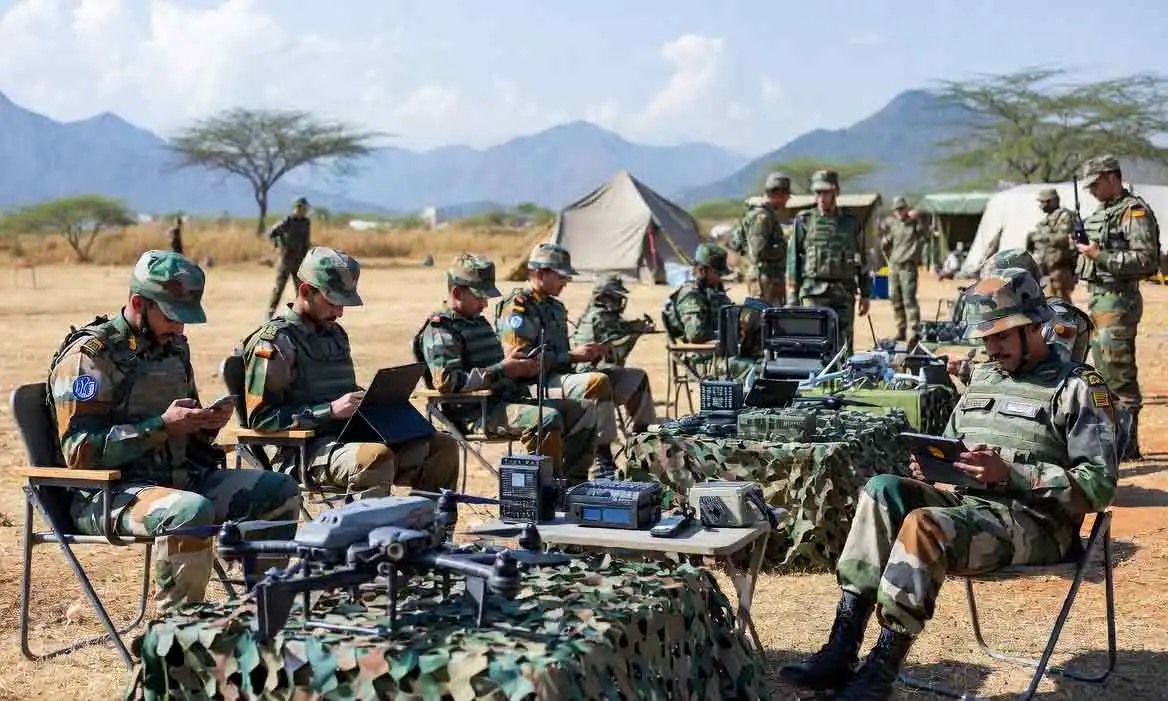
The Indian Army has rolled out a new social media usage policy that aims to provide clear guidelines for its personnel regarding platforms such as Instagram, WhatsApp, X (formerly Twitter), YouTube, and LinkedIn. According to officials, this policy has been implemented to address evolving digital security concerns.
Under the revised regulations, Army personnel are allowed to use Instagram solely for viewing purposes. The Army has designated the platform as restricted-use, with officials stating, “No comments or views will be communicated on Instagram.” This reflects a move towards minimizing potential risks associated with commenting or engaging interactively on social media.
When it comes to messaging applications, including WhatsApp, Telegram, Signal, and Skype, personnel are permitted to exchange unclassified information, but only with known contacts. They are urged to take personal responsibility for ensuring that information reaches the correct recipient, reinforcing the individual soldier’s duty in maintaining operational security.
Other platforms like YouTube, X, Quora, and Instagram are classified for passive use only. Users are restricted to gathering information or knowledge without the option to upload content, make comments, or share user-generated material. Similarly, LinkedIn is restricted to professional use, allowing personnel to upload resumes and search for potential job opportunities but forbidding any other interactions.
This directive has been issued by Army Headquarters through the Directorate General of Military Intelligence (DGMI) and is in effect immediately, replacing previous social media norms to better align with the current digital landscape.
The move comes in light of comments made by General Upendra Dwivedi, Chief of the Army Staff, during the Chanakya Defence Dialogue. He discussed the challenges young soldiers, particularly those from Generation Z, face with social media. General Dwivedi noted the increasing reliance on smartphones, acknowledging that while cadets often grapple with disconnecting at training academies, smart devices have become essential for keeping in touch with families in remote areas.
He pointed out the importance of differentiating between “reacting” and “responding” on social media, emphasizing that impulsive actions could have operational and security ramifications. By allowing passive viewing while restricting more active participation, General Dwivedi indicated that the Army aims to foster a culture of disciplined engagement. This policy not only seeks to enhance the security of military operations but also aims to instill a sense of thoughtfulness in the way Army personnel engage with the digital world.
Overall, the revised guidelines underscore the Indian Army’s commitment to maintaining operational security while acknowledging the realities of modern communication. The directive serves to promote responsible online behavior among its personnel, aiming to safeguard national security interests effectively.


