




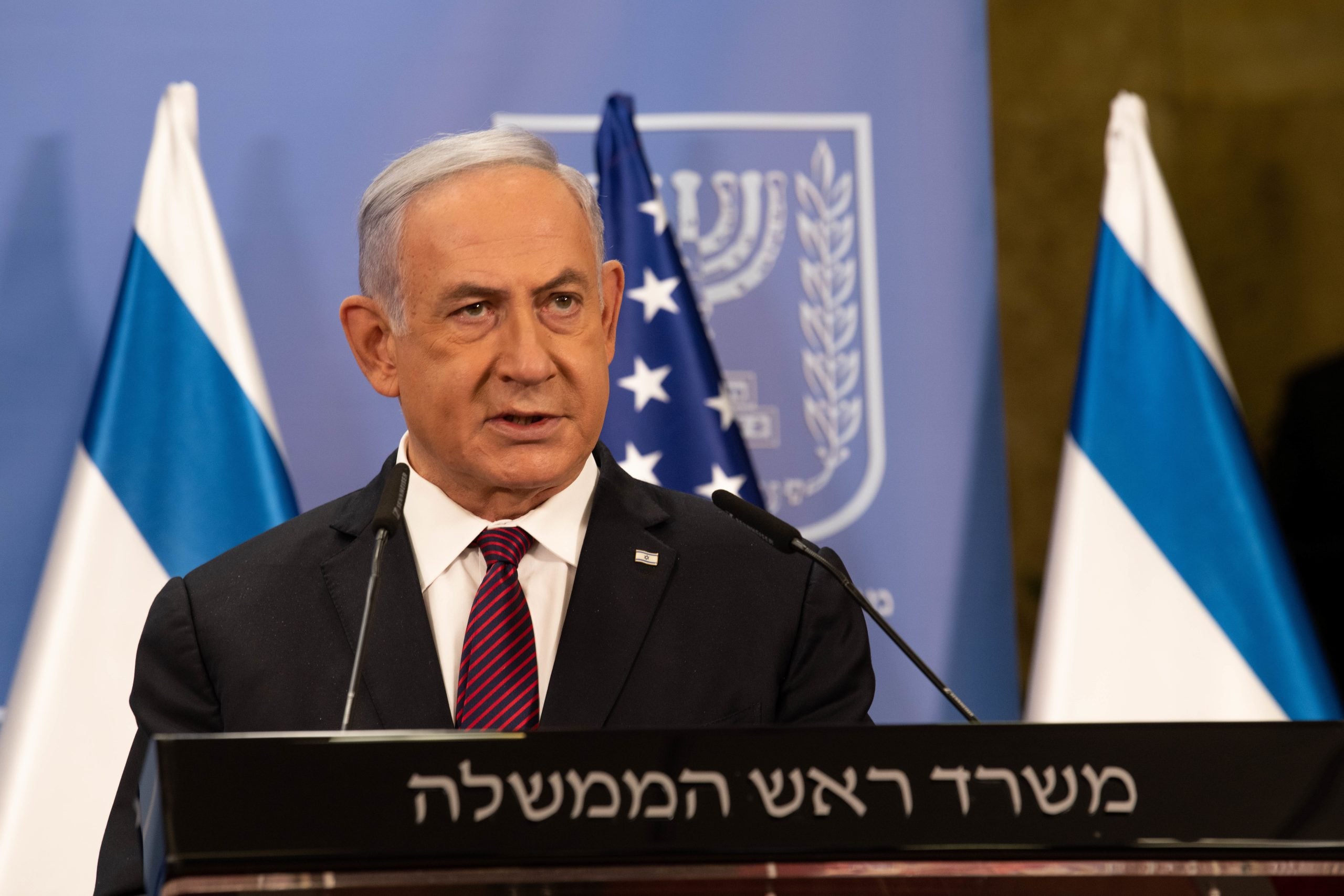
Israeli Prime Minister Benjamin Netanyahu is set to meet with former President Donald Trump at the latter’s Mar-a-Lago resort in Florida on Monday. This meeting comes at a critical juncture in the ongoing fragile Gaza truce negotiations, as concerns grow among some White House officials about the progress—or lack thereof—on both sides regarding the next phase of the ceasefire.
Trump, who indicated that Netanyahu requested the meeting, aims to advance discussions on a potential Palestinian technocratic government for Gaza and the deployment of an international stabilization force, with announcements possibly made as soon as January. The two leaders are scheduled to convene at 1 PM.
During the discussions, Israeli government spokeswoman Shosh Bedrosian stated that Netanyahu would address the second phase of the ceasefire, which primarily focuses on disarming Hamas and the demilitarization of Gaza. However, Netanyahu plans to pivot attention towards Iran, requesting further U.S. action against Tehran’s nuclear ambitions during his fifth meeting with Trump this year. Bedrosian highlighted the perceived threats that Iran poses to both the Middle East and the United States.
Netanyahu’s visit occurs after a whirlwind of diplomatic activities in Palm Beach, where Trump recently hosted Ukrainian President Volodymyr Zelensky to discuss strategies for ending Russia’s invasion. The ceasefire in Gaza, reached in October, stands as one of Trump’s significant accomplishments since returning to power, but maintaining momentum is crucial for both his administration and regional mediators.
In recent weeks, Trump’s global envoy Steve Witkoff and son-in-law Jared Kushner have held meetings in Miami with officials from Qatar, Egypt, and Turkey, seeking ways to facilitate negotiations. The significance of Netanyahu’s meeting with Trump has drawn attention, especially from experts in peacebuilding efforts. Gershon Baskin, co-head of the Alliance for Two States, emphasized the urgency of commencing the second phase, warning that Hamas has had ample time to re-establish itself in the absence of decisive action.
The first phase of the ceasefire agreement involved the release of hostages taken during the October 7 attacks, with Hamas returning nearly all but one body. Both parties have accused each other of violating the ceasefire conditions frequently. The second stage, intended to see Israel withdraw from Gaza while Hamas disarms, remains contentious, and logistics concerning an interim governing authority and the international force remain unresolved.
Reports have surfaced indicating Trump’s intention to convene an inaugural meeting for a new Gaza “Board of Peace” at the upcoming Davos forum in January. However, senior officials in the White House are reportedly growing weary of what they perceive as Netanyahu’s attempts to delay the peace process, triggering frustrations regarding the stalled progress on phase two.
Yossi Mekelberg, a Middle East expert at Chatham House, observed that increasing signs of exasperation from the U.S. administration concerning Netanyahu’s tactics could influence their approach moving forward. The current situation, labeled as “going nowhere,” raises the stakes for both leaders.
As Netanyahu shifts focus toward Iran’s nuclear program and military actions targeting Hamas and Hezbollah, the political landscape in Israel adds another layer of complexity. As the country approaches election season, observers note that Netanyahu’s maneuvers may also be aimed at solidifying his power amid rising tensions in the region.


