




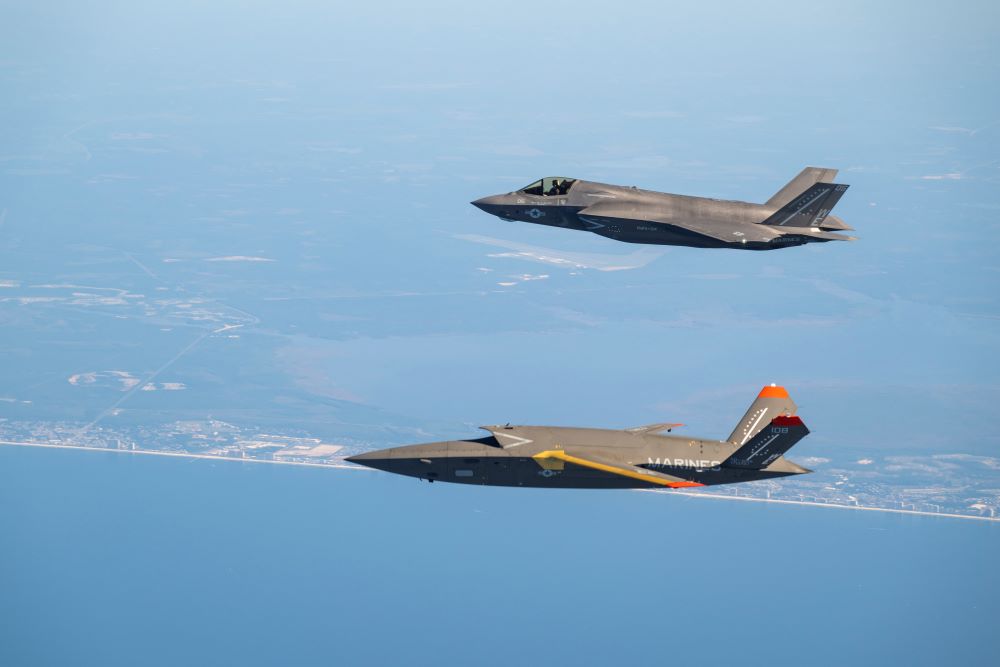
The US Marine Corps is entering the rapidly evolving field of collaborative combat technology, marking a significant step in its modernization efforts. The Marine Corps has chosen Northrop Grumman and Kratos to spearhead the development of its inaugural Collaborative Combat Aircraft (CCA). This decision is part of a broader trend among military forces around the globe to incorporate advanced drone systems that can work alongside traditional manned aircraft.
The CCA will be based on the XQ-58 Valkyrie airframe, a platform known for its stealth capabilities, which allows it to execute missions without being easily detected. Its design features conventional takeoff and landing capabilities, making it versatile for various operational environments. Crucially, the airframe incorporates modular payload bays, which can be adapted for diverse mission requirements, thus providing multi-mission flexibility.
Additionally, the aircraft will utilize Northrop’s Advanced Mission Kit. This innovative system includes advanced sensors and software-defined technology that enable the CCA to deliver both kinetic and non-kinetic effects. This feature ensures that the drone will be fully combat-ready, capable of performing a wide range of missions, from surveillance and reconnaissance to direct engagement.
The initiative signifies the Marine Corps’ commitment to integrating cutting-edge technology into its combat operations, aiming to enhance overall effectiveness and adaptability in complex battlefield scenarios. The CCA’s collaborative capabilities are expected to redefine the future of air combat, allowing for more efficient and effective missions while mitigating risks to human pilots.
As the development of the CCA progresses, it promises to showcase the cutting-edge intersection of unmanned systems and traditional military tactics, reflecting a significant leap toward a more integrated approach to modern warfare.


