




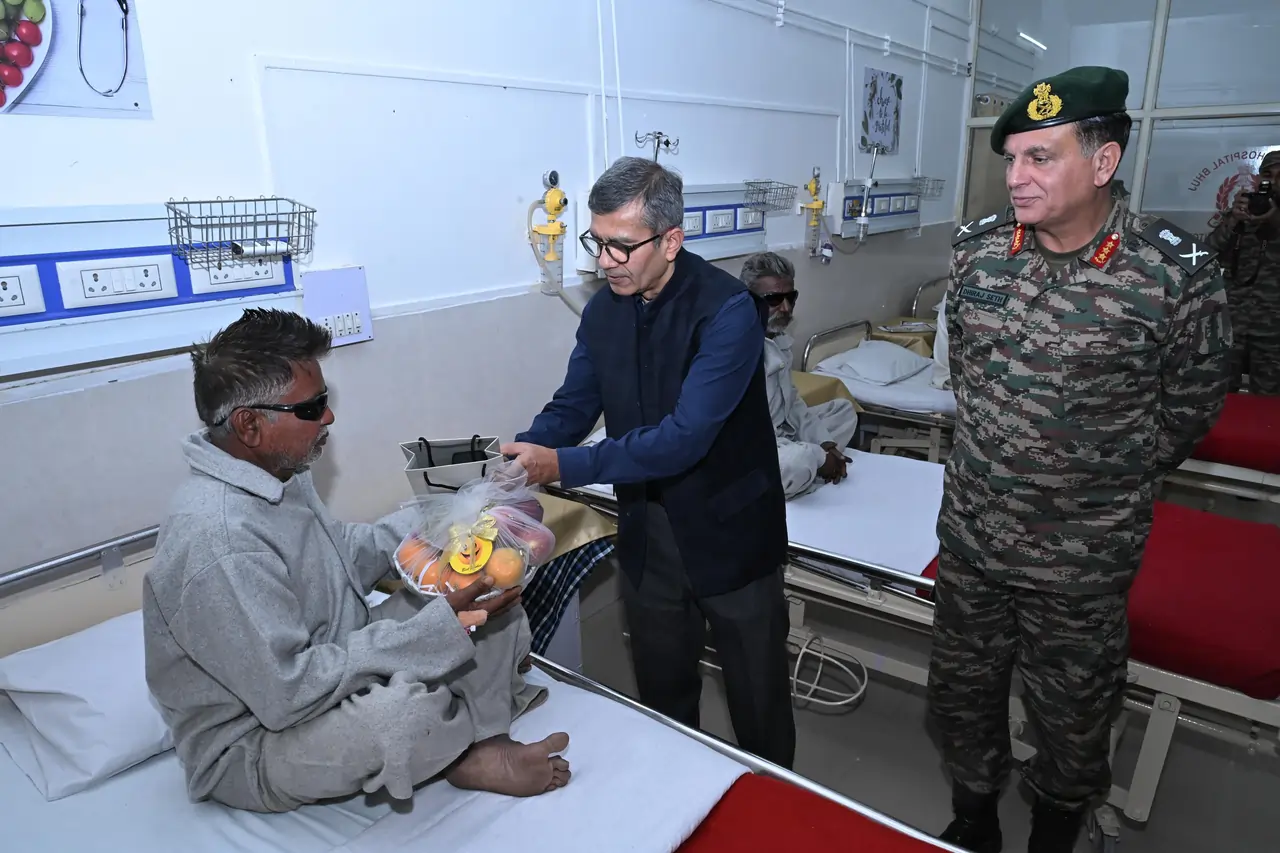
In a significant demonstration of healthcare outreach, Rajesh Kumar Singh, the Defence Secretary of the Ministry of Defence, along with Lt Gen Dhiraj Seth, General Officer Commanding-in-Chief of Southern Command, recently visited a Surgical Eye Camp held at the Military Hospital in Bhuj. This initiative, which was organized in collaboration with the Army Hospital (Research & Referral) in New Delhi, aims to provide essential eye care to a vulnerable population.
Running from February 3 to February 5, 2026, the three-day camp successfully restored vision to over 200 individuals, including veterans, their dependents, and civilians from the Kutch region. This effort is particularly noteworthy as it addresses the healthcare needs in a geographically remote and strategically critical border area, emphasizing the Indian Army’s commitment to community welfare.
During the visit, Singh took the time to engage with patients in the post-operative wards, assessing their recovery and overall well-being. He personally distributed post-operative medications and spectacles to a number of beneficiaries. Additionally, he recognized the exceptional professional service of Brigadier Sanjay Kumar Mishra, Consultant and Head of the Ophthalmology Department, and the surgical eye team from the Army Hospital (R&R). This acknowledgment highlighted their dedication to providing high-quality ophthalmic care even in challenging conditions.
Singh praised the camp as a shining example of the Indian Army’s relentless dedication to the welfare of veterans and effective cooperation between military and civilian sectors. He pointed out the significant impact of such outreach programs in enhancing the quality of life and ensuring access to specialized healthcare for those living in remote areas.
The outreach program reached nearly 3,000 individuals throughout the Kutch district, drawing beneficiaries from over 120 villages in the Bhuj Taluka. Particularly remote areas such as Lakhpat, Narayan Sarovar, and Dayapar were included in this initiative. Advanced cataract and corrective eye procedures were carried out with the help of state-of-the-art ophthalmic equipment, employing premium intraocular lenses and adhering to the highest standards of clinical safety.
By providing specialized eye care to communities in these distant and strategically important regions, the Indian Army not only addresses critical healthcare gaps but also reinforces trust with local populations. This initiative serves as a testament to the Army’s enduring commitment to community welfare and national service.


