




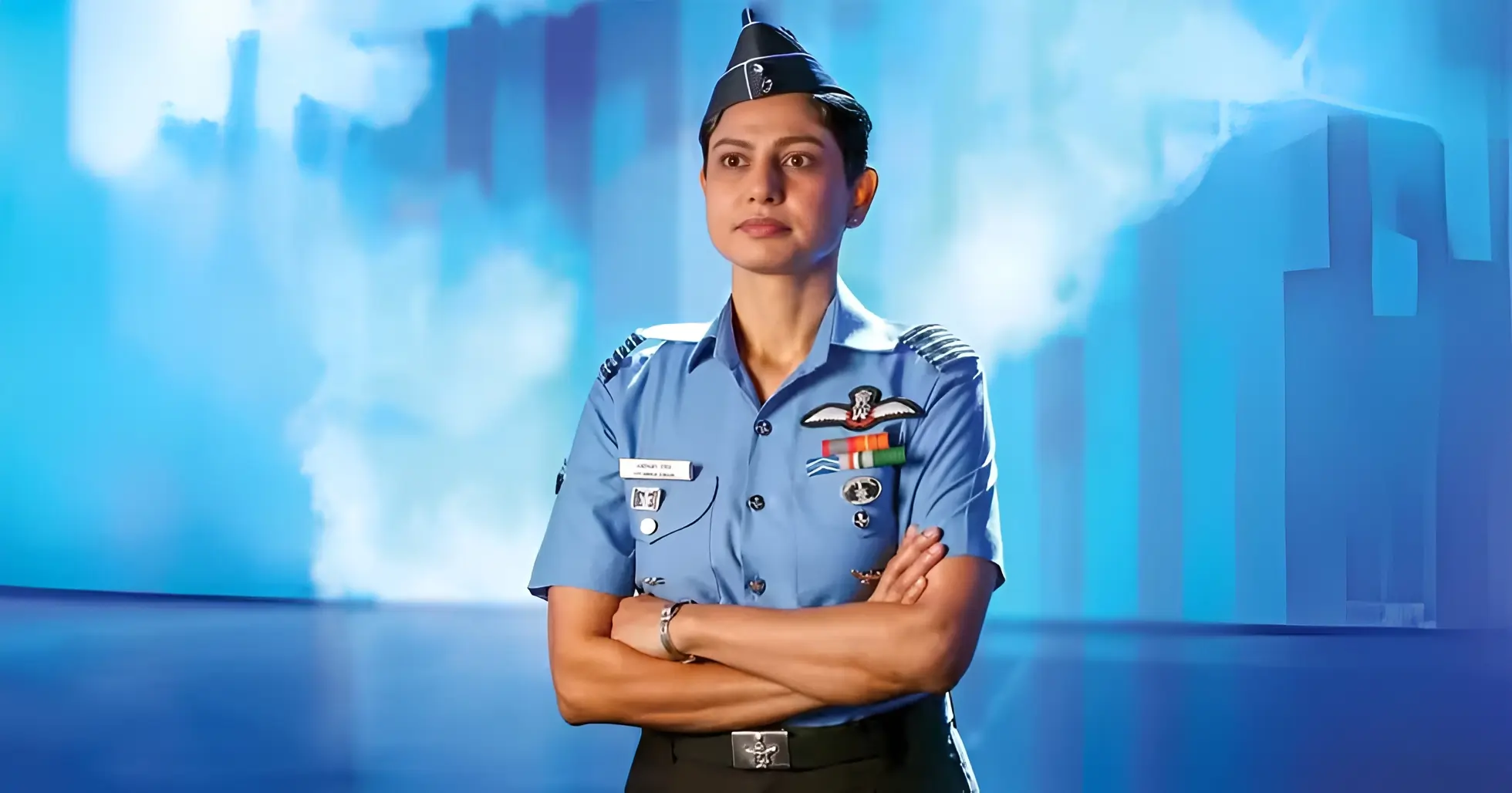
Key Points:
- Research indicates that a Wing Commander holds mid-level authority in the Indian Air Force (IAF), equivalent to a Lieutenant Colonel in the Army or Commander in the Navy, focusing on tactical command rather than strategic decisions.
- Evidence suggests their power is largely tied to specific appointments, such as commanding a squadron, with limitations on independent actions like major disciplinary measures or policy-making.
- It appears likely that Wing Commanders exercise operational leadership in flying and training, but they do not control broader aspects like national strategy or air bases.
- The rank reflects around 13 years of service, emphasizing experience in execution over high-level oversight, acknowledging the structured hierarchy where higher ranks hold greater sway.
Position in the Hierarchy
A Wing Commander ranks below Group Captain and above Squadron Leader in the IAF’s commissioned officer structure. This places them as a mid-tier field officer, responsible for unit-level leadership. Equivalents include Lieutenant Colonel in the Indian Army and Commander in the Indian Navy, ensuring interoperability across services during joint operations.
Command and Operational Roles
Wing Commanders typically command squadrons, overseeing daily operations, mission execution, and training. Their tactical authority involves leading flights and ensuring combat readiness, but strategic planning remains with senior officers.
Administrative Powers
Under the Air Force Act, 1950, they can award minor punishments to subordinates, such as reprimands or stoppages, but major disciplinary actions require higher approval through the chain of command.
Career Context
Promotion to Wing Commander generally occurs after 13 years of service, following rigorous selection and training, highlighting a focus on proven leadership.
In the Indian Air Force (IAF), the rank of Wing Commander represents a critical juncture in an officer’s career, bridging junior operational roles with senior leadership responsibilities. This analysis examines the rank’s authority, drawing from official structures, regulations, and operational norms, without venturing into unsubstantiated claims. The IAF’s hierarchy and doctrines emphasize disciplined, appointment-based power, ensuring alignment with national defence objectives.
Position of Wing Commander in the IAF Hierarchy
The IAF’s rank structure for commissioned officers follows a clear progression, derived from historical influences like the Royal Air Force but adapted to Indian needs. Commissioned officers are categorized from Flying Officer to Air Chief Marshal, with Wing Commander positioned as a mid-level rank.
| IAF Rank | Equivalent Army Rank | Equivalent Navy Rank | Typical Role Level |
|---|---|---|---|
| Air Chief Marshal | General | Admiral | Chief of Staff |
| Air Marshal | Lieutenant General | Vice Admiral | Command Head |
| Air Vice Marshal | Major General | Rear Admiral | Senior Command |
| Air Commodore | Brigadier | Commodore | Formation Command |
| Group Captain | Colonel | Captain | Station/Wing Command |
| Wing Commander | Lieutenant Colonel | Commander | Squadron/Unit Command |
| Squadron Leader | Major | Lieutenant Commander | Flight/Section Lead |
| Flight Lieutenant | Captain | Lieutenant | Junior Supervisory |
| Flying Officer | Lieutenant | Sub Lieutenant | Entry-Level |
Wing Commander sits immediately below Group Captain and above Squadron Leader. This equivalence facilitates joint operations under the Tri-Services framework, where ranks align for unified command. For instance, in exercises or deployments, a Wing Commander coordinates with Army Lieutenant Colonels on air support tasks. The rank’s NATO equivalent is OF-4, underscoring its field-grade status without general officer privileges.
Real Command Authority
A Wing Commander’s command scope is defined by their appointment, typically leading a squadron—a unit comprising 12-18 aircraft and 100-200 personnel. They oversee squadron operations, including maintenance, logistics, and personnel management, but do not command larger formations like wings (led by Group Captains) or air bases (often under Air Commodores or higher).
In staff appointments, they may serve as branch heads at headquarters or training establishments, advising on specialized areas like avionics or tactics. However, they cannot independently authorize deployments or resource allocations beyond their unit; such decisions escalate through the chain of command to Air Officers Commanding (AOCs) or higher. This structure prevents overreach, maintaining operational efficiency.
Operational Power
Operationally, Wing Commanders play a pivotal role at the tactical level. In flying branches, they lead mission planning, execution, and debriefs for sorties, ensuring adherence to IAF doctrines like the Air Power Doctrine, which emphasizes precision and readiness. They supervise training programs, mentoring junior pilots to achieve combat qualifications, and contribute to unit readiness assessments.
Distinguishing tactical from strategic: Their authority is execution-focused—e.g., directing air defence patrols or strike missions within assigned parameters—but strategic control, such as theatre-wide planning or asset integration, resides with Air Marshals or the Chief of Air Staff. In non-flying roles, like administration or logistics, they ensure operational support but lack veto power over broader mission directives.
Administrative and Disciplinary Powers
The Air Force Act, 1950, governs administrative authority, emphasizing a graduated disciplinary system. As commanding officers (COs) of squadrons, Wing Commanders can convene summary trials for airmen under Section 82, awarding minor punishments like up to 28 days’ detention, field punishment, or forfeiture of pay for offenses such as absence without leave or minor insubordination.
However, limitations are strict: Major offenses (e.g., mutiny under Section 37) require courts-martial convened by higher authorities. For junior officers or warrant officers, punishments are limited to reprimands or stoppages under Section 86, needing sanction from an officer empowered to convene a district court-martial. All actions follow the chain of command, with appeals to AOCs, preventing arbitrary use. This reflects the Act’s focus on maintaining discipline while safeguarding rights.
Comparison Between “Rank Power” vs “Appointment Power”
Intrinsic “rank power” grants baseline privileges, such as saluting protocols or pay scales (Level 12A in the 7th Pay Commission matrix, basic pay around ₹1,21,200). However, true authority stems from appointments. A Wing Commander commanding a frontline squadron wields significant operational control, whereas one in a staff role at Air Headquarters exercises advisory influence without direct command.
This distinction arises from the IAF’s merit-based system: Promotions consider annual confidential reports (ACRs), but postings by the Air Force Posting Board determine scope. Thus, power is contextual—not absolute to the rank—aligning with doctrines prioritizing mission needs over individual status.
Career Stage and Experience
Promotion to Wing Commander typically requires 13 years of commissioned service, per IAF progression norms. Entry via NDA, CDS, or AFCAT leads to commissioning as Flying Officer, with time-scale promotions: Flight Lieutenant after 2 years, Squadron Leader after 6-8 years.
Selection involves ACRs, promotion exams (e.g., ‘C’ Exam for staff college eligibility), and medical fitness. By this stage, officers possess 10-15 years of experience, including operational tours and courses at institutions like the Defence Services Staff College. This fosters leadership maturity, with emphasis on tactical expertise and team management, positioning them as mentors for junior cadres.
What Wing Commanders Do Not Control
Wing Commanders operate within defined boundaries, lacking authority over policy decisions, such as procurement or doctrinal revisions, handled by the Integrated Defence Staff or Ministry of Defence. National strategy, including force structuring or alliances, falls to the Chief of Defence Staff and political leadership.
They cannot engage in independent international interactions, like bilateral exercises without diplomatic clearance, nor command theatre-level operations (e.g., Western Air Command). Infrastructure decisions, like base expansions, require approval from higher echelons, reinforcing the hierarchical safeguard against overextension.
Common Myths and Public Misconceptions
Public perceptions often inflate the rank due to media portrayals. A common myth is that Wing Commanders command entire air bases; in reality, bases are led by Group Captains or Air Commodores, with Wing Commanders handling subunits.
Another misconception equates the rank with strategic power, akin to generals; however, they focus on tactical execution, not high-level planning. Claims of independent diplomatic authority are unfounded—IAF officers adhere to Ministry of External Affairs protocols. Additionally, the notion that all Wing Commanders fly combat missions overlooks non-flying branches, where administrative roles predominate. These myths stem from cinematic dramatizations, but factual review shows the rank’s power as measured and appointment-specific.
This examination underscores the Wing Commander’s role as a linchpin in IAF operations, balancing authority with accountability in a structured framework.


