




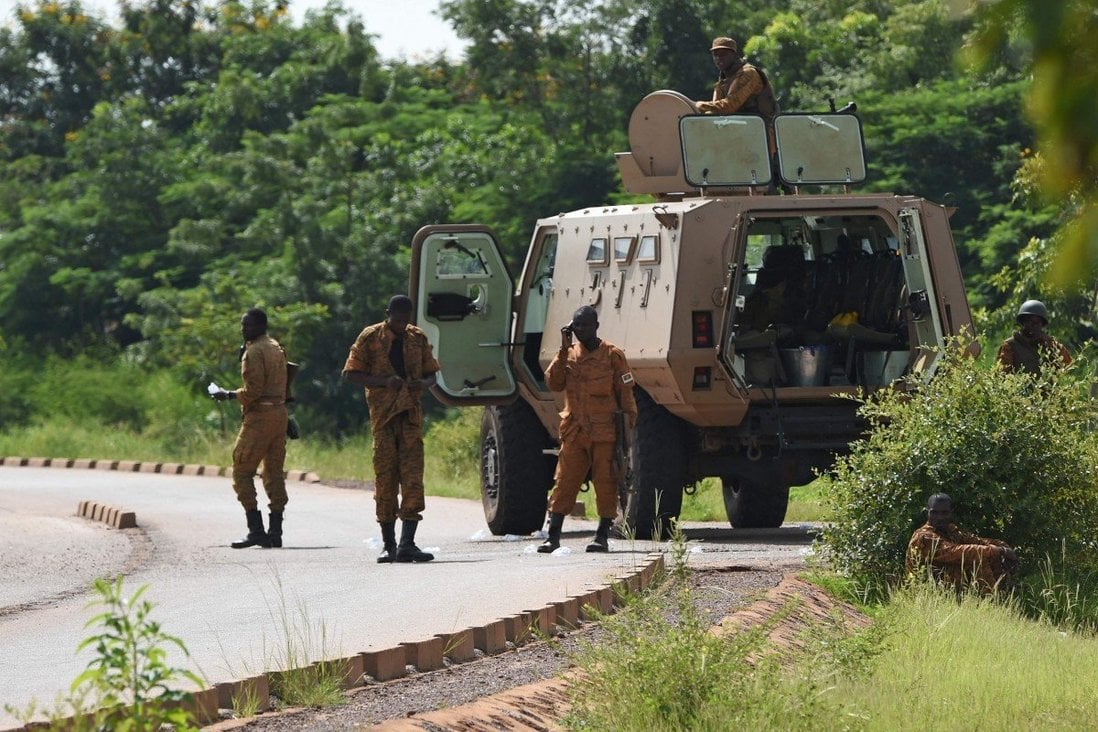
In recent weeks, the Al-Qaeda-affiliated group JNIM has ramped up its activities in Burkina Faso, claiming to have caused substantial casualties amid a resurgence of violent jihadist attacks. This escalation comes as the country grapples with the effects of ongoing unrest, having been under military rule since September 2022. Over the past decade, Burkina Faso has faced continuous assaults from various extremist groups linked to both Al-Qaeda and the Islamic State, most notably JNIM.
A report from the UN Security Council issued in February noted a temporary slowdown in JNIM’s operations, suggesting that militants had redirected their focus to support efforts in Mali. However, while there appeared to be a brief pause, the group has since launched a series of significant operations across northern and eastern regions of Burkina Faso, resulting in a high number of fatalities, including among civilians.
Since February 14, JNIM has taken responsibility for at least ten attacks across differing areas within Burkina Faso. Notably, the assault on a military base in Titao on February 15 resulted in numerous military casualties, alongside a separate ambush that claimed the lives of about 50 forestry officers in Tandjari.
The most recent onslaught demonstrated notable coordination, with numerous large-scale attacks unfolding between February 12 and 22, leading to over 130 fatalities among Burkinabe soldiers, civilians, and JNIM fighters. While JNIM has not publicly clarified the reasons behind this resurgence of violence, analysts suggest that jihadist groups often escalate their activities in the lead-up to the Muslim holy month of Ramadan. Additionally, the current dry-season conditions are believed to have facilitated their operations.
The newly intensified assaults are particularly concentrated in areas rich in financial resources for jihadist operations. The northern and eastern regions, characterized by lucrative gold mining sites and critical smuggling routes, serve as vital hubs for JNIM’s activities in the Sahel. The geography of the area also allows the group to leverage its connections to central command bases in Mali while providing opportunities for cross-border movements into neighboring countries.
In light of these developments, experts are increasingly questioning how JNIM and similar groups have been able to inflict such heavy losses despite claims from the Burkinabe army regarding improved preparations and capabilities. A political scientist from Burkina Faso highlighted that the frequency of attacks had not diminished, but rather the severity and impact of the attacks raised significant concerns.
The Burkinabe military, which is typically reticent regarding details of assaults, recently announced that it controls 74 percent of the national territory and has reportedly reclaimed around 600 villages. However, the ongoing transition period emphasizes the necessity for strategic reviews of military engagement approaches.
Moreover, the recent appointment of a senior JNIM leader tasked with expanding the group’s influence into regions such as Benin, Ivory Coast, Ghana, Niger, and Togo further underscores the security risks posed by the group and indicates a significant shift in their operational strategy within the West African context.


