




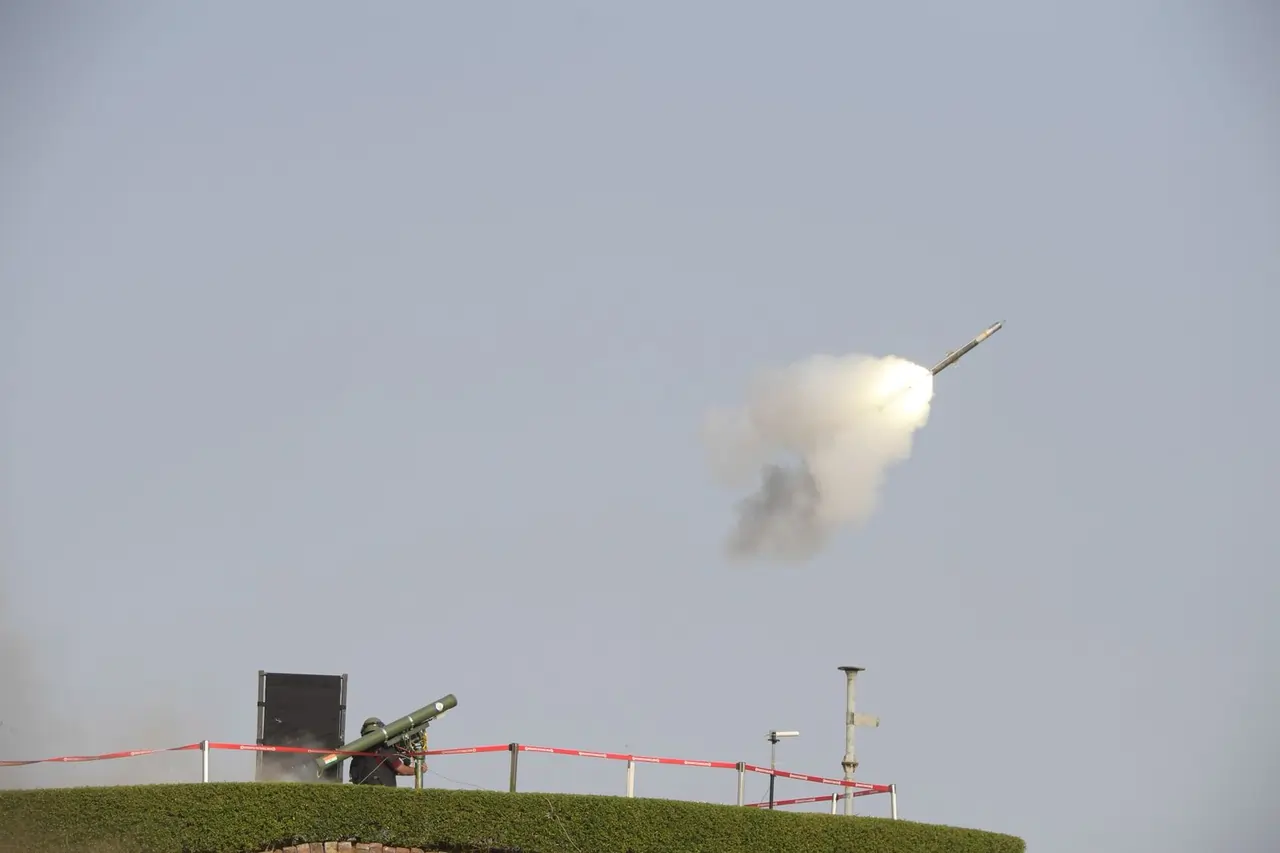
The Defence Research & Development Organisation (DRDO) has achieved a significant milestone by successfully conducting three consecutive flight trials of the Very Short-Range Air Defence System (VSHORADS) at the Integrated Test Range (ITR) in Chandipur, Odisha. These trials aimed to reaffirm the system’s performance, showcasing its ability to neutralize high-speed aerial threats across a variety of speeds, ranges, and altitudes.
Throughout the three flight tests, the VSHORADS missiles effectively intercepted and eliminated high-speed aerial targets designed to simulate enemy aircraft under a range of challenging scenarios. Each engagement satisfied stringent operational parameters, demonstrating the system’s efficacy at multiple engagement points. Importantly, the trials were executed in the system’s final deployment configuration, with field operators responsible for target acquisition and missile launch, which highlights the operational readiness of VSHORADS.
Advanced range instrumentation, including telemetry systems, electro-optical tracking systems, and radars set up by ITR Chandipur, provided comprehensive data confirming the missile’s precision and reliability against a wide spectrum of aerial threats. Observers included representatives from the Joint Forces and senior officials from DRDO, along with partners from the development and production sectors, who witnessed the user validation trials.
VSHORADS is an indigenously developed Man-Portable Air Defence System crafted by Research Centre Imarat, collaborating with various DRDO laboratories and industrial partners. It is specifically designed to meet the operational demands of all three branches of the Indian Armed Forces—the Army, Navy, and Air Force—thereby enhancing India’s short-range air defence capabilities.
The successful completion of the flight tests has garnered praise from Raksha Mantri Shri Rajnath Singh, who commended DRDO, the Armed Forces, and industry partners for their contributions. He described the accomplishment of three back-to-back successful trials as a pivotal moment and expressed optimism regarding the system’s induction into the Armed Forces.
Dr. Samir V Kamat, Secretary of the Department of Defence R&D and Chairman of DRDO, also congratulated the teams involved in the design, development, and testing of VSHORADS. He emphasized their collective efforts in bolstering India’s indigenous defence capabilities, highlighting the importance of such achievements in the context of national security.


