




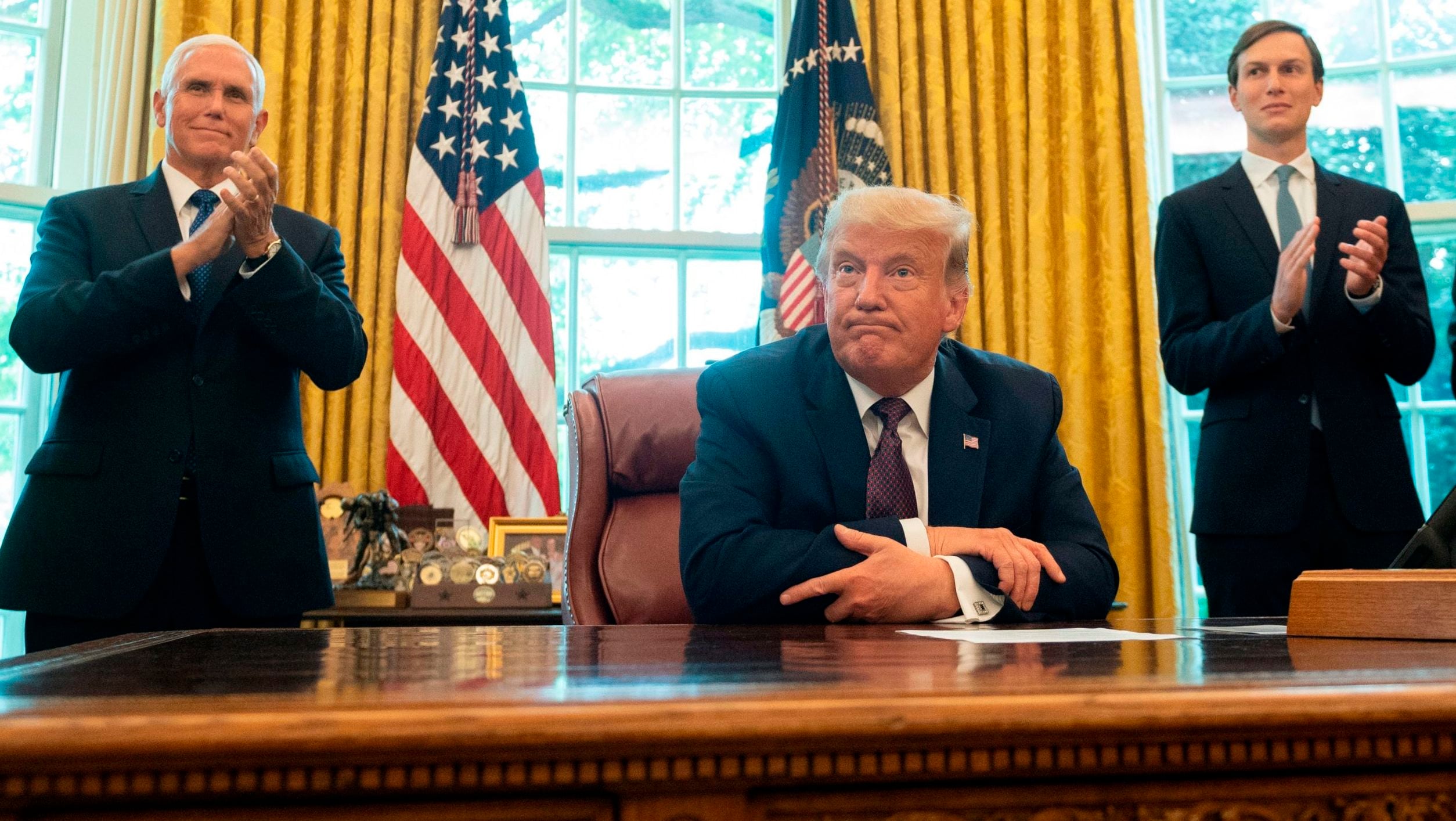
US President Donald Trump has intensified his rhetoric regarding drug trafficking in Latin America, calling on regional leaders to utilize military force against drug cartels, which he described as a “cancer” threatening the region. During a summit at his Doral golf club in Miami, Trump offered US support in the form of missile strikes aimed at eliminating prominent narcotics leaders.
As part of his new initiative, Trump unveiled a 17-nation “counter cartel” coalition, emphasizing a collective commitment to employing “hard power” to tackle organized crime. He asserted that the US is prepared to assist militarily, suggesting precision strikes on cartel leaders to eliminate their presence swiftly. “You want us to use a missile? They’re extremely accurate,” he said, demonstrating a willingness to escalate action if requested.
The gathering included several right-wing leaders from Latin America and the Caribbean, such as Argentina’s President Javier Milei, Ecuador’s Daniel Noboa, and El Salvador’s Nayib Bukele, the latter of whom has gained notoriety for a harsh crackdown on gang violence. Each leader portrayed a united front against organized crime, with Noboa stating that the era of criminal organizations freely operating across borders is “over.”
However, Cuban President Miguel Diaz-Canel criticized the summit, labeling it a “neocolonial” assembly where leaders effectively invited the US to impose military solutions to domestic issues. This backlash highlights the complex geopolitical dynamics at play, as regional leaders navigate their relationships with Washington while addressing internal security concerns spurred by escalating cartel violence.
Experts, including Irene Mia from the International Institute for Strategic Studies, noted a rise in violence attributed to drug cartels in countries previously regarded as safe, such as Ecuador and Chile. This has contributed to the increasing electoral success of right-wing parties in the region, which has made US intervention less controversial than in previous times.
During the summit, Trump reiterated his stance against the Cuban regime, claiming it to be on the brink of collapse, stating, “They have no money, they have no oil. They have a bad philosophy, they have a bad regime that’s been bad for a long time.” This warning comes on the heels of US military engagement in the Middle East, following recent strikes against Iran, indicating the administration’s aggressive foreign policy stance.
Amid discussions of military cooperation, the US and Ecuador also announced joint operations to combat drug trafficking, showcasing a tangible commitment to collaborative efforts against narcotrafficking organizations. In a recent operation, US forces released footage showing a successful strike against a location linked to narco-terrorism, signaling a proactive approach to combating drug-related crime.
Despite the gathering’s ambitious objectives, analysts pointed out the notable absence of Mexico and Brazil from the coalition, countries that play crucial roles in the narcotrafficking landscape. Experts warn that without their involvement, efforts to combat these issues may face significant challenges, as Mexican cartels are key players in the trafficking supply chain, while Brazil serves as an important gateway to European markets.


