




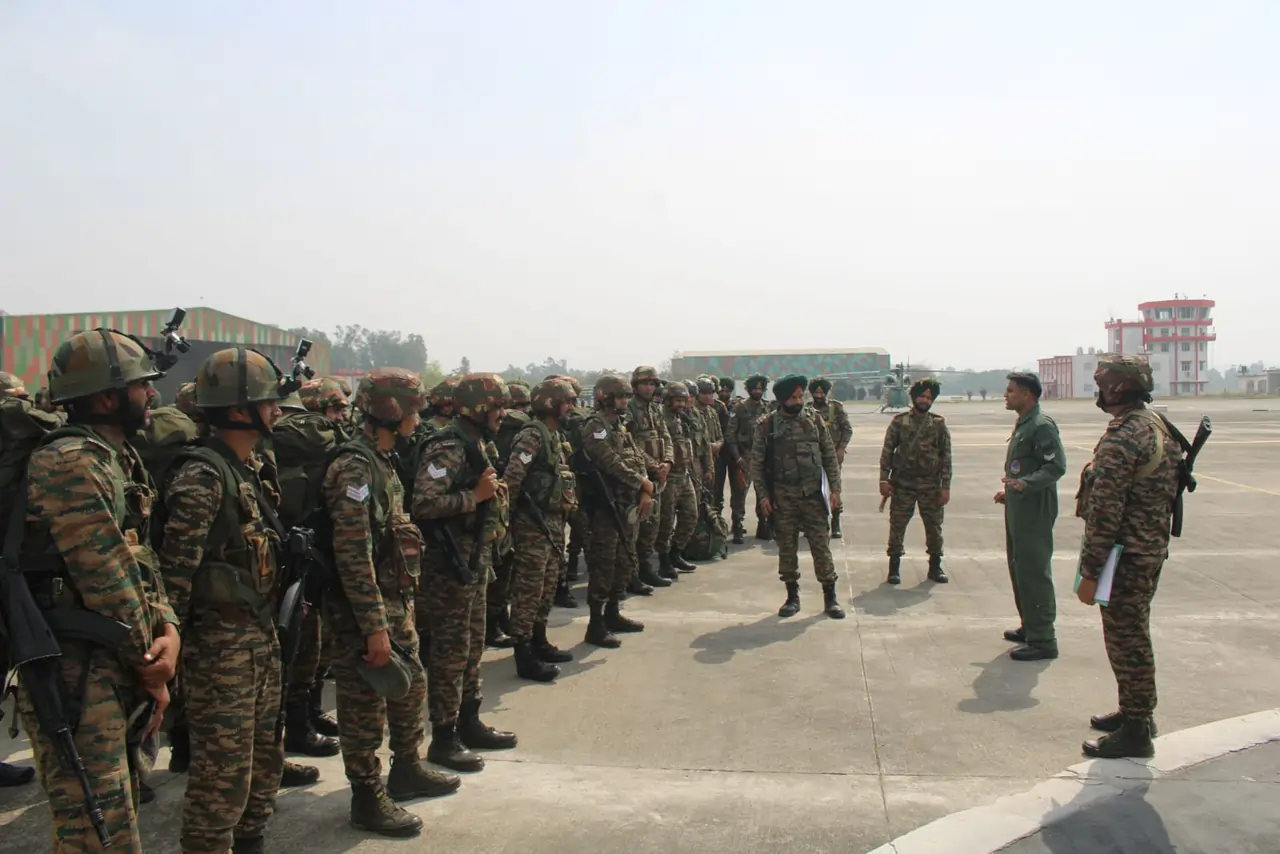
The Western Air Command of the Indian Air Force (IAF) recently completed a comprehensive military exercise, dubbed ADJO 2026, in collaboration with various commands of the Indian Army, including the Northern, Western, and South Western Commands. This large-scale initiative served to showcase the seamless integration and operational capability across a multitude of domains such as air, land, sea, space, cyber, information, and electronic warfare.
The exercise underscored a “Whole-of-Nation” approach to defense, emphasizing the importance of collaboration among the Indian Air Force, Indian Army, Indian Navy, as well as state governments and national agencies. This coordinated effort is reflective of a comprehensive strategy aimed at bolstering national defense preparedness.
Joint teams took part in complex and realistic operational scenarios, honing their skills in integrated planning, flexible decision-making, and real-time information sharing. This ensured the effective execution of missions amidst simulated combat situations.
Central to the exercise was the Integrated Air Command and Control System (IACCS), which was instrumental in coordinating operations. The system empowered personnel with real-time command, control, and situational awareness, thereby enhancing the ability to swiftly and efficiently respond to simulated threats.
A diverse fleet participated in the exercise, including fighter aircraft, helicopters, transport planes, and unmanned aerial systems (UAS) from both the Indian Air Force and the Indian Army. In addition, various Surface-to-Air Guided Weapon (SAGW) units and electronic warfare jamming systems were incorporated into both offensive and defensive operations, spotlighting the expanded role of modern air defense and electronic warfare capabilities.
The exercise also rigorously tested essential operational support functions, including logistics, maintenance, rapid runway repairs, administration, medical support, and humanitarian assistance and disaster relief (HADR). These systems have demonstrated their effectiveness in ensuring sustained operational capabilities even in adverse conditions.
Moreover, ADJO 2026 highlighted the significance of indigenous defense technologies, aligning with the Atmanirbhar Bharat initiative. This endeavor reinforces India’s determination to maintain air superiority while safeguarding national interests and effectively addressing emerging security challenges.
Overall, the exercise signifies a crucial advancement toward establishing future-ready interoperable joint warfighting capabilities for the Indian Armed Forces.


