




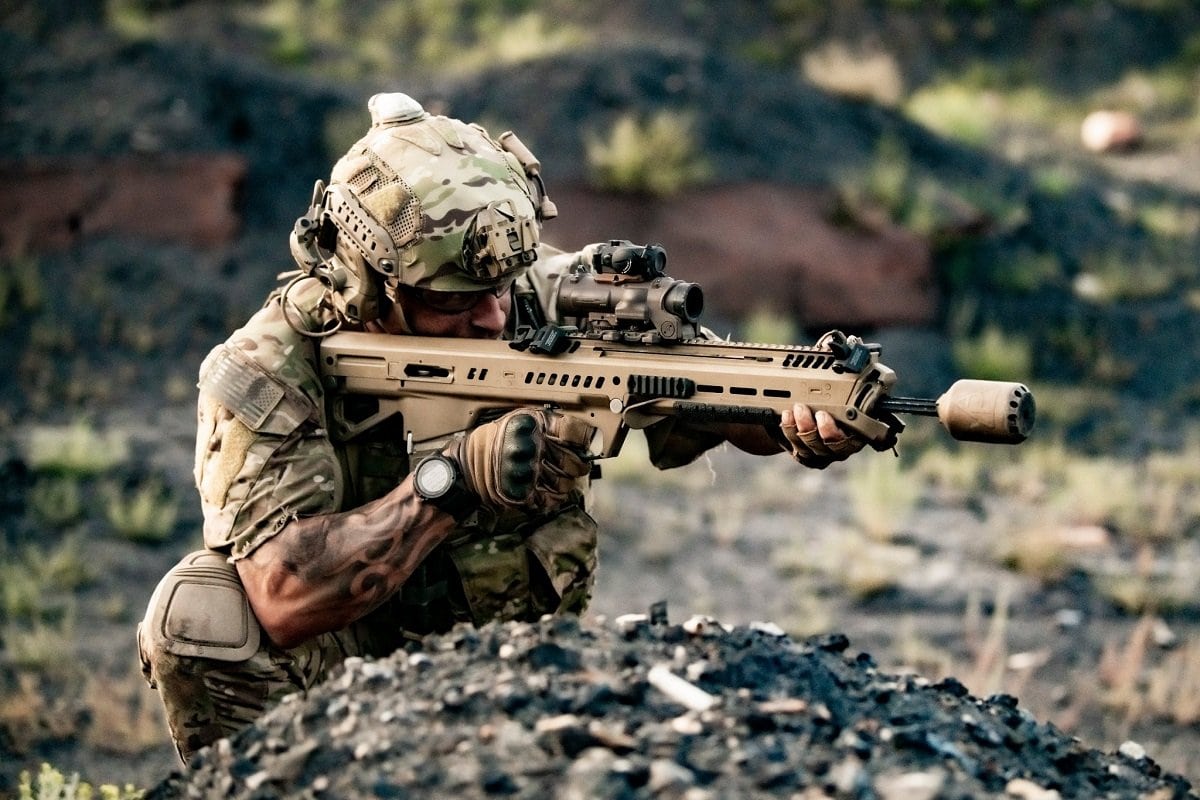
For generations, the tools utilized by infantry soldiers have remained largely unchanged, with rifles and machine guns firing traditional cartridges that have seen service from the jungles of Vietnam to the deserts of Afghanistan. However, the evolving landscape of modern warfare is pushing these weapons to their limits, prompting the US Army to launch an innovative initiative aimed at redefining squad-level firepower.
The Next Generation Squad Weapon (NGSW) program has emerged as a response to these challenges, aimed at replacing aging infantry small arms, particularly the M4/M4A1 carbine and the M249 Squad Automatic Weapon. This ambitious endeavor involves the introduction of a family of weapons that utilize a new 6.8mm cartridge, in conjunction with advanced fire-control components.
The NGSW is designed to create a fully integrated squad-level system that provides increased lethality and enhances target acquisition. This advancement ensures that soldiers are equipped to respond adeptly to threats, whether in short- or long-range engagements. With over 27 months of prototyping and evaluation backed by extensive soldier feedback, the program is not only ambitious but rooted in real-world demands.
Initiated in 2017, the NGSW program was fueled by the Army’s necessity to counter modern threats. It includes adversaries equipped with advanced body armor and demands improved range and firepower. After thorough testing and evaluations, the Army awarded a production contract in 2022 to SIG Sauer and Olin Winchester for the weaponry and ammunition, along with Vortex Optics for fire control systems. The fielding of these next-generation weapons and optics commenced in 2023, marking a significant leap forward in squad firepower.
At the heart of the NGSW program are two critical components: a standard infantry rifle and a light machine gun-style automatic weapon. While sharing common design elements such as ambidextrous controls and suppressor compatibility, each platform is optimized for distinct roles within the infantry squad.
The NGSW Rifle aims to act as the primary individual weapon for soldiers, offering a modular, piston-driven design that fires the innovative 6.8mm ammunition. This rifle is equipped with features like a non-reciprocating side charging handle and a collapsible or side-folding stock, enabling adaptability for various shooting positions. A suppressor, included in its standard configuration, enhances the shooter’s operational effectiveness by reducing noise and gas blowback.
Conversely, the NGSW Automatic Rifle is intended to fill the role of squad automatic weapon, set to replace the M249 light machine gun. Engineered for sustained suppressive fire, it employs a belt-fed system that allows for continuous target engagement. The design prioritizes reduced weight and improved controllability, incorporating a recoil mitigation system to facilitate sustained fire.
The NGSW’s effectiveness is closely tied to how well its core components work together. The advanced 6.8mm cartridge offers improved range, accuracy, and armor penetration compared to legacy ammunition. Additionally, the XM157 fire control system integrates a ballistic solver and laser rangefinder, enhancing real-time aiming capabilities and hit probability in challenging combat situations.
Nevertheless, the NGSW comes with certain trade-offs. The heightened performance of its new weapons and ammunition may lead to increased weight and logistic complexities, which could affect soldier load and supply chains. Implementing this systems-wide change across the Army will require time, which may result in mixed inventories and partial adoption during the transition period.
Currently, while the NGSW primarily focuses on the US Army, initial deliveries of XM7 rifles and XM250 automatic rifles have begun at installations like Fort Campbell, marking the initial phases of broader deployment. However, challenges remain, notably the US Marines’ decision not to adopt the NGSW in favor of their existing arms.
Looking to the future, the NGSW program is set to evolve continuously based on ongoing soldier feedback. Improvements may include enhanced suppressors and potential new carbine variants aimed at better balancing performance and weight. The overarching goal is to procure hundreds of thousands of these advanced weapons and optics over the coming decade to cultivate a more lethal and adaptable close-combat force.


