




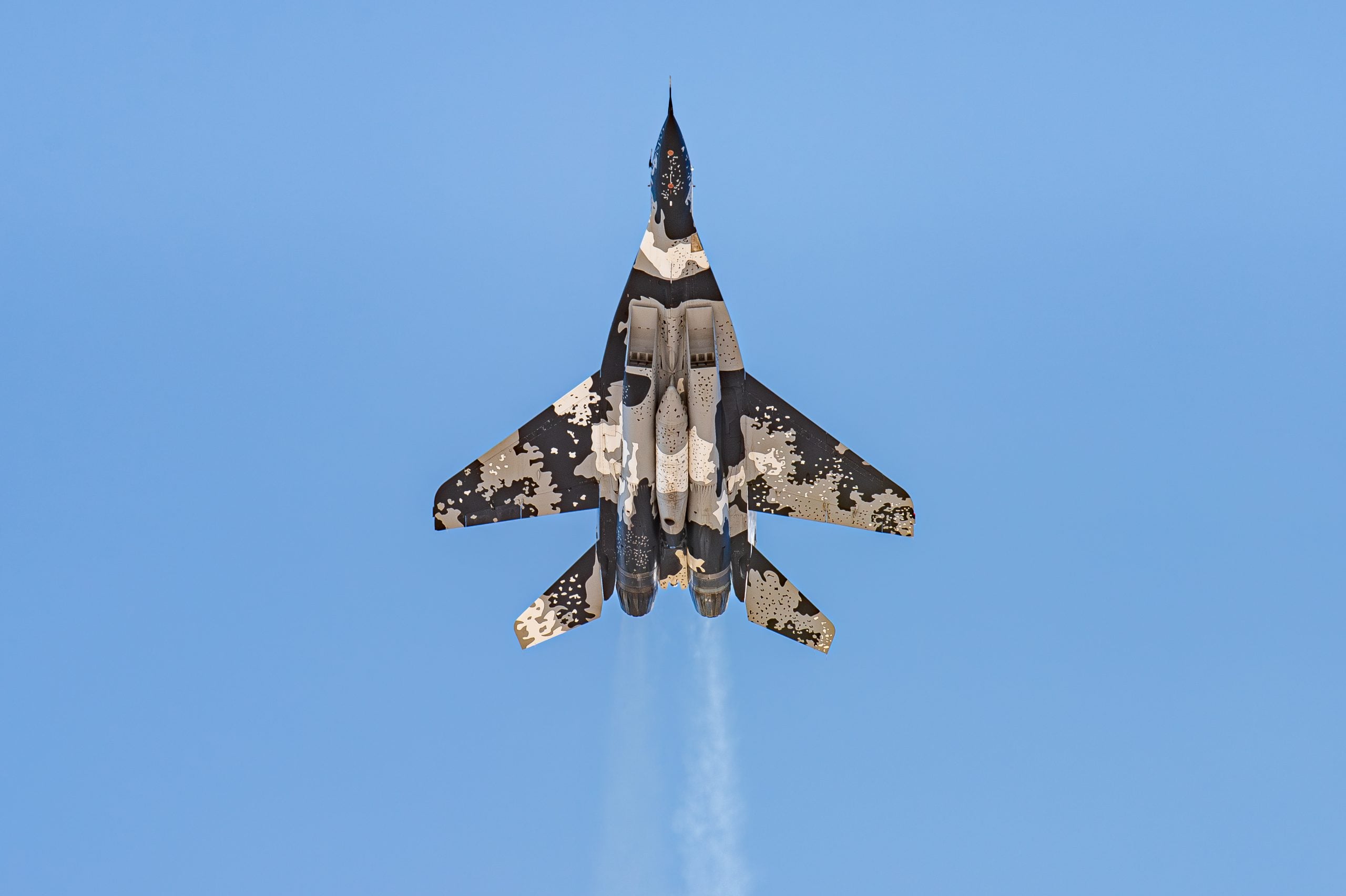
The MiG‑29 Fulcrum has a storied history that reflects the tumultuous air combat landscape from the late Cold War to the present. Born out of the need for a formidable Soviet response to Western fighter jets, this aircraft quickly established itself as a symbol of Soviet aviation prowess. Its inception in the 1970s aimed to create a powerful, agile air-superiority fighter capable of challenging adversaries like the F-15 and F-16.
The MiG‑29 is a twin-engine, fourth-generation fighter jet designed primarily for air superiority. First taking flight in 1977, it became operational by 1983 and was soon adopted by several Warsaw Pact nations and allies. Throughout its service, the Fulcrum has taken on various roles in numerous conflicts, from the Gulf War to the Balkan conflicts, demonstrating its versatility in air defense and interception missions.
The versatility of the MiG‑29 is highlighted by its various iterations. It began as the MiG‑29A, a single-seat fighter tailored for air combat. The MiG‑29UB, a two-seat trainer, retained combat capabilities, while the MiG‑29K/KUB versions were designed for carrier operations, featuring enhancements such as reinforced landing gear and folding wings. The most advanced variant, the MiG‑35, is a multirole fighter equipped with modern avionics and enhanced combat capabilities.
Upgrades over the years have transformed the MiG‑29 from its original design into a platform capable of undertaking a range of missions. Variants like the MiG‑29S/SMT/UPG incorporated advanced radar, improved systems, and enhanced weaponry, while others like the MiG‑29M/M2 received extensive modernization, bridging the gap between earlier models and the MiG‑35.
At its core, the MiG‑29 integrates advanced aerodynamic design, a robust powerplant, and sophisticated avionics. Its unique wing design promotes maneuverability, particularly during dogfights, while twin Klimov RD‑33 turbofan engines allow the aircraft to achieve speeds over Mach 2.2. The radar and sensor systems, although increasingly outpaced by Western technology, still provide essential target detection and engagement capabilities.
The strengths of the MiG‑29 are evident in its performance characteristics. Its agility makes it competitive in close engagements, and its rugged construction allows for operations from makeshift airfields. However, it faces limitations, particularly in fuel range and avionics. While the aircraft has undergone various upgrades, its older systems occasionally lag behind more modern fighters.
Globally, the MiG‑29 remains a staple in the arsenals of numerous countries, including Russia, India, and Poland, serving multiple roles from air defense to interception. Its continued relevance is bolstered by modernized variants like the MiG‑35, which feature advanced capabilities such as AESA radar.
Looking ahead, the MiG‑29 faces challenges as modern air combat increasingly favors stealth and networked warfare systems. Nevertheless, the aircraft’s mix of performance, payload flexibility, and rugged design ensures its ongoing service in air forces around the world, proving its adaptability even amid the rapidly evolving landscape of military aviation technology. Through a combination of upgrades and the introduction of new variants, the MiG‑29 continues to influence air power globally while navigating the complexities of contemporary aerial warfare.


