




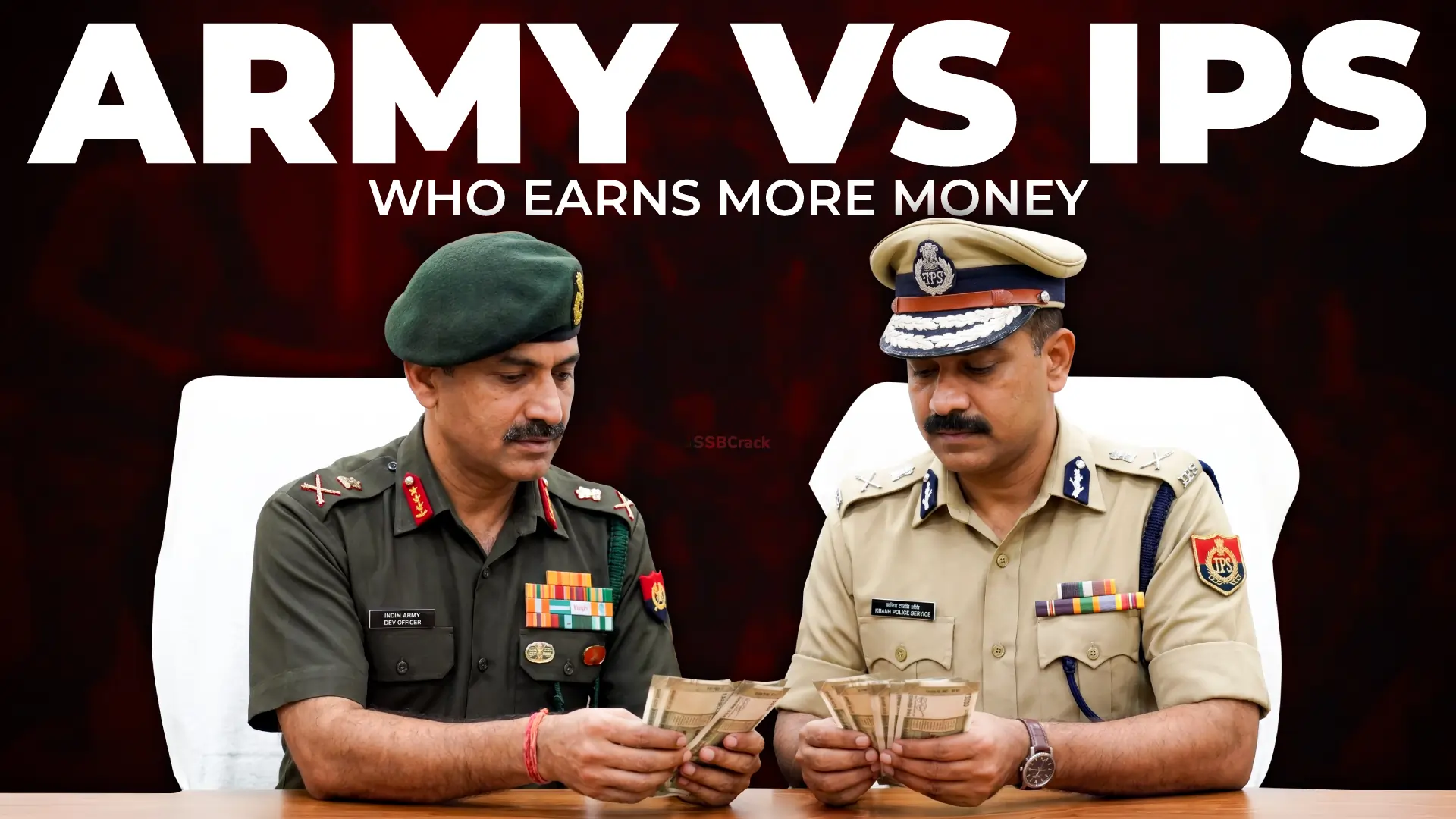
The Indian Army and the Indian Police Service (IPS) represent two of the most prestigious uniformed services in India, attracting candidates through the National Defence Academy (NDA), Combined Defence Services (CDS), or the Union Public Service Commission (UPSC) Civil Services Examination. While both offer attractive compensation packages under the 7th Central Pay Commission (CPC), with Dearness Allowance (DA) currently at 60% effective from January 1, 2026, there are notable differences in basic pay structures, allowances, and non-monetary perks.
This article provides a factual, data-driven comparison of earnings, focusing on commissioned Army officers (Lieutenant and above) versus IPS officers (Deputy Superintendent of Police and equivalent). It is based on the prevailing 7th CPC pay matrix; the 8th CPC has been constituted but remains under consultation with no implementation as of May 2026.
1. Pay Matrix and Rank-Wise Basic Pay
Both services follow the same 7th CPC pay levels for equivalent ranks, starting at Level 10 for entry-level officers. However, Army officers receive Military Service Pay (MSP) of ₹15,500 per month (up to Brigadier rank), which is reckoned as pay for computing DA and pension. IPS officers do not receive MSP.
Key Rank-Wise Basic Pay (Entry Pay in Pay Matrix, approximate mid-scale figures for illustration):
| Rank (Army) | Pay Level | Basic Pay (₹) | Equivalent IPS Rank | Basic Pay (₹) |
|---|---|---|---|---|
| Lieutenant | 10 | 56,100 | Deputy Superintendent of Police (DSP)/ASP | 56,100 |
| Captain | 10B | 61,300 | Additional Superintendent of Police | 67,700 |
| Major | 11 | 69,400–94,700 | Superintendent of Police (SP) | 78,800 |
| Lieutenant Colonel | 12A | 1,21,200 | Deputy Inspector General (DIG) | 1,31,000 |
| Colonel | 13 | 1,30,600 | Inspector General (IG) | 1,44,200 |
| Brigadier | 13A | 1,39,600 | Additional Director General of Police | 2,05,000 |
| Major General | 14 | 1,44,200–1,82,200 | Director General of Police (DGP) | 2,25,000 (fixed) |
| Lieutenant General (Army Commander) | 17 | 2,25,000 (fixed) | – | – |
| General (COAS) | 18 | 2,50,000 (fixed) | – | – |
Note: Actual basic pay increases with annual increments and years of service. Top scales for Army (Level 15–18) and IPS (apex scale) are comparable at the highest levels.
2. Dearness Allowance (DA) and Gross Emoluments
DA stands at 60% of basic pay (including MSP for Army officers) as of January 2026.
- Entry-level example (Lieutenant/DSP, Basic ₹56,100):
- Army: Basic ₹56,100 + MSP ₹15,500 = ₹71,600; DA (60%) ≈ ₹42,960. Subtotal before other allowances: ≈ ₹1,14,560.
- IPS: Basic ₹56,100; DA (60%) ≈ ₹33,660. Subtotal: ≈ ₹89,760.
Army officers thus start with approximately 25–30% higher gross pay due to MSP alone.
3. Allowances: Key Differences
Common Allowances (both services):
- House Rent Allowance (HRA): 27% (X cities), 18% (Y), 9% (Z) of basic pay.
- Transport Allowance (TA): ₹3,600–7,200 + DA, city-dependent.
- Medical facilities, leave travel concession, and children’s education allowance.
Army-Specific Allowances (highly variable by posting):
- Field Area Allowance / Counter-Insurgency Allowance: ₹6,300–10,500+.
- High Altitude Allowance: ₹5,300–25,000+.
- Siachen Glacier Allowance: Up to ₹31,500 (tax-free in many cases).
- Kit Maintenance Allowance and others.
These can add ₹15,000–40,000+ per month in operational postings, which are common in the Army.
IPS-Specific Perks (more urban-oriented):
- Uniform allowance, risk/hardship allowance (limited compared to Army field postings).
- Official vehicle, driver, and security staff (especially at SP rank and above).
- Subsidised electricity, water, and telephone bills in government accommodation.
In peace stations or metropolitan postings, IPS officers benefit from higher HRA, but Army field allowances often outweigh this during a typical career.
4. In-Hand Salary Estimates (Approximate, Post-Deductions)
In-hand pay varies by posting, taxes, NPS contributions (10% of basic + DA), and other deductions. Representative monthly figures (2026, with 60% DA):
- Entry Level (Lieutenant/DSP): Army ₹90,000–1,25,000+; IPS ₹67,000–85,000 (higher in metros due to HRA).
- Mid-Level (Major/SP): Army ₹1,40,000–2,00,000+; IPS ₹1,10,000–1,60,000.
- Senior Level (Brigadier/IG): Army ₹2,00,000–2,80,000+; IPS ₹2,00,000–2,75,000.
Independent analyses indicate Army officers’ total in-hand compensation is typically 20–30% higher, particularly in the first 15–20 years of service, due to MSP and operational allowances.
5. Non-Monetary Perks and Long-Term Benefits
- Housing and Lifestyle: Army officers enjoy cantonment accommodation (often free or nominal rent) and access to CSD canteens for subsidised goods. IPS officers receive rent-free government bungalows with staff in many states.
- Medical and Pension: Both have comprehensive medical coverage (Army via ECHS; IPS via CGHS-equivalent). Post-2004 recruits are under the National Pension System (NPS). Army personnel benefit from MSP counting toward pension calculations.
- Other Benefits: Army offers ration, canteen facilities, and leave encashment advantages. IPS provides official vehicles, security, and greater exposure to state-level authority.
Retirement benefits, including gratuity and commuted pension, are broadly comparable, though Army service often qualifies for earlier retirement with pension advantages in certain cases.
6. Who Earns More Overall?
Army officers generally earn more in total monetary compensation, especially when factoring in MSP, DA applicability on MSP, and field/hardship allowances. The differential is most pronounced at junior and mid-levels and in non-metropolitan or operational postings. IPS earnings can be competitive in high-HRA cities or at senior ranks where perks like official vehicles add significant value.
However, “earnings” extend beyond salary. Army service involves frequent transfers, field risks, and longer working hours, while IPS roles often offer greater administrative authority and urban stability. Personal choice should consider lifestyle, risk, and job satisfaction alongside financials.
Sources: Data drawn from official 7th CPC notifications, government pay calculators, and verified analyses (2025–2026). Salaries are approximate and subject to individual posting, increments, and government revisions. For the most precise figures, refer to the latest Ministry of Defence or Ministry of Home Affairs orders.
This comparison underscores that while Army officers hold a clear edge in structured pay and allowances, both careers provide respectable, inflation-protected compensation aligned with national service.


