




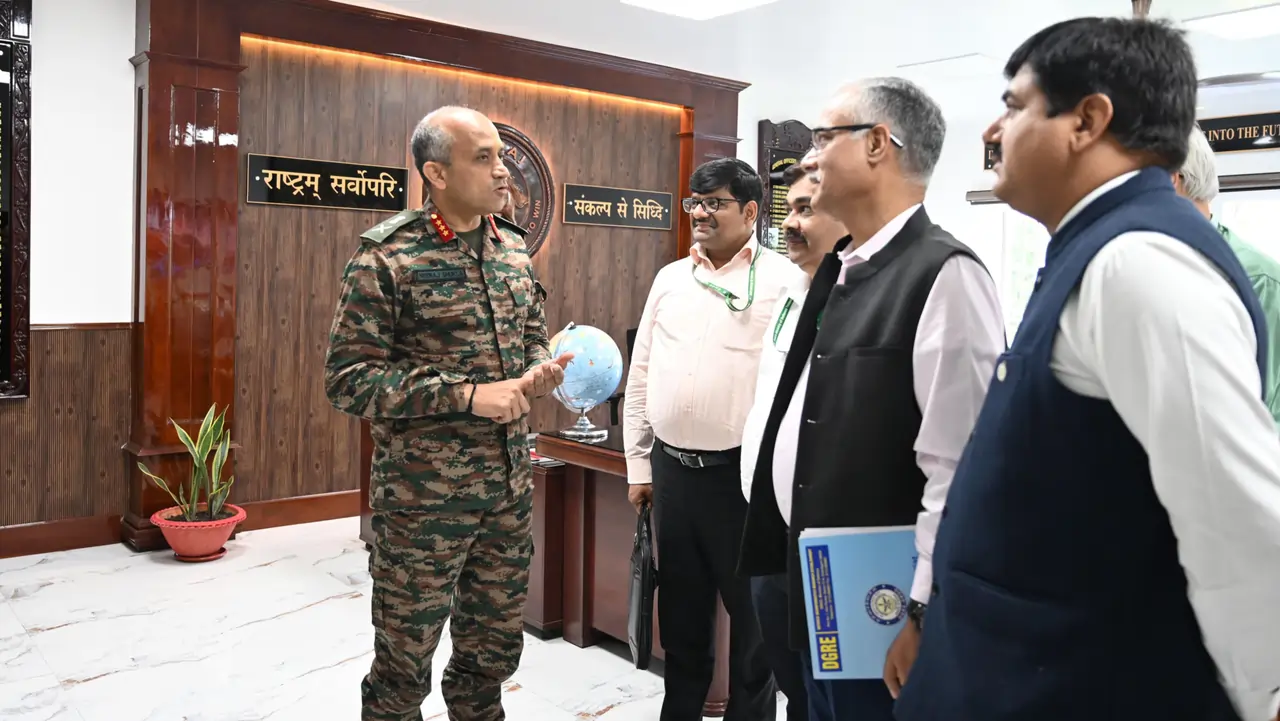
Lieutenant General Neeraj Shukla, the General Officer Commanding of the Gajraj Corps, recently engaged in a significant dialogue with Dr. P K Satyawali, a Scientist ‘H’ at the Defence Geoinformatics Research Establishment (DGRE), during his visit to Tezpur in Assam. This meeting marked a crucial exchange of ideas and expertise between military leadership and scientific research aimed at addressing the unique challenges posed by the Eastern Himalayan region.
During the interaction, the DGRE team presented their advanced research efforts focused on weather and avalanche forecasting systems. These innovations are designed to enhance not only the military’s operational effectiveness in the challenging terrains of the Himalayas but also ensure the safety and efficiency of personnel deployed in these difficult conditions. The team also introduced mobility support technologies that are integral for navigating the complex geography.
In addition to forecasting systems, the DGRE showcased innovative solutions for landslide mitigation along with specialized engineering strategies tailored for high-altitude military operations. Such advancements are essential as they directly impact the operational capability of armed forces in environments where both weather and terrain can severely hinder movement and logistical operations.
Lt Gen Shukla expressed his appreciation for the work being done by the DGRE scientists, emphasizing the vital role their contributions play in bolstering national security. He acknowledged how these technological developments are not just enhancing operational capability but also fostering a deeper collaboration between the Indian Army and defense research institutions.
The dialogue highlighted the increasing synergy between military operations and scientific research, pointing towards a future where cutting-edge solutions are integral to modern warfare, especially in challenging environments like the Eastern Himalayas. This partnership signifies a proactive approach in preparing the armed forces to meet contemporary and future challenges effectively.


