




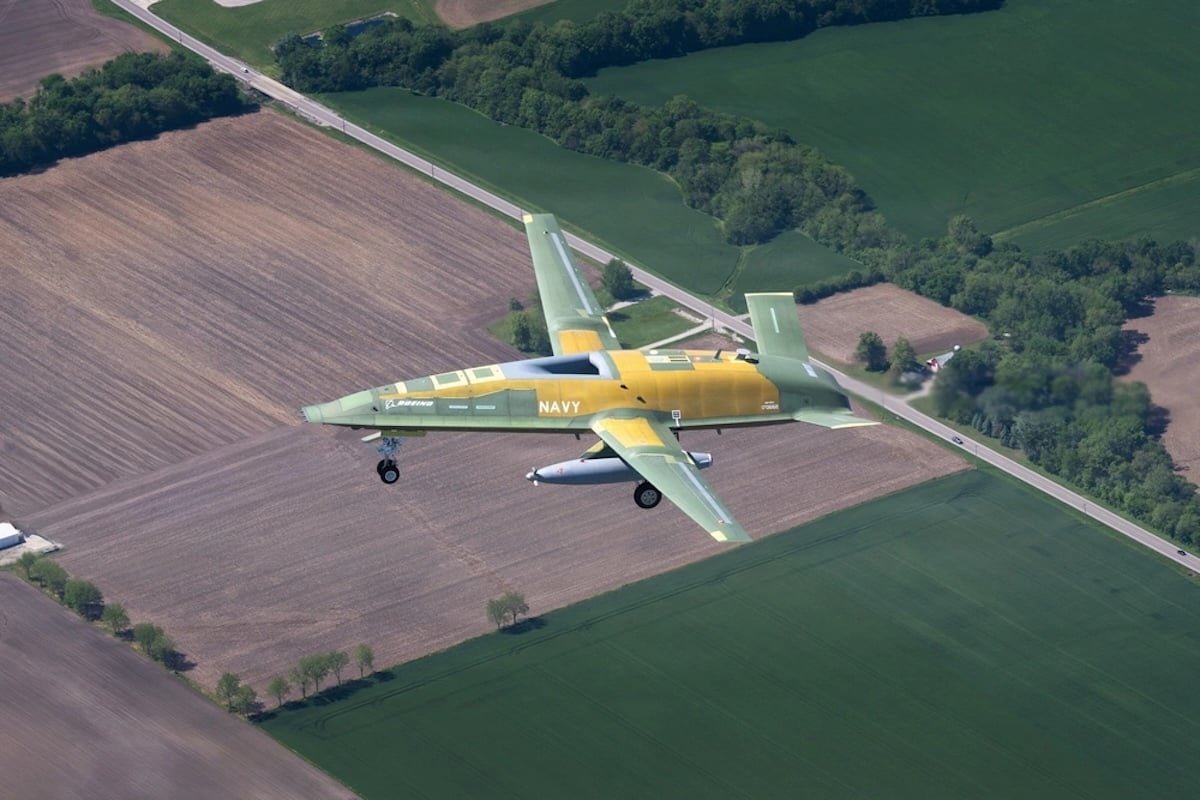
The US Navy has confirmed that the MQ-25A Stingray unmanned tanker has achieved Milestone C approval, paving the way for the commencement of low-rate initial production. This significant advancement indicates that the MQ-25A is now poised for contracted production, with an initial order for three Stingray drones expected to be finalized this summer. This initial batch will be followed by options to produce three additional units in a second batch and five more in a third batch.
The announcement follows the MQ-25A’s successful maiden flight in April, during which the drone operated autonomously for two hours, effectively executing a predefined mission plan. Vice Adm. John E. Dougherty IV, Portfolio Acquisition Executive Aviation, emphasized the critical role of the MQ-25A, stating that it would provide persistent aerial refueling capabilities, thereby enhancing the capacity and effectiveness of carrier strike groups. He highlighted the importance of keeping these groups “lethal, flexible, and forward-ready.”
The MQ-25A Stingray holds the distinction of being the first unmanned tanker designed for full operations from an aircraft carrier, thereby setting a precedent for future carrier-based unmanned aerial systems. The drone measures approximately 51 feet (15.5 meters) in length, stands 15 feet (4.6 meters) tall, and boasts a wingspan of 75 feet (23 meters). Its primary function is to alleviate the aerial refueling responsibilities currently undertaken by F/A-18E/F Super Hornet aircraft, allowing these fighter jets to concentrate on strike missions.
Powered by a Rolls-Royce AE 3007N turbofan engine, the MQ-25A has a maximum takeoff weight of around 44,000 pounds (20,000 kilograms). It is designed to operate seamlessly with various aircraft, including F/A-18 Super Hornets, E-2D Hawkeyes, and F-35C Lightning IIs. In addition to its refueling capabilities, the drone is also equipped to support intelligence, surveillance, and reconnaissance missions.
This initiative is part of an $805 million contract awarded to Boeing in 2018 for the development of the unmanned tanker. Initially, the MQ-25A was slated to achieve initial operating capability (IOC) by 2024; however, delays attributed to manufacturing challenges and issues related to carrier availability have moved this timeline to 2029, according to reports from USNI News.


