




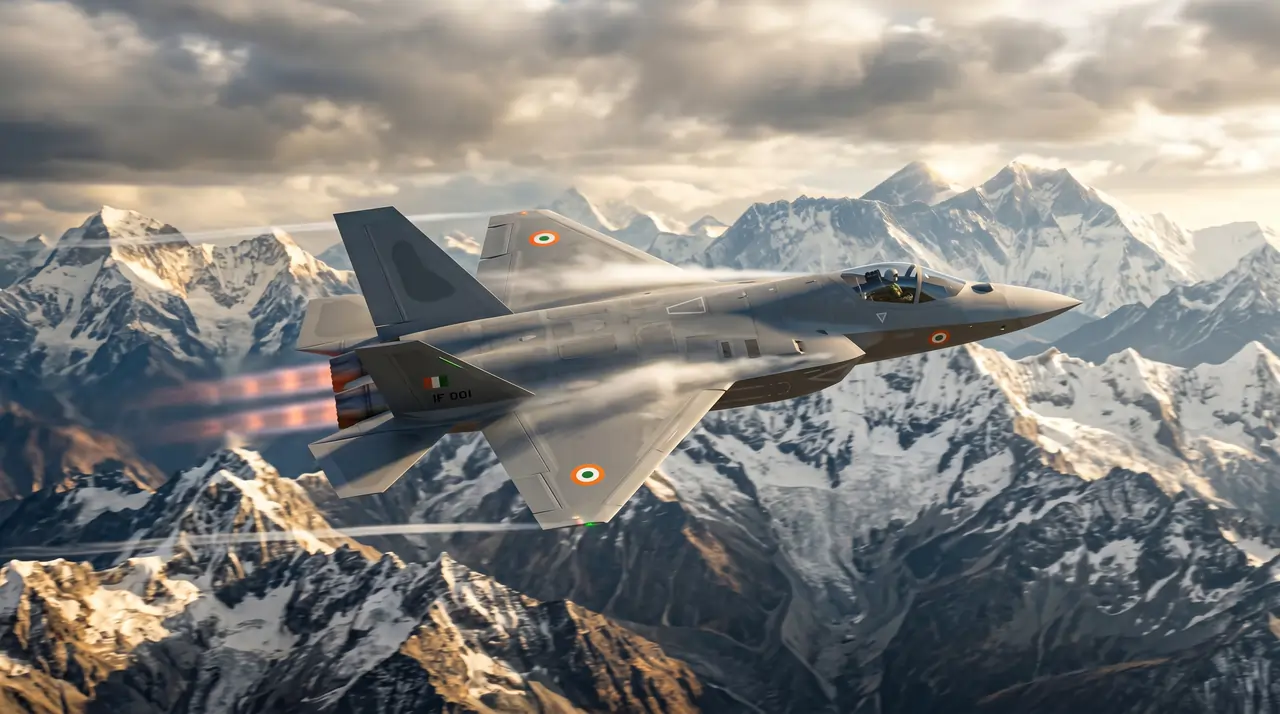
The race to develop a cutting-edge engine for India’s Advanced Medium Combat Aircraft (AMCA) programme has intensified as British aerospace giant Rolls-Royce has put forth a compelling proposal to co-develop a next-generation fighter engine within India. This collaboration would include full intellectual property rights for the Indian government, positioning Rolls-Royce in direct competition with French defense titan Safran as both companies vie for a pivotal defense technology partnership.
Rolls-Royce’s proposal is particularly significant because it highlights India’s determination to retain sovereignty over key fighter-engine technologies. This base of expertise is crucial as India moves forward with its first indigenous fifth-generation stealth fighter programme.
### Rolls-Royce’s Ambitious Offer
The British firm has outlined plans for co-developing a new engine tailored specifically for the AMCA, targeting the more advanced AMCA Mk2 variant. This engine, expected to offer thrust in the 110–130 kN range, is vital for delivering the performance desired in a fifth-generation stealth aircraft. Initial reports suggest that ground testing could commence by 2032, with the engine taking to the skies by 2034, aligning seamlessly with the broader AMCA development roadmap.
In contrast to traditional licensed production agreements, Rolls-Royce’s offer entails deeper involvement from Indian entities at every stage of development – from design through testing and certification. This high level of collaboration indicates a significant shift from mere assembly to genuine co-development.
### Importance of the Engine for AMCA
The AMCA represents India’s most ambitious aircraft development initiative to date. Spearheaded by the Aeronautical Development Agency under the Defence Research and Development Organisation (DRDO), the AMCA is designed as a twin-engine, single-seat stealth multirole fighter with advanced capabilities including a low radar cross-section, internal weapons bays, and sophisticated electronic warfare features.
The programme will unfold in two segments: the initial AMCA Mk1 and the subsequent Mk2 variant. While the Mk1 is set to be powered by General Electric’s F414 engines, critical for the first phase of the project, the Mk2 aims for an even mightier power source in the 120 kN class. This more robust engine will enhance key performance metrics, including thrust-to-weight ratio, payload capacity, and operational sustainability – all vital parameters for a fifth-generation fighter.
### Safran’s Competitive Edge
While Rolls-Royce is making aggressive moves, Safran remains a formidable contender. The French firm has also been seeking a partnership with India for the AMCA Mk2 engine, drawing on its extensive experience in collaboration with Indian defense establishments. Reports indicate that Safran’s proposal includes a partnership with DRDO’s Gas Turbine Research Establishment, known for its past contributions to engine development, albeit under the Kaveri programme which faced challenges transitioning to production-scale readiness.
### Strategic Significance of IP Rights
Central to Rolls-Royce’s offer is the promise of complete intellectual property rights. This holds immense importance, as ownership of engine technology is tightly guarded in military aviation. For India, acquiring full IP rights would facilitate independent upgrades, modifications, and maintenance of the engine, liberating the nation from reliance on foreign suppliers for critical propulsion technologies. This capability is unprecedented in India’s defense landscape, marking an essential transition towards self-sufficiency in advanced military aviation technology.
### The Path Forward for AMCA
With backing from the government and a structured industry partnership model, the AMCA programme is gaining momentum. The rollout of a prototype is anticipated around 2028-29, with initial flights set for the end of that period and service entry by 2034. Given the stringent timelines, choosing the right engine partner is crucial; while the Mk1 can proceed with existing engines, meeting the demands of the Mk2 will require robust collaboration with a foreign player capable of delivering on advanced specifications.
Learnings from the Kaveri project, which, despite not meeting expectations, provided significant insights into engine design and testing, will play a pivotal role in shaping future initiatives. The overarching goal is to build a national aeronautical engine capability that endures for generations.
### Conclusion: A Critical Decision for India’s Aerospace Future
The unfolding contest between Rolls-Royce and Safran underscores the strategic importance of the AMCA engine development process. The eventual decision will not only shape India’s current military capabilities but will also define its future in integrated aerospace design and manufacturing.
The stakes are high, and if India successfully navigates these negotiations, it could overcome critical barriers in military engine development, paving the way for a robust, self-reliant aerospace framework for decades to come. As talks progress, defense analysts and industry stakeholders will be closely monitoring developments, understanding that this decision will have far-reaching implications on India’s combat capabilities and defense autonomy into the mid-2030s and beyond.


