




In Defence Current Affairs for 09 June 2026, we will see the latest national and international current affairs news. These important current affairs will be beneficial for your upcoming NDA, CDS, CDS OTA, AFCAT, TA, Agniveer Army, Agniveer Navy, Agniveer Air Force, Women Military Police, INET, MNS, ACC exams, SCO, PCSL, CAPF, and SSB interviews, and direct entries for Army, Navy, and Air Force like SSC Tech, TGC, JAG, NCC, TES, 10+2 Cadet. Download a PDF file about current events at the end of this article. Let us now see the Current Affairs.
Defence Current Affairs 09 June 2026
President Droupadi Murmu Confers Gallantry Awards at Defence Investiture Ceremony 2026
President of India Droupadi Murmu conferred several prestigious gallantry awards upon personnel of the Armed Forces, Central Armed Police Forces (CAPFs), and State/Union Territory Police during Phase-I of the Defence Investiture Ceremony 2026 held at Rashtrapati Bhavan on 8 June 2026. The awards recognized extraordinary courage, exceptional bravery, and selfless devotion to duty displayed by security personnel while safeguarding the nation.
Highlights of the Ceremony
During the ceremony, the President presented:
- 07 Kirti Chakras, including 02 posthumous awards
- 15 Vir Chakras, including 03 posthumous awards
- 29 Shaurya Chakras, including 01 posthumous award
These gallantry awards are among India’s highest peacetime and wartime decorations and are awarded for acts of valor performed under challenging and life-threatening circumstances.
Kirti Chakra Awardees
The Kirti Chakra is India’s second-highest peacetime gallantry award, recognizing conspicuous courage and self-sacrifice away from the battlefield.
The recipients included:
- Lance Naik Meenatchi Sundaram A
- Naib Subedar Doleshwar Subba
- Major Arshdeep Singh
- Air Commodore Prasanth Balakrishnan Nair
- Captain Lalrinawma Sailo
Posthumous Kirti Chakras
The following soldiers were honored posthumously for their supreme sacrifice:
- Sepoy Janjal Pravin Prabhakar
- Lieutenant Shashank Tiwari
Vir Chakra Awardees
The Vir Chakra is India’s third-highest wartime gallantry award. Several Army and Air Force officers were recognized for exceptional bravery during military operations.
Notable recipients included:
- Colonel Koshank Lamba
- Group Captain Ranjeet Singh Sidhu
- Group Captain Manish Arora
- Group Captain Animesh Patni
- Group Captain Kunal Kalra
- Group Captain Joy Chandra
- Lieutenant Colonel Sushil Bisht
- Squadron Leader Sarthak Kumar
- Squadron Leader Siddhant Singh
- Squadron Leader Rizwan Malik
- Flight Lieutenant Aarshveer Singh Thakur
- Naib Subedar Satish Kumar
Posthumous Vir Chakras
The award was conferred posthumously on:
- Sub-Inspector Mohd Imteyaj
- Constable Deepak Chingakham
- Rifleman Sunil Kumar
Shaurya Chakra Awardees
The Shaurya Chakra is awarded for acts of courage and valor during peacetime operations. The recipients represented the Army, Navy, Air Force, Assam Rifles, CRPF, and other security forces.
Some of the prominent awardees were:
- Inspector Laxman Kewat
- Inspector Rameshwar Prasad Deshmukh
- Lieutenant Colonel Neetesh Bharti Shukla
- Major Aditya Pratap Singh
- Major Ashish Kumar
- Assistant Commandant Mohd Shafiq
- Lieutenant Commander Suraj Prashar
- Ram Goyal
- Assistant Commandant Vipin Wilson
- Wing Commander Abhimanyu Singh
- Major Bhargav Kalita
- Major Leishangthem Deepak Singh
- Major Anshul Baltoo
- Major Shivkant Yadav
- Subedar P.H. Moses
- Major Vivek
- Lieutenant Colonel Ghatage Aditya Shrikumar
- Captain Yogender Singh Thakur
- Subedar Shamsher Singh
- Naik Rahul Singh
- Lieutenant Commander Dilna K
- Lieutenant Commander Roopa A
Posthumous Shaurya Chakra
The Shaurya Chakra (Posthumous) was awarded to:
- Lance Dafadar Baldev Chand
Significance of the Gallantry Awards
India’s gallantry awards symbolize the nation’s gratitude toward security personnel who display extraordinary courage while protecting national interests. These decorations inspire future generations of soldiers and reinforce the values of duty, sacrifice, and patriotism.
The 2026 Defence Investiture Ceremony showcased numerous acts of heroism performed in counter-terrorism operations, border security missions, special operations, aviation missions, and internal security duties. The awardees exemplified the highest traditions of the Indian Armed Forces and security services.
Indian Army Issues RFI for Indigenous Loitering Munition System
The Indian Army has taken another significant step towards strengthening its indigenous defence capabilities by issuing a Request for Information (RFI) for an advanced loitering munition system. The move reflects India’s growing focus on self-reliance in defence technology under the Atmanirbhar Bharat initiative and highlights the increasing importance of unmanned systems in modern warfare.
What is a Loitering Munition?
A loitering munition is an unmanned aerial weapon system capable of hovering or “loitering” over a target area for a certain period before engaging a target with precision. It combines the features of a drone and a guided missile, enabling surveillance, target identification, and strike capabilities in a single platform. These systems have become increasingly important in contemporary conflicts due to their flexibility, accuracy, and relatively low operational costs.
Key Features Sought by the Indian Army
According to the RFI, the Army is seeking an indigenous loitering munition capable of operating in diverse terrains, including high-altitude regions. The proposed system is expected to:
- Operate effectively at altitudes up to approximately 18,000 feet.
- Possess a range of around 15 kilometres.
- Offer an endurance of about 45 minutes.
- Deliver high precision with minimal targeting error.
- Possess anti-armour capabilities suitable for engaging modern battlefield threats.
- Function in challenging operational environments, including mountainous regions and border areas.
Integration with Future Combat Platforms
The proposed loitering munition forms part of the Indian Army’s broader modernization efforts, particularly under the Future Ready Combat Vehicle (FRCV) programme. The Army aims to integrate advanced unmanned systems, including loitering munitions and surveillance drones, into its armoured and mechanised formations. Such integration will significantly enhance battlefield awareness, precision-strike capabilities, and operational effectiveness.
Growing Importance of Drone Warfare
Recent global conflicts have demonstrated the transformative role of drones and loitering munitions in warfare. Recognising this shift, the Indian Army released a comprehensive technology roadmap for Unmanned Aerial Systems (UAS) and loitering munitions in 2026. The roadmap identifies these technologies as critical components of future military operations and encourages domestic industry participation in their development.
India has also accelerated the induction of indigenous drone systems, including precision-guided munitions and kamikaze drones, to enhance its operational capabilities and reduce dependence on foreign suppliers.
Boost to Indigenous Defence Manufacturing
The Army’s RFI emphasizes a high level of indigenous content, reinforcing the government’s commitment to promoting domestic defence manufacturing. This initiative is expected to create opportunities for Indian public-sector enterprises, private defence companies, startups, and research institutions working in drone technology, sensors, communications, propulsion systems, and artificial intelligence.
The growing demand for indigenous drones and loitering munitions is likely to strengthen India’s defence industrial ecosystem and position the country as a significant player in advanced military technologies.
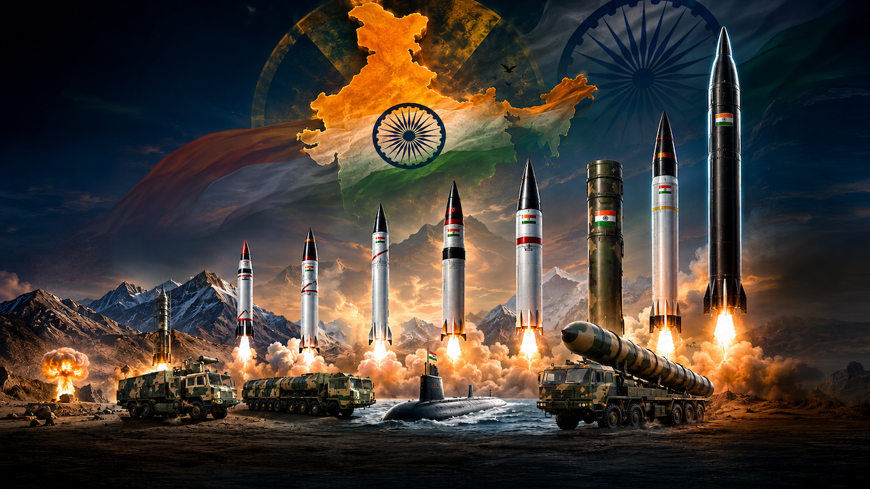
India Strengthens Nuclear Deterrence as Arsenal Reaches 190 Warheads
India has modestly increased its nuclear weapons stockpile, with estimates suggesting that the country now possesses around 190 nuclear warheads as of early 2026. The assessment was published in the latest report of the Stockholm International Peace Research Institute (SIPRI), which tracks global military capabilities, defence spending, and arms transfers.
The report indicates that India is continuing its long-term programme of nuclear modernization. Alongside maintaining a credible deterrent against Pakistan, New Delhi is increasingly investing in advanced delivery systems capable of operating over longer ranges. These developments reflect India’s efforts to address emerging security challenges in the broader Asian region.
SIPRI also highlighted Operation Sindoor, conducted in May 2025, as one of the most serious military confrontations between India and Pakistan in recent years. During the crisis, Indian forces reportedly targeted strategic facilities linked to Pakistan’s air and missile infrastructure. Despite intense military exchanges, both nations exercised restraint and avoided escalation into a full-scale conflict.
India’s defence expenditure continued to grow significantly. Military spending reached approximately $92.1 billion in 2025, representing an increase of nearly nine percent compared to the previous year. This maintained India’s position as the world’s fifth-largest military spender, behind only the United States, China, Russia, and Germany.
The report further noted that India remained one of the world’s leading arms importers. Between 2021 and 2025, India accounted for 8.2 percent of global arms imports, making it the second-largest importer of major weapons systems. This reflects the country’s ongoing efforts to modernize its armed forces while simultaneously promoting indigenous defence production.
The findings underline India’s expanding role in global security affairs and its determination to strengthen strategic capabilities amid an evolving geopolitical environment.
India Approves Major Dual-Use Airport Project at Great Nicobar Island
India is set to invest approximately ₹13,000 crore in the construction of a new dual-use airport as part of the Great Nicobar Island Development Project. The facility will serve both civilian and military purposes and is expected to be completed within the next five years.
The project is considered strategically important due to Great Nicobar’s location near key maritime routes in the Indo-Pacific region. The airport will enhance India’s ability to monitor sea lanes, support defence operations, and improve connectivity in one of the country’s most remote island territories.
Before finalizing the project, authorities examined the possibility of expanding the existing airfield at INS Baaz. However, studies concluded that large-scale expansion would require extensive land reclamation and could adversely affect environmentally sensitive areas, including local flora, fauna, and tribal regions.
Defence experts emphasize that the new airport is not merely an infrastructure project but a critical component of India’s maritime security strategy. The facility will support larger transport aircraft, surveillance platforms, and fighter aircraft, significantly improving operational readiness in the region.
The planned Joint User Greenfield Airport and Naval Air Station will strengthen India’s capacity to respond rapidly to emergencies, maintain logistics support in forward locations, and safeguard national interests across the Indo-Pacific. The project is expected to play a vital role in enhancing India’s strategic presence in the region while contributing to economic development and connectivity in the Andaman and Nicobar Islands.

L&T Commits ₹18,600 Crore Investment to Boost Tamil Nadu’s Industrial Growth
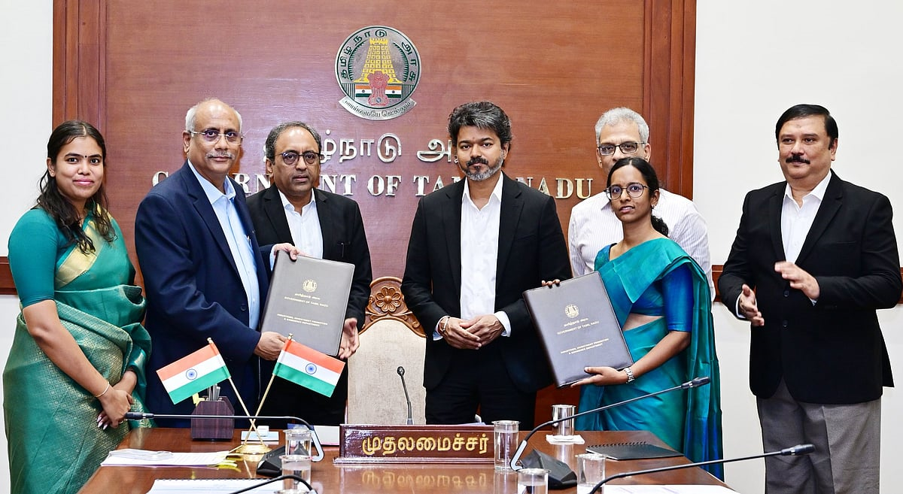
Engineering and infrastructure giant Larsen & Toubro (L&T) has signed a major Memorandum of Understanding (MoU) with the Tamil Nadu government involving investments worth ₹18,600 crore across data centres, electronics manufacturing, and shipbuilding sectors.
The agreement marks one of the largest industrial commitments in the state and is expected to create more than 8,200 employment opportunities. The projects are aimed at strengthening Tamil Nadu’s position as a leading destination for advanced manufacturing, digital infrastructure, and strategic industries.
A significant portion of the investment, amounting to ₹15,000 crore, will be dedicated to developing hyperscale and edge artificial intelligence data centres in Kanchipuram district. The project is designed to meet growing demand for cloud computing, AI applications, and secure digital storage facilities. It is also expected to support Tamil Nadu’s ambition of building a trillion-dollar digital economy by 2036.
Another investment of ₹2,500 crore will be directed towards electronics and electrical equipment manufacturing in Coimbatore. This initiative is projected to generate around 2,000 jobs while strengthening the state’s manufacturing ecosystem.
In addition, L&T plans to invest ₹1,100 crore in expanding its shipyard at Kattupalli in Tiruvallur district. The expansion will significantly enhance shipbuilding and repair capabilities, enabling the facility to service naval and commercial vessels. The upgraded shipyard will also support offshore wind energy infrastructure and other maritime projects.
The Tamil Nadu government believes these investments will generate substantial economic activity, create employment opportunities, and contribute significantly to the state’s long-term goal of expanding its economy to USD 1.5 trillion by 2036. The agreement highlights Tamil Nadu’s growing importance as a hub for technology, manufacturing, and strategic industries in India.
Review Questions
- According to SIPRI Yearbook 2026, India’s estimated nuclear warhead stockpile
reached approximately how many warheads by early 2026?
A) 150
B) 175
C) 190
D) 210
Answer: C) 190 - Which organization publishes the annual report on global military expenditure,
arms transfers, and nuclear arsenals?
A) IAEA
B) SIPRI
C) NATO
D) ASEAN
Answer: B) SIPRI - India ranked as the world’s __ largest military spender in 2025.
A) Third
B) Fourth
C) Fifth
D) Sixth
Answer: C) Fifth - India’s military expenditure in 2025 was approximately:
A) $82.1 billion
B) $92.1 billion
C) $102.1 billion
D) $112.1 billion
Answer: B) $92.1 billion - During the period 2021–25, India accounted for what percentage of global arms
imports?
A) 6.5%
B) 7.4%
C) 8.2%
D) 9.8%
Answer: C) 8.2% - Which military operation was described by SIPRI as a severe India-Pakistan crisis in
May 2025?
A) Operation Vijay
B) Operation Meghdoot
C) Operation Sindoor
D) Operation Trident
Answer: C) Operation Sindoor - How much investment has been approved for the new dual-use airport at Great
Nicobar Island?
A) ₹10,000 crore
B) ₹11,500 crore
C) ₹13,000 crore
D) ₹15,000 crore
Answer: C) ₹13,000 crore - The new airport at Great Nicobar Island will primarily serve:
A) Only civilian purposes
B) Only military purposes
C) Both military and civilian purposes
D) Tourism purposes only
Answer: C) Both military and civilian purposes - Which existing airfield was considered for expansion before the new airport
project was approved?
A) INS Vikrant
B) INS Baaz
C) INS Hansa
D) INS Garuda
Answer: B) INS Baaz - The runway at INS Baaz has recently been expanded to:
A) 3,500 ft
B) 4,000 ft
C) 4,500 ft
D) 5,000 ft
Answer: C) 4,500 ft - The Great Nicobar project is strategically important because of its location in the:
A) Arctic Region
B) Mediterranean Region
C) Indo-Pacific Region
D) Atlantic Region
Answer: C) Indo-Pacific Region - The proposed facility at Great Nicobar will function as a:
A) Commercial seaport
B) Space launch centre
C) Joint User Greenfield Airport and Naval Air Station
D) Nuclear research centre
Answer: C) Joint User Greenfield Airport and Naval Air Station - Larsen & Toubro signed an MoU with which state government for investments
worth ₹18,600 crore?
A) Karnataka
B) Andhra Pradesh
C) Telangana
D) Tamil Nadu
Answer: D) Tamil Nadu - Exercise Samudra Shakti Conducted B/w Indonesia &
A. India
B. Nepal
C. Bangladesh
D. Bhutan
ANSWER: A - Captain Rank of Indian Navy Equivalent to Which rank of IAF?
A. Flying Officer
B. Flight Lieutenant
C. Group Captain
D. None
ANSWER: C - Brussels Is The Capital Of
A. Belgium
B. Belize
C. Benin
D. Bhutan
ANSWER: A - “Jungle Nama” Book Is Written By
A. Jhumpa Lahiri
B. Amitav Ghosh
C. Hew Strachan
D. Nirupama Rao
ANSWER: B - Rapid Action Force Hq Is In
A. Mumbai
B. Lucknow
C. Surat
D. New Delhi
ANSWER: D - War Cry Of SIKH LIGHT INFANTRY Is
A. Garud ka hun bol pyare
B. Everywhere
C. Raja Ramachandra ki jai
D. Jo bole So Nihal, sat sri akal
ANSWER: D - “Wings of Fire” Book Is Written By
A. Jhumpa Lahiri
B. Amitav Ghosh
C. Hew Strachan
D. Dr. APJ Kalam
ANSWER: B
ALSO READ:
- Latest Daily Current Affairs and Defence Updates
- Latest Daily Current Affairs May 2026[DOWNLOAD PDF]
- Latest Daily Current Affairs April 2026[DOWNLOAD PDF]
- Latest Daily Current Affairs March 2026[DOWNLOAD PDF]
- Latest Daily Current Affairs February 2026[DOWNLOAD PDF]
- Latest Daily Current Affairs January 2026[DOWNLOAD PDF]
- Latest Daily Current Affairs November 2025[DOWNLOAD PDF]
- Latest Daily Current Affairs October 2025[DOWNLOAD PDF]
- Latest Daily Current Affairs August 2025[DOWNLOAD PDF]
- Latest Daily Current Affairs July 2025[DOWNLOAD PDF]
- Monthly Defence Current Affairs June 2025 [DOWNLOAD PDF]
- Monthly Defence Current Affairs May 2025 [DOWNLOAD PDF]
- Monthly Defence Current Affairs April 2025 [DOWNLOAD PDF]
- Monthly Defence Current Affairs March 2025 [DOWNLOAD PDF]
- Monthly Defence Current Affairs February 2025 [DOWNLOAD PDF]


