





In Defence Current Affairs for 24 July 2026, we will see the latest national and international current affairs news. These important current affairs will be beneficial for your upcoming NDA, CDS, CDS OTA, AFCAT, TA, Agniveer Army, Agniveer Navy, Agniveer Air Force, Women Military Police, INET, MNS, ACC exams, SCO, PCSL, CAPF, and SSB interviews, and direct entries for Army, Navy, and Air Force like SSC Tech, TGC, JAG, NCC, TES, 10+2 Cadet. Download a PDF file about current events at the end of this article. Let us now see the Current Affairs.
Defence Current Affairs 24 July 2026
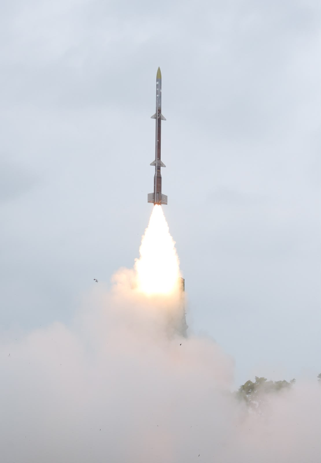
DRDO Successfully Conducts Maiden Flight-Test of ‘Kusha’
India has achieved another milestone in strengthening its indigenous air defence capabilities with the successful maiden flight-test of the ‘Kusha’ Long-Range Surface-to-Air Missile (LR-SAM). The Defence Research and Development Organisation (DRDO) carried out the test on 23 July 2026 from Dr. A.P.J. Abdul Kalam Island off the coast of Odisha. The successful trial demonstrates India’s growing expertise in developing advanced missile systems capable of protecting the country’s airspace against modern aerial threats.
During the test, the missile was launched against an electronic target designed to imitate a fast-moving, high-altitude aerial threat. The missile successfully tracked and destroyed the target, validating the effectiveness of the weapon system under realistic operational conditions.
The Kusha missile system has been designed to engage multiple types of aerial threats, including fighter aircraft, cruise missiles, unmanned aerial vehicles (UAVs), and large enemy aircraft over a wide range of distances and altitudes. Such capabilities significantly enhance India’s layered air defence network.
An important feature of the project is that all major components, including the missile, radar systems, command-and-control centre, and other weapon system elements, have been developed by various DRDO laboratories in collaboration with Indian industry partners. This reflects the success of the country’s policy of promoting indigenous defence manufacturing under the Aatmanirbhar Bharat initiative.
Defence Minister Rajnath Singh described the successful test as a landmark achievement for India’s defence research and development sector. He stated that the development of a long-range surface-to-air missile system places India among a select group of nations possessing such advanced technology. The project is also expected to reduce dependence on imported air defence systems while significantly strengthening national security.
Key Points
- Organisation: Defence Research and Development Organisation (DRDO)
- Missile: Kusha Long-Range Surface-to-Air Missile
- Test Date: 23 July 2026
- Test Site: Dr. A.P.J. Abdul Kalam Island, Odisha
- Capability: Intercepts aircraft, missiles, UAVs and other aerial threats
- Significance: Boosts indigenous air defence capability and reduces import dependence.
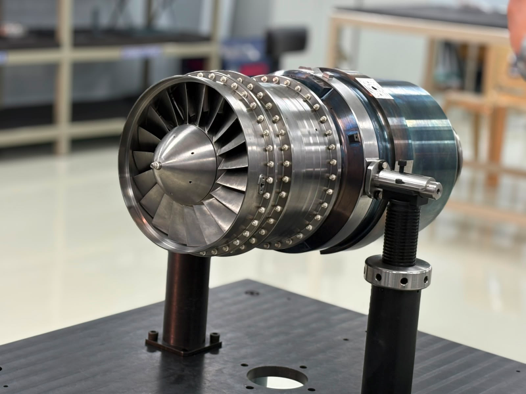
India Develops First Indigenous Expendable Turbo Jet Engine
India has reached another important milestone in aerospace technology with the successful development of its first indigenous Expendable Turbo Jet Engine in the 350 kg thrust class. The engine has been designed by the Gas Turbine Research Establishment (GTRE), a premier laboratory of DRDO, marking a significant achievement in the country’s efforts to develop advanced propulsion technologies.
To manufacture and assemble the engine, GTRE partnered with Azad Engineering Limited, Hyderabad. On 22 July 2026, the fully developed engine was successfully delivered to GTRE, highlighting the growing collaboration between India’s scientific institutions and private defence industry.
The project represents years of research, precision engineering, advanced manufacturing techniques, and close cooperation between defence scientists and industrial partners. Jet engine technology is regarded as one of the most challenging engineering fields because it requires highly specialised materials, precision manufacturing, and sophisticated design capabilities.
Only a limited number of countries possess the expertise to independently design and manufacture advanced jet engines. The successful completion of this project demonstrates India’s improving technological capabilities and reinforces the country’s commitment to self-reliance in defence production.
The achievement is expected to support future indigenous missile and aerospace programmes while reducing dependence on foreign propulsion technologies. It also reflects the increasing role of Indian private industry in the development of advanced defence equipment.
Key Points
- Developed by: GTRE, DRDO
- Industry Partner: Azad Engineering, Hyderabad
- Engine Class: 350 kg thrust
- Delivered: 22 July 2026
- Importance: Major milestone in indigenous aerospace and defence technology.
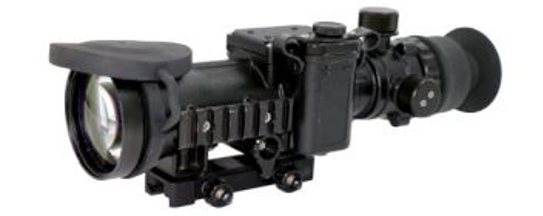
MKU to Supply Netro NW-3000 Night-Vision Sights to Indian Army
Kanpur-based defence manufacturer MKU Limited is set to supply the first batch of its Netro NW-3000 Night-Vision Weapon Sights to the Indian Army by the end of 2026. The delivery marks a significant advancement in strengthening the Army’s night combat capability through indigenously developed technology.
Around 4,000 night-vision sights will be delivered in the initial phase under a larger contract worth ₹660 crore, signed in October 2025, for the supply of 29,762 units.
Before receiving approval, the NW-3000 underwent nearly one year of extensive testing under the supervision of the Ministry of Defence. The trials were conducted in diverse environmental conditions, including high-altitude regions, extremely hot deserts, and sub-zero temperature areas. Its consistent performance across these challenging conditions contributed to its selection.
The Netro NW-3000 is compatible with modern assault rifles and features advanced night-vision sensor technology. It offers a wider field of view and incorporates a built-in infrared illuminator for improved visibility during low-light operations. The system is also designed to fit weapons equipped with MIL-STD-1913 Picatinny rails, allowing easy integration with existing weapon platforms.
The induction of these advanced night-vision systems will improve operational effectiveness during night-time missions and further strengthen India’s indigenous defence manufacturing ecosystem.
Key Points
- Company: MKU Limited, Kanpur
- Equipment: Netro NW-3000 Night-Vision Weapon Sight
- Initial Delivery: About 4,000 units
- Total Contract: ₹660 crore
- Total Quantity: 29,762 sights
- Significance: Enhances the Indian Army’s night-fighting capability.
Paras Defence to Establish ₹6,200 Crore Semiconductor Packaging Facility in Madhya Pradesh
In a major boost to India’s semiconductor manufacturing ecosystem, Paras Semiconductors Private Limited, a subsidiary of Paras Defence and Space Technologies, has signed a Memorandum of Understanding (MoU) with the Government of Madhya Pradesh to establish a ₹6,200 crore semiconductor packaging facility.
The advanced facility will be located along the Ujjain–Indore Corridor and will focus on developing modern semiconductor packaging technologies. The project is expected to generate employment opportunities while strengthening India’s strategic semiconductor capabilities.
The facility will operate as an Outsourced Semiconductor Assembly and Test (OSAT) centre and will undertake several advanced packaging processes, including 3D heterogeneous integration, 2.5D and 3D packaging, hybrid bonding, chiplet integration, wafer bumping, flip-chip assembly, testing, and reliability services.
The agreement was signed with the Department of Science and Technology through the Madhya Pradesh State Electronics Development Corporation.
Paras Semiconductors has been established to support the development of semiconductor technologies for strategic and high-performance sensor applications. By combining semiconductor manufacturing with the parent company’s expertise in optics and optronics, the project is expected to contribute significantly to India’s electronics and defence sectors.
The initiative aligns with the Government of India’s objective of creating a strong domestic semiconductor ecosystem and reducing dependence on imported semiconductor components.
Key Points
- Company: Paras Semiconductors Pvt. Ltd.
- Investment: ₹6,200 crore
- Location: Ujjain–Indore Corridor, Madhya Pradesh
- Facility Type: OSAT Semiconductor Packaging Centre
- Focus: Advanced semiconductor packaging and testing
- Importance: Strengthens India’s semiconductor ecosystem.

India Plans to Commission Five Small Modular Reactors by 2033
India has announced an ambitious plan to commission at least five indigenous Small Modular Reactors (SMRs) by 2033, marking a significant step towards expanding the country’s clean energy capacity. The first SMR project will be established at Tarapur in Maharashtra, reflecting India’s commitment to developing advanced nuclear energy technologies.
The initiative is supported by a ₹20,000 crore allocation under the Nuclear Energy Mission. The long-term objective is to increase India’s nuclear power generation capacity to 100 GW by 2047, thereby reducing dependence on fossil fuels and supporting sustainable economic growth.
The Bhabha Atomic Research Centre (BARC) is leading the development of three indigenous reactor designs: the 220 MW Bharat Small Modular Reactor, a 55 MW reactor, and a high-temperature gas-cooled reactor intended for hydrogen production. These designs have received in-principle approval from the Atomic Energy Commission.
The Government also plans to increase India’s installed nuclear capacity from the current 8.8 GW to 22 GW by 2031–32. The Nuclear Power Corporation of India Limited (NPCIL) is expected to contribute 50 GW, while NTPC aims to develop an additional 30 GW of nuclear capacity.
Globally, countries such as the United States, Russia, and South Korea are actively developing Small Modular Reactors. These compact reactors are considered suitable for providing clean and reliable electricity to industries, especially where decentralised power generation is required.
India’s focus on indigenous reactor technology and domestic manufacturing is expected to enhance energy security while supporting the country’s transition towards low-carbon energy sources.
Key Points
- Target: Five indigenous SMRs by 2033
- First Site: Tarapur, Maharashtra
- Mission Allocation: ₹20,000 crore
- Lead Organisation: Bhabha Atomic Research Centre (BARC)
- Long-term Goal: 100 GW nuclear capacity by 2047
- Importance: Clean energy, energy security, and indigenous nuclear technology.

Review Questions
- The maiden flight-test of the ‘Kusha’ Long-Range Surface-to-Air Missile was
conducted by:
A) ISRO
B) HAL
C) DRDO
D) BEL
Answer: C) DRDO - The maiden flight-test of the ‘Kusha’ missile was conducted from:
A) Pokhran Test Range, Rajasthan
B) Chandipur, Odisha
C) Dr. A.P.J. Abdul Kalam Island, Odisha
D) Sriharikota, Andhra Pradesh
Answer: C) Dr. A.P.J. Abdul Kalam Island, Odisha - India’s first indigenous Expendable Turbo Jet Engine has been designed by:
A) ADA
B) HAL
C) Gas Turbine Research Establishment (GTRE), DRDO
D) BHEL
Answer: C) GTRE, DRDO - Which company partnered with GTRE for manufacturing and assembling the
indigenous Expendable Turbo Jet Engine?
A) Tata Advanced Systems
B) Bharat Forge
C) L&T Defence
D) Azad Engineering, Hyderabad
Answer: D) Azad Engineering, Hyderabad - The Netro NW-3000 supplied by MKU Limited is a:
A) Radar System
B) Assault Rifle
C) Thermal Drone
D) Night-Vision Weapon Sight
Answer: D) Night-Vision Weapon Sight - The total value of the contract awarded to MKU Limited for supplying Netro NW
3000 sights is:
A) ₹450 crore
B) ₹500 crore
C) ₹660 crore
D) ₹720 crore
Answer: C) ₹660 crore - Paras Defence’s proposed ₹6,200 crore semiconductor packaging facility will be
established in:
A) Gujarat
B) Karnataka
C) Telangana
D) Madhya Pradesh
Answer: D) Madhya Pradesh - The semiconductor facility of Paras Defence will primarily function as an:
A) Semiconductor fabrication plant
B) Chip design centre
C) Outsourced Semiconductor Assembly and Test (OSAT) facility
D) Lithium battery manufacturing unit
Answer: C) Outsourced Semiconductor Assembly and Test (OSAT) facility - India’s first Small Modular Reactor (SMR) is planned to be established at:
A) Kalpakkam
B) Kudankulam
C) Kakrapar
D) Tarapur, Maharashtra
Answer: D) Tarapur, Maharashtra - Under the Nuclear Energy Mission, India aims to commission at least how many
indigenous Small Modular Reactors (SMRs) by 2033?
A) Three
B) Four
C) Five
D) Ten
Answer: C) Five - Department Executive Of The Department Of Military Affairs Is
A. Defence Minister
B. NSA
C. CDS
D. Prime Minister
ANSWER: C - Rapid Action Force Hq Is In
A. Mumbai
B. Lucknow
C. Surat
D. New Delhi
ANSWER: D - Baku Is In Which Continent
A. Africa
B. Asia
C. Australia
D. North America
ANSWER: B - ISRO Hq Is In
A. Mumbai
B. Kochi
C. Chennai
D. Bangalore
ANSWER: D - India Purchased Bofors Gun from
A. USA
B. Sweden
C. France
D. None of the above
ANSWER: B - “Naam Namak Nishaan” Is The Motto Of
A. THE GRENADIERS
B. Rajputana Rifles
C. Gorkha
D. None
ANSWER: A - Civil Services Day Every Year Observed On
A. 20 April
B. 21 April
C. 22 April
D. 23 April
ANSWER: B - Joint Exercises B/w The India And USA Is Called:
A. Yama
B. SLINEX
C. Indra
D. Tiger Triumph
ANSWER: D - AH-64 Apache Is A
A. Transport Helicopter
B. Attack Helicopter
C. Light Utility Helicopter
D. None of the above
ANSWER: B - Dhanush (howitzer) Manufactured By
A. L & T
B. Boeing
C. ISRO
D. Advanced Weapons and Equipment India Limited
ANSWER: D
ALSO READ:
- Latest Daily Current Affairs and Defence Updates
- Latest Daily Current Affairs June 2026[DOWNLOAD PDF]
- Latest Daily Current Affairs May 2026[DOWNLOAD PDF]
- Latest Daily Current Affairs April 2026[DOWNLOAD PDF]
- Latest Daily Current Affairs March 2026[DOWNLOAD PDF]
- Latest Daily Current Affairs February 2026[DOWNLOAD PDF]
- Latest Daily Current Affairs January 2026[DOWNLOAD PDF]
- Latest Daily Current Affairs November 2025[DOWNLOAD PDF]
- Latest Daily Current Affairs October 2025[DOWNLOAD PDF]
- Latest Daily Current Affairs August 2025[DOWNLOAD PDF]
- Latest Daily Current Affairs July 2025[DOWNLOAD PDF]
- Monthly Defence Current Affairs June 2025 [DOWNLOAD PDF]
- Monthly Defence Current Affairs May 2025 [DOWNLOAD PDF]


