




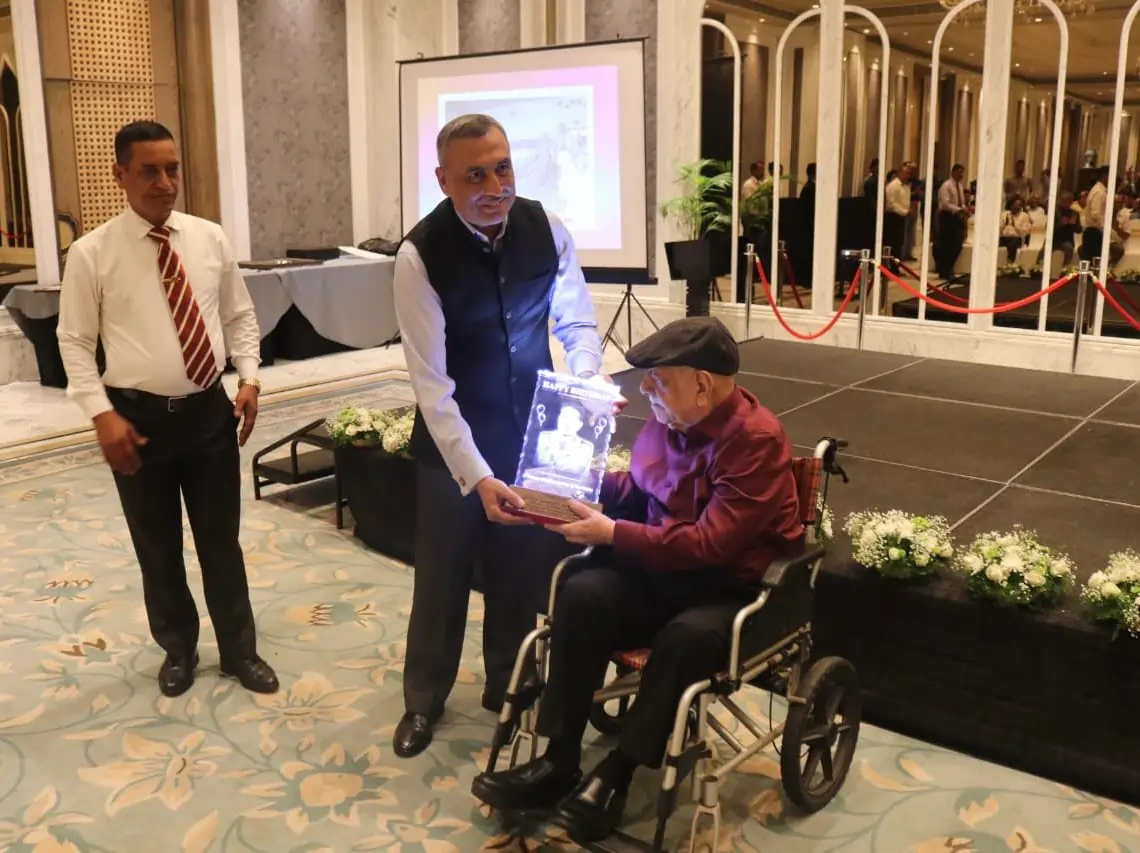
The Indian Army recently commemorated the 100th birthday of Colonel Kanwar Sain Bakshi, AVSM (Retired), honoring him as one of the most distinguished veterans of the MAHAR Regiment. This centennial celebration marked a remarkable life devoted to military service and nation-building, with the Army recognizing Col Bakshi as an iconic figure and a testament to loyalty, duty, and selfless service to India.
Col Bakshi’s military career is intertwined with pivotal events in post-Independence Indian history. He commanded troops during the 1965 India-Pakistan War and later trained generations of soldiers while managing a significant number of prisoners following the 1971 War. His career, characterized by both battlefield courage and exceptional administrative prowess, positioned him as a leader among his peers.
A highlight of Col Bakshi’s legacy occurred during the 1965 War when he served as the Commanding Officer of 2 MAHAR. His leadership during the pivotal Battle of Asal Uttar in the Punjab sector was instrumental. The battle is celebrated as one of the war’s key defensive operations, where Indian forces successfully halted a major Pakistani armored offensive. Under his command, 2 MAHAR fought valiantly and earned both the Battle Honour “Asal Uttar” and the Theatre Honour “Punjab,” which remain proud symbols of the battalion’s collective bravery and dedication.
Following his operational contributions, Col Bakshi served an extensive and historically significant tenure as the Commandant of the MAHAR Regimental Centre for approximately seven-and-a-half years. His extensive time in this role allowed him to cultivate an environment focused on high standards and regimental pride, shaping the foundational training and professional development of numerous officers and soldiers. Veterans remember him not just as a senior officer but also as a mentor who reinforced the regiment’s traditions and values.
During this period, he also oversaw the historic Presentation of Colours to the MAHAR Regiment in 1970, a ceremonial event that symbolizes the unit’s honor and identity. His administrative capabilities were crucial in organizing this significant milestone in the regiment’s history, further solidifying its traditions.
In the aftermath of the 1971 War, Col Bakshi was given the major responsibility of establishing one of the largest prisoner-of-war camps at Dhana, Madhya Pradesh, which housed over 15,000 prisoners. Managing this facility entailed meticulous planning and coordination to ensure compliance with laws governing the treatment of POWs, showcasing his capacity to handle complex military and logistical challenges beyond combat command.
As Col Bakshi reflects on a century of life, the Colonel of the MAHAR Regiment expressed heartfelt gratitude and best wishes from the Indian Army and the regiment’s fraternity. He is celebrated as a symbol of unwavering dedication, loyalty, and service. His contributions as a combat leader, mentor, and institution builder continue to inspire both serving personnel and veterans alike.
Col Bakshi’s journey demonstrates the highest traditions of military service—courageous leadership in battle, responsibility in command, and a profound commitment to the welfare and professional growth of his troops. As the Indian Army pays tribute to this exceptional soldier, leader, mentor, and legend, Col Bakshi’s life remains an enduring source of pride not only for the MAHAR Regiment but also for the nation he served selflessly.


