




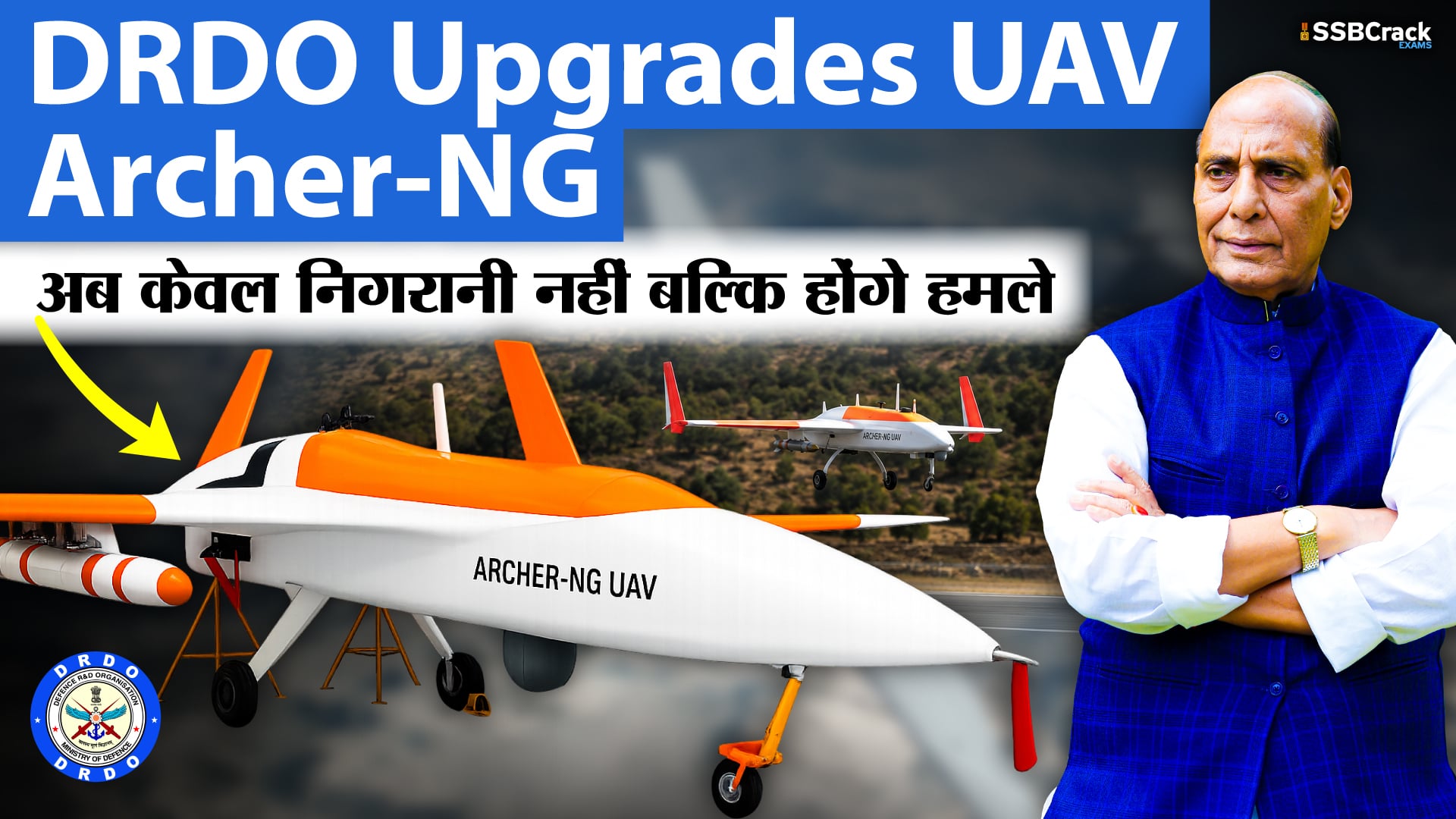
India is taking a significant step towards strengthening its indigenous unmanned warfare capabilities by upgrading the Archer-NG (Next Generation) Unmanned Aerial Vehicle (UAV) into a multi-role combat platform.
DRDO Upgrades UAV Archer-NG
Developed by the Defence Research and Development Organisation (DRDO), the Archer-NG was initially conceived as a Medium-Altitude Long-Endurance (MALE) drone for Intelligence, Surveillance, and Reconnaissance (ISR) missions. It is now being enhanced to perform precision strike operations and counter-drone missions alongside its surveillance role.
Transition from Surveillance to Combat
The evolving nature of modern warfare has highlighted the growing importance of armed unmanned systems. In response, DRDO is transforming Archer-NG into a versatile platform capable of engaging both ground and aerial targets.
The upgraded UAV will retain its primary ISR functions while gaining the ability to conduct precision strikes against enemy assets and participate in counter-UAV operations. This transition reflects India’s emphasis on developing advanced indigenous military technologies to meet future battlefield requirements.
Advanced ISR Capabilities
During its current development phase, Archer-NG is being equipped with state-of-the-art surveillance systems designed to provide real-time battlefield awareness.
Key technologies include:
- High-resolution Electro-Optical (EO) sensors
- Infrared (IR) imaging systems
- Synthetic Aperture Radar (SAR)
- Secure high-bandwidth communication and data links
These systems will enable the UAV to conduct long-duration surveillance missions, monitor enemy activities, and transmit real-time intelligence to commanders for faster operational decision-making.
Endurance and Operational Performance
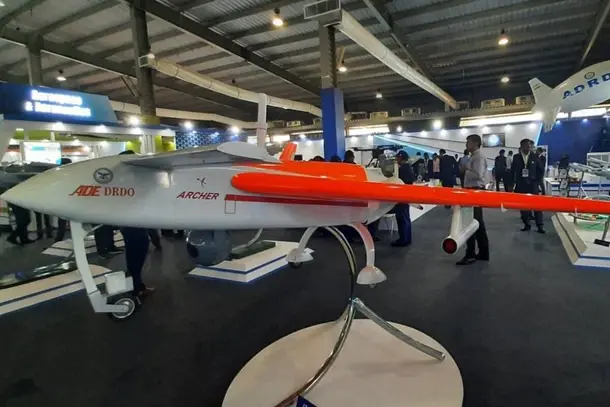
Archer-NG is expected to remain airborne for more than 18 hours and operate at altitudes exceeding 30,000 feet. Such capabilities will allow continuous surveillance over large operational areas while supporting military missions in diverse geographical environments.
Weaponisation and Multi-Role Capability
The next phase of development focuses on transforming Archer-NG into a combat-capable UAV.
The platform is being configured to carry:
- Precision-guided munitions
- Anti-tank guided missiles (ATGMs)
- Air-to-air weapons for counter-drone and aerial engagement roles
These enhancements will allow Archer-NG to destroy enemy armoured vehicles, strike strategic ground targets, and intercept hostile drones, significantly expanding its operational utility.
Strengthening India’s Indigenous Defence Capability
The Archer-NG programme forms part of India’s broader Atmanirbhar Bharat initiative in defence manufacturing. By developing advanced indigenous combat drones, India aims to reduce dependence on imported unmanned systems while building a self-reliant defence industrial base.
The project also demonstrates DRDO’s commitment to integrating advanced sensors, precision weapons, and network-centric technologies into indigenous platforms capable of meeting the evolving demands of modern warfare.
Strategic Importance
The transformation of Archer-NG into a multi-role combat UAV offers several strategic advantages:
- Enhances India’s intelligence, surveillance, and reconnaissance capabilities.
- Provides indigenous precision strike capability without risking pilot lives.
- Strengthens counter-drone operations against emerging aerial threats.
- Supports long-endurance missions across diverse terrains.
- Promotes self-reliance in advanced unmanned combat technologies.
Conclusion
The Archer-NG upgrade marks an important milestone in India’s defence modernisation programme. By evolving from a surveillance-focused UAV into a versatile combat platform, the drone will provide the Indian Armed Forces with improved situational awareness, precision strike capability, and enhanced counter-UAV operations. The project reinforces India’s objective of building technologically advanced and self-reliant defence capabilities for future conflicts.


