





In Defence Current Affairs for 12 August 2026, we will see the latest national and international current affairs news. These important current affairs will be beneficial for your upcoming NDA, CDS, CDS OTA, AFCAT, TA, Agniveer Army, Agniveer Navy, Agniveer Air Force, Women Military Police, INET, MNS, ACC exams, SCO, PCSL, CAPF, and SSB interviews, and direct entries for Army, Navy, and Air Force like SSC Tech, TGC, JAG, NCC, TES, 10+2 Cadet. Download a PDF file about current events at the end of this article. Let us now see the Current Affairs.
Defence Current Affairs 12 August 2026
Indian Navy Launches Next-Generation Offshore Patrol Vessel ‘Shruti’
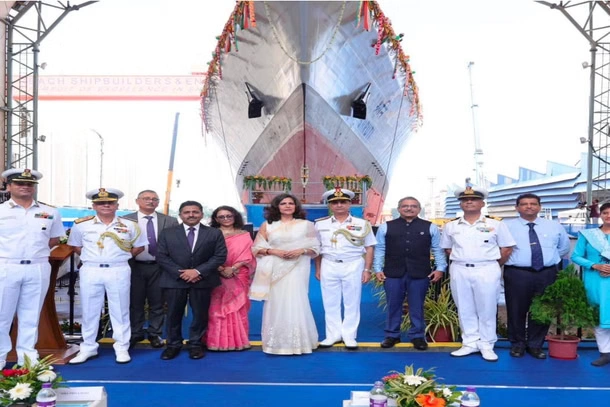
The Indian Navy has taken another step towards strengthening its indigenous shipbuilding capability with the launch of Yard 3037, named ‘Shruti’, a Next Generation Offshore Patrol Vessel (NGOPV), at Garden Reach Shipbuilders & Engineers (GRSE), Kolkata, on 11 August 2026.
The vessel was launched by Mrs Manika Sadhu in the presence of Vice Admiral Sanjay Sadhu, Controller of Warship Production & Acquisition. Senior representatives of the Indian Navy, Ministry of Defence and GRSE attended the ceremony.
Role of Next-Generation OPVs
The construction of NGOPVs is being undertaken simultaneously at two Indian shipyards:
- GRSE, Kolkata
- Goa Shipyard Limited (GSL), Goa
These vessels have been indigenously designed and built and are intended to strengthen India’s maritime operational capabilities.
The ships will be capable of undertaking multiple missions, including:
- Maritime surveillance
- Search and rescue operations
- Protection of offshore assets
- Humanitarian Assistance and Disaster Relief (HADR)
- Anti-piracy operations
Why is the Ship Named ‘Shruti’?
The name ‘Shruti’ has been drawn from India’s ancient heritage and refers to the four Vedas. The ship’s crest features the Ursa Major constellation along with a red-and-white lighthouse.
Significance
The launch reflects India’s growing focus on Aatmanirbhar Bharat and Make in India in naval shipbuilding. Increasing domestic construction of warships can reduce dependence on foreign suppliers while strengthening India’s maritime security capabilities.
HFCL Unveils Indigenous Defence Communication and Surveillance Systems
HFCL Limited has introduced a range of advanced defence technologies designed to improve secure military communications and battlefield awareness. The new systems include High Capacity Radio Relay systems, Drone Detection Radars and Ground Surveillance Radars.
The developments are part of India’s broader effort to increase self-reliance in defence technology under the Aatmanirbhar Bharat initiative.
High Capacity Radio Relay
HFCL’s High Capacity Radio Relay system is designed to provide secure line-of-sight communication even in difficult operational environments.
The system provides high-speed backhaul connectivity of up to 100 Mbps and supports both point-to-point and multipoint communication.
It also incorporates:
- Adaptive power control
- Frequency-hopping technology
- Interference resilience
- Secure communications
These capabilities can help maintain reliable communication between forward military formations and command headquarters.
Manufacturing Facility
HFCL’s defence manufacturing facility at Hosur, Tamil Nadu, inaugurated in December 2024, is expected to play an important role in scaling production.
The facility has the capacity to manufacture annually:
- 1,000 High Capacity Radio Relay units
- 1,000 Surveillance Radars
Significance
Indigenous communication and surveillance technologies can strengthen India’s military preparedness by reducing dependence on imported systems and improving the availability of critical defence equipment.
Gaganyaan Mission Remains on Track for 2027 Crewed Flight
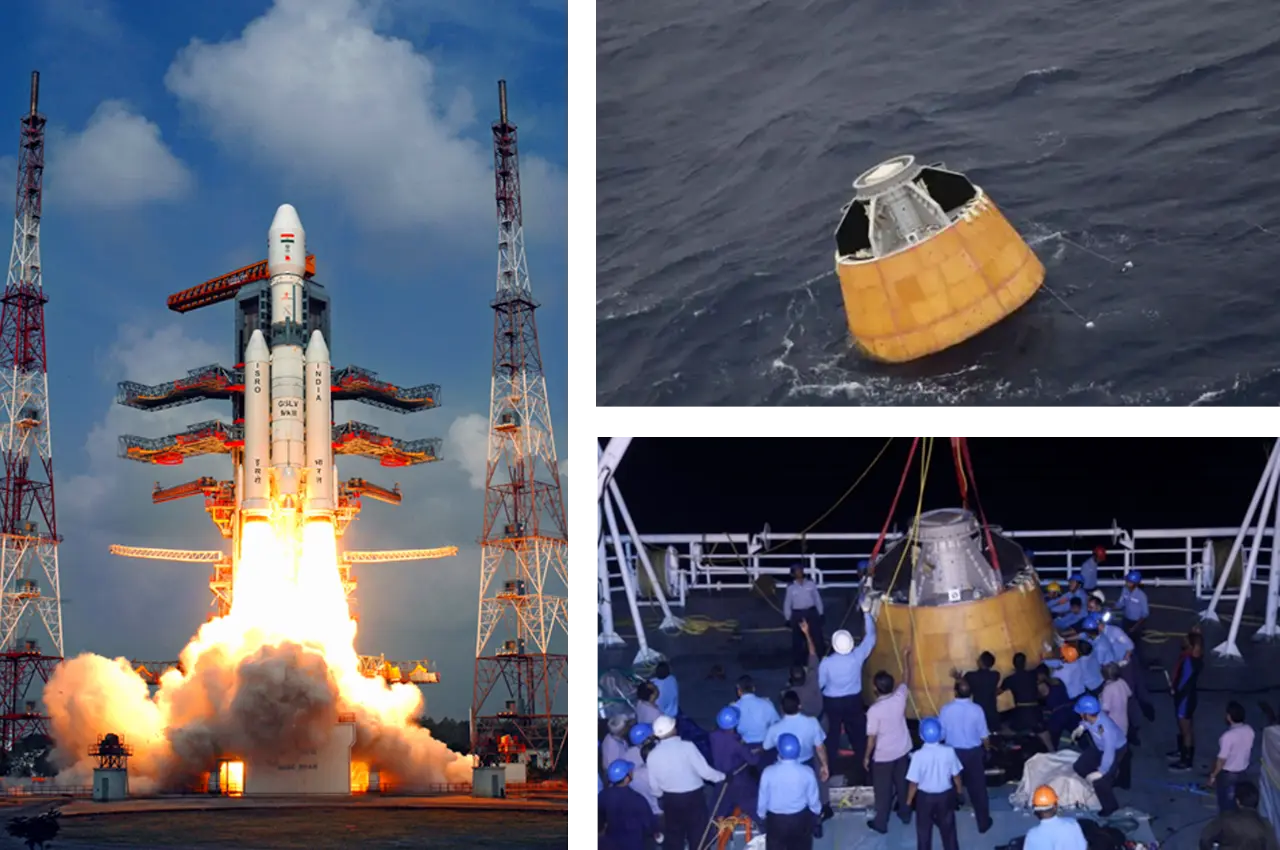
India’s ambitious Gaganyaan human-spaceflight programme continues to progress according to the planned timeline. The first uncrewed experimental mission is scheduled for late 2026, while India’s first crewed Gaganyaan mission is targeted for 2027.
The programme is an important milestone in India’s space programme because it aims to demonstrate India’s capability to send humans safely into low Earth orbit and bring them back to Earth.
Human-Rated Launch Vehicle
The mission will use the Human Rated Launch Vehicle Mark-3 (HLVM-3), derived from ISRO’s proven LVM-3 rocket.
According to the PPT, the HLVM-3 has completed development and ground testing of its propulsion stages and structures. The human-rated version incorporates additional safety and redundancy features necessary for crewed missions.
Crew and Service Modules
The Orbital Module consists of:
- Crew Module
- Service Module
Their propulsion systems have undergone development, testing and qualification.
Crew Escape System
One of the most important safety components is the Crew Escape System (CES). It is designed to protect astronauts in the event of an emergency during launch.
Five types of motors have been developed and static tested, while the structures of the escape system have been realised and qualified. The next major milestone is the TV-D2 test, which will further validate the system during flight.
Vyommitra
India’s humanoid robot Vyommitra is scheduled to fly during the first uncrewed mission in the fourth quarter of 2026. The mission will help validate several technologies required for human spaceflight.
Bharatiya Antariksh Station
Alongside Gaganyaan, India is also progressing towards the Bharatiya Antariksh Station, which is targeted for operationalisation by 2035.
Significance
Successful completion of Gaganyaan would establish India as a country capable of independently conducting human spaceflight missions, while providing technological foundations for future space-station and deep-space exploration programmes.
Mumbai Start-Up Develops Indigenous Joule-Thomson Cooler for Missile Seekers
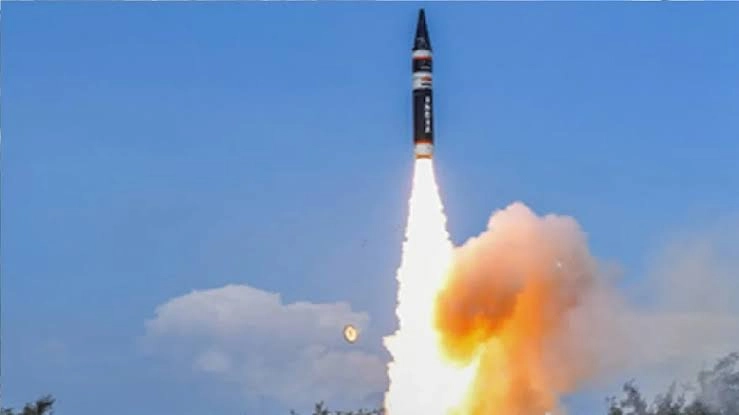
A Mumbai-based defence start-up, Techno Defence Pvt Ltd, has developed an indigenous Joule-Thomson (JT) Cooler used in missile seeker systems. The technology represents an important development because such systems have historically been controlled by a limited number of technologically advanced countries.
The development was supported by the Defence Research and Development Organisation (DRDO).
What Is a Joule-Thomson Cooler?
A JT Cooler is a compact cooling device used to rapidly reduce the temperature of certain sensors.
In missile systems using infrared-guided seekers, sensors and focal-plane arrays need to be cooled to extremely low temperatures to operate effectively.
The device developed by Techno Defence can cool infrared sensors to approximately –196°C. It is described as miniature, lightweight and vibration-free.
How Was the Technology Developed?
The project originated from an interaction between IIT-Bombay alumnus Dr Pravin Salinkar and a DRDO laboratory director around 2017–18.
Dr Salinkar subsequently co-founded Techno Defence with fellow IIT-Bombay alumnus Sudarshan Saraf. The company assembled a small team of engineers and technicians to work on the technology.
In 2020, the company received funding under the DRDO Technology Development Fund (TDF) scheme to design and develop the JT Cooler.
The company also collaborated with DRDO’s Solid State Physics Laboratory (SSPL) and Research Centre Imarat (RCI).
Strategic Importance
JT Cooler technology is particularly important for infrared-guided missile seekers. The technology is subject to Missile Technology Control Regime (MTCR) restrictions and has historically been available mainly to countries such as the United States, France and Israel.
India’s indigenous capability in this area can:
- Reduce dependence on foreign technology
- Support domestic missile production
- Strengthen India’s defence technology base
- Potentially create opportunities for defence exports
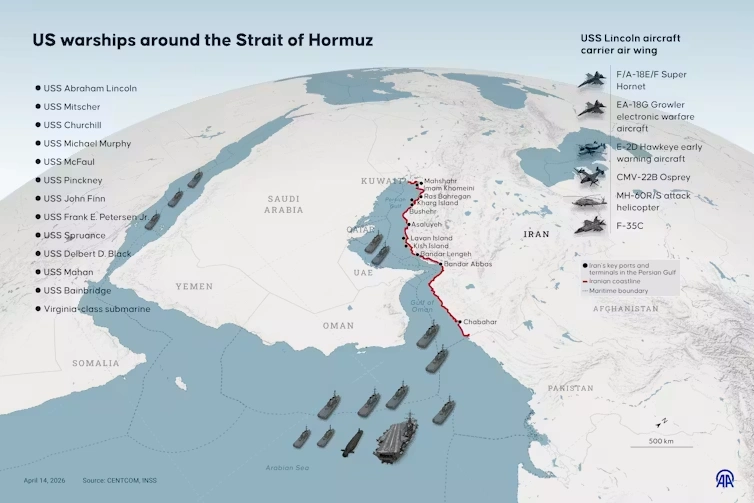
Trump Says US Controls Strait of Hormuz, Warns Iran Amid Rising Tensions
- Tensions between the United States and Iran have intensified over the strategically important Strait of Hormuz, a crucial maritime route for global energy supplies. US President Donald Trump has asserted that the United States has control over the waterway and warned Iran against taking further action.
- The remarks came amid continuing military and diplomatic tensions in the region, with shipping activity and energy markets facing growing uncertainty.
- Trump’s Statement on the Strait of Hormuz
- Speaking to reporters, Trump said that the United States “totally control[s] the Strait of Hormuz” and warned that Iran could face severe consequences if it takes further action against US interests.
- The statement reflects Washington’s increasingly hardline position towards Tehran as negotiations over the conflict remain uncertain.
- Trump has simultaneously indicated that the United States could continue negotiations while keeping military options open, creating uncertainty about the future course of the conflict.
- Why Is the Strait of Hormuz Important?
- The Strait of Hormuz is one of the world’s most important energy chokepoints. It connects the Persian Gulf with the Gulf of Oman and the Arabian Sea, providing a major route for oil and liquefied natural gas shipments.
- Before the current conflict, the waterway handled approximately one-fifth of global oil and LNG flows, making any prolonged disruption potentially significant for international energy markets.
- Any threat to shipping through the strait can therefore affect:
- Global crude-oil prices
- LNG supplies
- Shipping and insurance costs
- Energy security of importing countries
- Inflation and transportation costs
- Iran’s Position
- Iran has taken a firm position regarding the reopening of the waterway. Iranian security official Mohsen Rezaei said that the Strait of Hormuz would remain closed unless Washington accepted Tehran’s conditions, including the release of frozen Iranian assets and an end to regional conflicts.
- This has raised concerns about a prolonged disruption to international shipping.
- Impact on Global Oil Markets
- The uncertainty surrounding the Strait of Hormuz is already influencing energy markets. According to Reuters, Brent crude settled at $88.91 per barrel on 11 August 2026, while US crude settled at $83.20 per barrel.
- A prolonged disruption could push oil prices higher because removing a significant volume of crude from international markets would tighten global supply.
- For oil-importing countries, higher crude prices could translate into increased costs for:
- Petrol and diesel
- Aviation fuel
- Transport
- Industrial production
- Electricity and other energy-intensive activities
- Growing Risks to Maritime Security
- The crisis is not limited to the Strait of Hormuz. Shipping has also faced security threats around other strategic waterways.
- On 11 August, a suspected Houthi attack in the Bab el-Mandeb Strait reportedly killed four crew members and two Yemeni rescuers. Separately, the US military said it had used missiles to disable a cargo ship that allegedly violated a naval blockade near Iranian ports.
- These incidents demonstrate how tensions in the region can affect several major maritime routes simultaneously.
- Why the Issue Matters for India
- India is highly dependent on imported crude oil, making developments around the Strait of Hormuz particularly important for its energy security.
- A prolonged disruption could increase India’s crude-import bill if global oil prices rise sharply. It could also place pressure on domestic fuel prices, inflation and the country’s current-account position.
- At the same time, India has strong economic and strategic interests across the Gulf region, including relationships with major oil-producing countries.
Review Questions
- ‘Shruti’, the Next Generation Offshore Patrol Vessel (NGOPV), was launched at
which shipyard?
A) Cochin Shipyard Limited
B) Goa Shipyard Limited
C) Garden Reach Shipbuilders & Engineers (GRSE)
D) Mazagon Dock Shipbuilders Limited
Answer: C) Garden Reach Shipbuilders & Engineers (GRSE) - The NGOPVs being constructed by GRSE and GSL are primarily intended for which
of the following missions?
A) Only anti-submarine warfare
B) Only aircraft carrier operations
C) Maritime surveillance, search and rescue, anti-piracy and HADR
D) Strategic nuclear deterrence
Answer: C) Maritime surveillance, search and rescue, anti-piracy and HADR - What is the maximum backhaul connectivity capacity of HFCL’s High Capacity
Radio Relay system mentioned in the PPT?
A) 50 Mbps
B) 100 Mbps
C) 500 Mbps
D) 1 Gbps
Answer: B) 100 Mbps - India’s first crewed Gaganyaan mission is targeted for which year?
A) 2026
B) 2027
C) 2030
D) 2035
Answer: B) 2027 - Which humanoid robot is planned to fly during the first uncrewed Gaganyaan
mission?
A) Vyomika
B) Gagani
C) Vyommitra
D) Antariksh
Answer: C) Vyommitra - The indigenous Joule-Thomson Cooler developed for missile seeker applications
can cool infrared sensors to approximately:
A) –50°C
B) –100°C
C) –150°C
D) –196°C
Answer: D) –196°C - The Joule-Thomson Cooler project received support under which DRDO scheme?
A) iDEX
B) Mission Shakti
C) Technology Development Fund (TDF)
D) Technology Development Board
Answer: C) Technology Development Fund (TDF) - Light Combat Helicopter Is Manufactured By
A. DRDO
B. HAL
C. Boeing
D. Airbus
ANSWER: B - Ex ‘KAZIND’ & ‘KHANJAR’ Conducted b/w India &
A. Kazakhstan
B. Kyrgyzstan
C. Both a & b
D. None of the above
ANSWER: C - Munitions India Limited Is An Indian State-owned Defence Company, HQ in
A. Pune
B. Mumbai
C. Noida
D. Chennai
ANSWER: A - Current CDS Of India Is
A. Gen Anil Chauhan
B. Gen Bipin Rawat
C. Gen M M Naravane
D. General N. S. Raja Subramani
ANSWER: D - War Cry of Mechanised Infantry Regiment Is
A. Durga Mata K Jai
B. Raja Ram Chandra K Jai
C. Bolo Bharat Mata Ki Jai
D. Bajrang Bali K Jai
ANSWER: C - Ex ‘BLUE FLAG’ Conducted b/w India &
A. Qatar
B. Oman
C. UAE
D. Israel
ANSWER: D - Operation Devi Shakti Was Conducted In
A. 2016
B. 2017
C. 2018
D. 2021
ANSWER: D - Always Alert Is The Motto Of
A. RAW
B. IB
C. DRDO
D. None of the above
ANSWER: B - Only Five-star Rank Officer of The IAF Is
A. K.M Karippa
B. V R Chaudhary
C. R K S Bhadauria
D. Arjan Singh
ANSWER: D - SPYDER Is A
A. Destroyer
B. OPV
C. Submarine
D. Air defence system
ANSWER: D - Vilnius Is the Capital Of
A. Lithuania
B. Qatar
C. Malawi
D. Maldives
ANSWER: A - “Making of a General-A Himalayan Echo” Book Is Written By
A. Ramesh Kandula
B. Meghna Pant
C. Hunter Biden
D. Lt. Gen. Konsam Himalay Singh
ANSWER: D - President’s Bodyguard Motto Is
A. Jai Hind
B. Sarvda Shaktishali
C. Bharat Mata Ki Jai
D. Rashtra Pratham
ANSWER: C
ALSO READ:
- Latest Daily Current Affairs and Defence Updates
- Latest Daily Current Affairs July 2026[DOWNLOAD PDF]
- Latest Daily Current Affairs June 2026[DOWNLOAD PDF]
- Latest Daily Current Affairs May 2026[DOWNLOAD PDF]
- Latest Daily Current Affairs April 2026[DOWNLOAD PDF]
- Latest Daily Current Affairs March 2026[DOWNLOAD PDF]
- Latest Daily Current Affairs February 2026[DOWNLOAD PDF]
- Latest Daily Current Affairs January 2026[DOWNLOAD PDF]
- Latest Daily Current Affairs November 2025[DOWNLOAD PDF]
- Latest Daily Current Affairs October 2025[DOWNLOAD PDF]
- Latest Daily Current Affairs August 2025[DOWNLOAD PDF]
- Latest Daily Current Affairs July 2025[DOWNLOAD PDF]


