




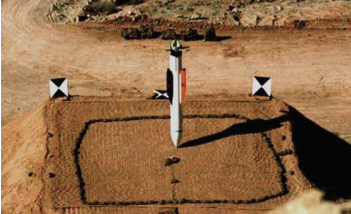
The GBU-57, widely referred to as the Massive Ordnance Penetrator (MOP), stands as a pivotal advancement in the United States’ arsenal of precision-guided munitions, specifically designed to address the challenges posed by deeply buried and heavily fortified targets such as Iran’s Fordow fuel-enrichment plant, which is notoriously resilient against conventional strikes.
This heavyweight bomb, weighing approximately 30,000 pounds and measuring over 20 feet in length, is engineered to penetrate substantial layers of hardened concrete and soil before detonation. The GBU-57’s design emphasizes penetration over blast effects, enabling it to target high-value installations that are typically secured against aerial assaults. Utilizing a high-explosive warhead and reinforced structure, it can reach depths of up to 200 feet before exploding, maximizing the effectiveness of each strike.
The development of the GBU-57 emerged in response to the growing trend of adversaries concealing weapons of mass destruction and other strategic facilities underground, beyond the reach of traditional air-delivered weapons. Historical models, such as the GBU-28 and GBU-37, proved inadequate for the advanced fortifications being constructed by adversaries, necessitating the creation of the MOP. The initial stages of its development began in 2004, with flight tests conducted by 2008, and by 2011, the bomb achieved operational capability under the Air Force’s oversight.
A hallmark of the GBU-57 is its advanced fuzing technology, which allows it to detonate only after full penetration of the target’s defenses. This is facilitated by a specialized casing, which provides kinetic energy during descent, and void-sensing technology that delays detonation until the bomb reaches an internal chamber, ensuring maximum destruction deep within the target.
Despite its formidable capabilities, the GBU-57 has limitations. Its significant weight restricts it to being deployed exclusively from the B-2 Spirit bomber, and it is not intended for tactical missions or close air support. Additionally, its effectiveness can be compromised by exceptionally dense materials or complex underground structures, which may prevent optimal penetration and disrupt the fuze mechanism.
In operation, the GBU-57 has been linked to strategic military planning, particularly regarding high-stakes targets like Iran’s nuclear facilities. Its deployment is typically reserved for rare scenarios where critical infrastructure demands specialized munitions, affirming its role as a game-changer in the realm of precision strikes against fortified installations.
Looking forward, the necessity for robust munitions like the GBU-57 is anticipated to increase as adversaries continue to enhance their underground capabilities. Future enhancements may address its guidance systems and penetration materials, ensuring that it remains a crucial asset in modern warfare. By maintaining the ability to engage even the most heavily protected targets, the GBU-57 underscores the ongoing evolution of military strategies in the face of emerging global threats.


