




In Defence Current Affairs for 02 July 2026, we will see the latest national and international current affairs news. These important current affairs will be beneficial for your upcoming NDA, CDS, CDS OTA, AFCAT, TA, Agniveer Army, Agniveer Navy, Agniveer Air Force, Women Military Police, INET, MNS, ACC exams, SCO, PCSL, CAPF, and SSB interviews, and direct entries for Army, Navy, and Air Force like SSC Tech, TGC, JAG, NCC, TES, 10+2 Cadet. Download a PDF file about current events at the end of this article. Let us now see the Current Affairs.
Defence Current Affairs 02 July 2026
Major Defence Leadership Appointments
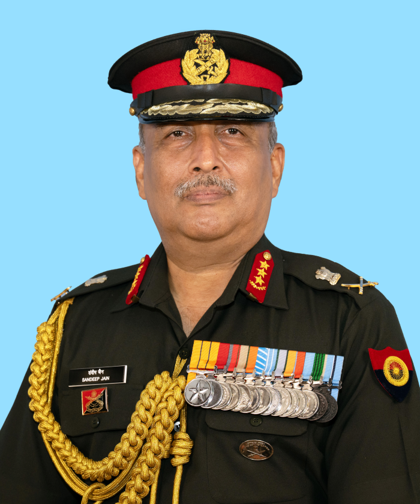
- Lieutenant General Sandeep Jain, AVSM, SM assumed the appointment of Vice Chief of the Army Staff (VCOAS).
- An alumnus of the National Defence Academy (NDA), Lt Gen Sandeep Jain was commissioned into the MAHAR Regiment in June 1988.
- During his nearly 38 years of distinguished service, he has held several important command and staff appointments across diverse operational areas.
- Before becoming the VCOAS, Lt Gen Sandeep Jain served as the General Officer Commanding-in-Chief (GOC-in-C), Southern Command.
- Lieutenant General Rajesh Pushkar, AVSM, VSM assumed charge as the General Officer Commanding-in-Chief (GOC-in-C), Southern Command on 1 July 2026, succeeding Lt Gen Sandeep Jain.
- Lieutenant General Mohit Malhotra, AVSM, SM took over as the General Officer Commanding-in-Chief (GOC-in-C), South Western Command.
- Air Marshal Jasvir Singh Mann, AVSM, VSM assumed command as the Air Officer Commanding-in-Chief (AOC-in-C), Southern Air Command on 1 July 2026.
- He was presented with a Ceremonial Guard of Honour at the Headquarters of Southern Air Command on the occasion.
- Air Marshal P.V. Shivanand, AVSM, VM assumed the appointment of Air Officer Commanding-in-Chief (AOC-in-C), South Western Air Command on 1 July 2026.
- After taking charge, he paid tribute to the Bravehearts at the South Western Air Command War Memorial.
India & Malaysia Review Entire Spectrum Of Bilateral Military Cooperation
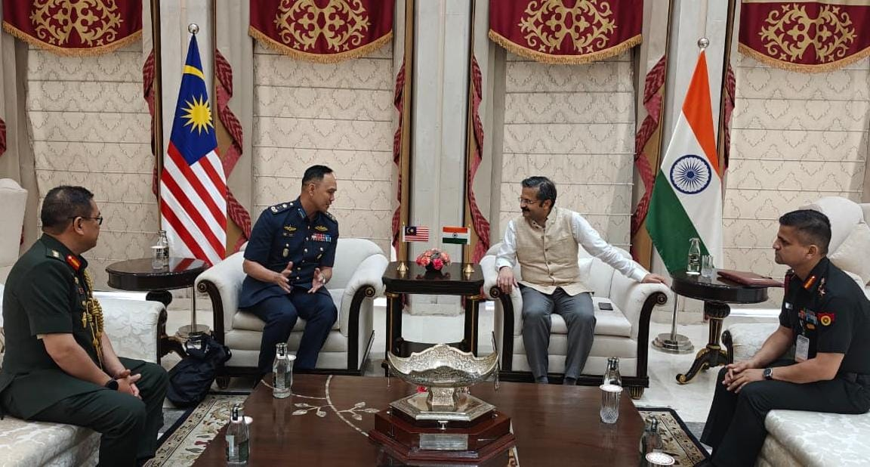
- The 12th India-Malaysia Sub Committee Meeting on Military Cooperation (SCMC) took place in New Delhi on July 01, 2026.
- The meeting was co-chaired by Joint Secretary, Ministry of Defence, India Shri Amitabh Prasad and Assistant Chief of Staff, Defence Operations & Training, Malaysian Armed Forces Maj Gen Amer Mahmud Bin Abdul Rahman.
- The two sides reviewed the entire spectrum of bilateral military cooperation and expressed satisfaction with the steady progress achieved.
- The discussions covered ongoing defence engagements, including military-to-military exchanges, bilateral exercises, training, staff talks, capacity building, maritime cooperation, and cooperation in emerging domains.
- The meeting underscored the importance of strengthening defence cooperation as a key pillar of the India-Malaysia Enhanced Strategic Partnership. Both sides reaffirmed their commitment to further deepening bilateral defence ties based on mutual trust, shared interests, and a common vision for a secure, stable, and prosperous Indo-Pacific.
- India & Malaysia Relations
- Overview
- India and Malaysia share strong historical, cultural, economic, and strategic ties spanning over two millennia.
- Diplomatic relations were established in 1957, soon after Malaysia (then the Federation of Malaya) gained independence.
- The relationship was elevated to an Enhanced Strategic Partnership during the visit of the Malaysian Prime Minister to India in 2024.
- Historical and Cultural Relations
- Ancient trade connected India with the Malay Peninsula through maritime routes.
- Indian culture has significantly influenced Malaysia’s language, architecture, traditions, and festivals.
- Malaysia is home to over 2 million people of Indian origin, making them one of the country’s largest ethnic communities.
- Festivals such as Deepavali, Thaipusam, and Pongal are celebrated widely in Malaysia.
- Political Relations
- Regular high-level visits strengthen bilateral cooperation.
- Both countries cooperate closely in regional and multilateral forums such as:
- ASEAN
- East Asia Summit (EAS)
- ASEAN Regional Forum (ARF)
- Indian Ocean Rim Association (IORA)
- United Nations (UN)
- India supports ASEAN centrality under its Act East Policy.
- Economic and Trade Relations
- Malaysia is among India’s largest trading partners in Southeast Asia.
- Bilateral trade includes:
- Petroleum products
- Electronics
- Machinery
- Chemicals
- Palm oil
- Pharmaceuticals
- Agricultural products
- Trade is governed by the ASEAN–India Trade in Goods Agreement (AITIGA).
- Both countries aim to expand investment, digital trade, and green economy cooperation.
- Investment Relations
- Malaysian companies have invested in:
- Infrastructure
- Highways
- Construction
- Renewable energy
- Real estate
- Indian companies are active in:
- Information Technology
- Healthcare
- Manufacturing
- Banking
- Education
- Defence and Security Cooperation
- Defence cooperation includes:
- Joint military exercises
- Training programmes
- Defence industry collaboration
- Maritime security
- Key exercise:
- Exercise Harimau Shakti (Army)
- Cooperation also covers:
- Counter-terrorism
- Cybersecurity
- Intelligence sharing
- Defence exchanges
- Maritime Cooperation
- Both countries support:
- Freedom of navigation
- Maritime safety
- Blue Economy initiatives
- Disaster relief cooperation
- Cooperation is important due to the strategic Strait of Malacca, one of the world’s busiest shipping routes.
- Education and People-to-People Ties
- Thousands of Indian students pursue medical and higher education in Malaysia.
- Academic exchanges and scholarships continue to strengthen educational cooperation.
- Tourism between the two countries has grown significantly.
- Healthcare Cooperation
- Collaboration in:
- Pharmaceuticals
- Medical tourism
- Traditional medicine
- Healthcare technology
- Space and Technology
- Cooperation is expanding in:
- Digital economy
- Artificial Intelligence
- Start-up ecosystem
- Space technology
- Innovation
- Recent Developments (2024–26)
- Relations upgraded to an Enhanced Strategic Partnership.
- Both countries committed to increasing bilateral trade and investment.
- Greater focus on:
- Semiconductor cooperation
- Digital payments
- FinTech
- Green energy
- Renewable technologies
- Supply chain resilience
- Continued cooperation under India’s Act East Policy and Malaysia’s role as a key ASEAN partner.
Indian Army Creates Integrated Battle Groups in Major Military Reform
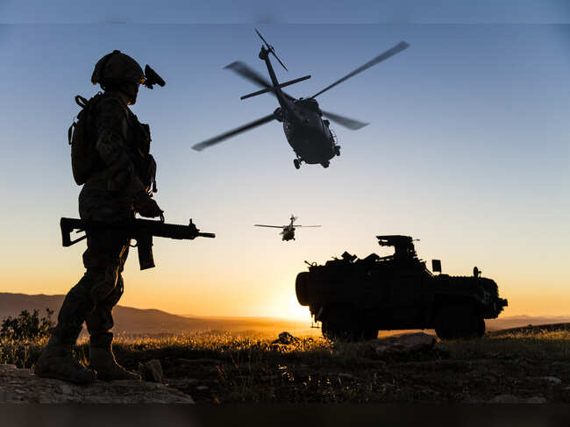
- The Indian Army has initiated one of its most significant organisational reforms by raising five Integrated Battle Groups (IBGs) and one dedicated Fire Support Group (FSG).
- The move is aimed at transforming the Army into a faster, more agile, and technology-driven force capable of responding effectively to future security challenges. The new formations became operational on 1 July 2026 as part of the Army’s ongoing modernisation programme.
- The first phase of the reform has been implemented under the XVII Mountain Strike Corps, headquartered at Panagarh in West Bengal.
- This corps is primarily responsible for operations along India’s northern border with China.Unlike the traditional structure, where infantry, armour, artillery, engineers, air defence, signals, logistics, and aviation function separately, an IBG integrates these capabilities into a single formation.
- This enables rapid mobilisation, quicker decision-making, and enhanced operational flexibility across different terrains.
- Each IBG consists of more than 5,000 personnel and includes infantry, armoured units, artillery, engineers, air defence, signals, logistics, and surveillance assets.The formations are tailored according to the operational requirements of specific regions, making them suitable for both offensive and defensive operations.A newly introduced Chief Operations Officer, generally of Brigadier rank, will coordinate planning and execution within each IBG, ensuring greater synergy among different combat arms.
- The newly created Fire Support Group (FSG) has been established to provide concentrated and precise long-range firepower to the Integrated Battle Groups.Equipped with advanced artillery systems and precision-strike capabilities, the FSG is expected to significantly improve the Army’s ability to neutralise enemy positions while supporting ground operations.
- Alongside the introduction of IBGs, the Army is also restructuring its formations through initiatives such as Rudra all-arms brigades, Bhairav light commando battalions, Shaktimaan artillery regiments, and Divyastra drone and precision-strike units.
Agnikul Cosmos & ICEYE Sign MoU to Develop SAR Satellite Systems
- Agnikul Cosmos, an Indian private space transportation company, and ICEYE, a Finland-based Synthetic Aperture Radar (SAR) satellite company, signed a Memorandum of Understanding (MoU) on 30 June and 1 July 2026.
- The agreement aims to jointly build, launch, and operate Synthetic Aperture Radar (SAR) Earth observation satellite systems from India.
- The MoU was signed during the Bharat Innovates event held in Nice, France.
- The partnership seeks to strengthen India’s commercial space ecosystem by combining Agnikul’s launch capabilities with ICEYE’s expertise in SAR satellite technology.
- Synthetic Aperture Radar (SAR) satellites can capture high-resolution images of the Earth’s surface regardless of weather conditions or time of day, making them valuable for continuous monitoring.
- The collaboration is expected to support applications such as:
- Disaster management
- Agriculture monitoring
- Maritime surveillance
- Border security
- Environmental monitoring
- Urban planning
- The initiative aligns with India’s vision of expanding private sector participation in the space sector and enhancing indigenous Earth observation capabilities.
- It also reinforces India’s growing position as a global hub for satellite manufacturing and commercial space launches.
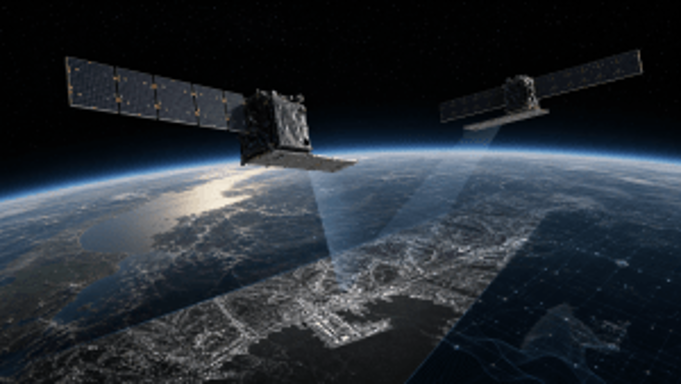
Vidura SAR System: Strengthening India’s Tactical Surveillance Capability
India has taken another significant step towards self-reliance in defence technology with the development of the Vidura Synthetic Aperture Radar (SAR) System by Ahmedabad-based space technology startup PierSight. The company has secured a major contract, reportedly from the Indian Army, for the supply of the indigenous radar system, highlighting the growing role of Indian start-ups in strengthening the country’s defence capabilities under the Aatmanirbhar Bharat initiative.
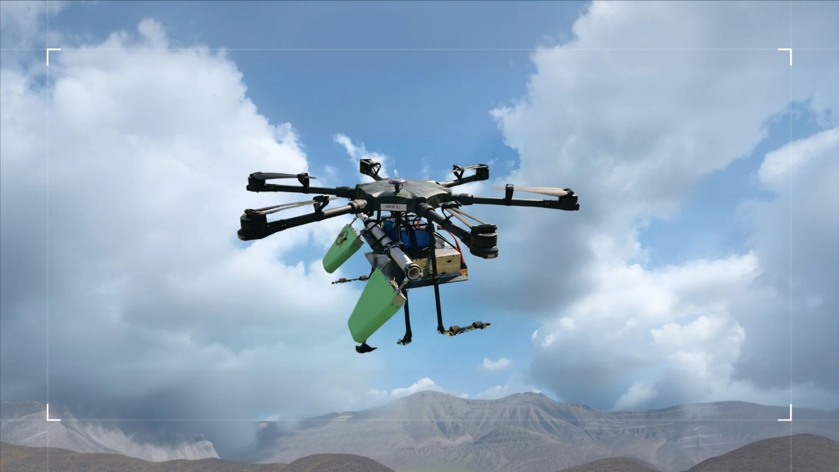
Vidura is an advanced airborne Synthetic Aperture Radar (SAR) payload designed to provide reliable surveillance in conditions where conventional optical sensors are ineffective. Unlike ordinary cameras, the radar can generate high-resolution images through dense cloud cover, heavy vegetation, smoke, and complete darkness. This enables security forces to detect hidden structures, vehicles, and movement even in adverse weather or low-visibility conditions.
The system has been developed to support a wide range of military operations, including border surveillance, intelligence gathering, reconnaissance, and counter-insurgency missions. It is particularly useful in difficult terrains such as the North-Eastern states and the Union Territory of Jammu and Kashmir, where dense forests and mountainous landscapes often limit the effectiveness of optical surveillance systems.
Vidura is an evolution of Varuna, PierSight’s earlier Synthetic Aperture Radar programme that was originally designed for maritime surveillance through a planned constellation of satellites. By leveraging the technological expertise and intellectual property developed under the Varuna project, the company successfully adapted the technology for tactical land-based defence applications.
One of the key strengths of Vidura is its support for P-band, L-band, and X-band radar configurations. These multiple frequency options allow the system to perform different surveillance tasks, ranging from deep penetration through vegetation to high-resolution imaging of surface targets. The radar also offers wide-area coverage, making it suitable for monitoring large operational zones.
Another important feature of Vidura is its drone-agnostic design, which allows it to be integrated with various types of unmanned aerial vehicles (UAVs) rather than being restricted to a single platform. This flexibility enables the armed forces to deploy the system on different drones according to mission requirements, enhancing operational efficiency and reducing dependence on specific manufacturers.
Field trials of Vidura commenced in mid-2026, with defence agencies evaluating its performance under operational conditions. During testing, the system demonstrated its capability to conduct Intelligence, Surveillance, and Reconnaissance (ISR) missions from stand-off distances while remaining within friendly airspace. This approach reduces operational risks to personnel while providing real-time situational awareness and actionable intelligence.
The induction of the Vidura SAR System reflects India’s increasing focus on indigenous defence innovation, advanced surveillance technologies, and private-sector participation in national security. As the country continues to modernise its armed forces, systems like Vidura are expected to play an important role in enhancing battlefield awareness, improving border management, and strengthening India’s overall defence preparedness.
Review Questions
- India and Malaysia elevated their bilateral ties to which level in 2024?
A. Strategic Dialogue
B. Comprehensive Economic Partnership
C. Enhanced Strategic Partnership
D. Defence Cooperation Agreement
Answer: C - Which Indian policy forms the basis of India’s engagement with Malaysia and the
ASEAN region?
A. Neighbourhood First Policy
B. Look West Policy
C. SAGAR Policy
D. Act East Policy
Answer: D - Exercise Harimau Shakti is a joint military exercise conducted between India and
which country?
A. Indonesia
B. Singapore
C. Thailand
D. Malaysia
Answer: D - The Strait of Malacca, important for India–Malaysia maritime cooperation,
connects which two water bodies?
A. Arabian Sea and Bay of Bengal
B. Andaman Sea and South China Sea
C. Indian Ocean and Red Sea
D. Bay of Bengal and Java Sea
Answer: B - The ASEAN–India Trade in Goods Agreement (AITIGA) primarily aims to promote:
A. Space cooperation
B. Defence production
C. Trade in goods between India and ASEAN countries
D. Cultural exchanges
Answer: C - The Indian Army recently operationalised five Integrated Battle Groups (IBGs) and
one Fire Support Group under which Corps?
A. I Corps
B. II Corps
C. XIV Corps
D. XVII Mountain Strike Corps
Answer: D - What is the primary objective of an Integrated Battle Group (IBG)?
A. Increase administrative staff
B. Conduct only peacekeeping operations
C. Enable rapid, self-contained and integrated combat operations
D. Replace the Indian Air Force in border operations
Answer: C - Which of the following is NOT typically an integral component of an Integrated
Battle Group (IBG)?
A. Infantry
B. Artillery
C. Engineers
D. Merchant Navy
Answer: D - The newly created Fire Support Group (FSG) is mainly responsible for:
A. Border fencing
B. Medical evacuation
C. Logistics management
D. Providing concentrated long-range artillery and precision fire support
Answer: D - The establishment of Integrated Battle Groups is primarily intended to:
A. Reduce India’s defence budget
B. Increase the size of Army divisions
C. Replace all existing Army regiments
D. Improve operational readiness, mobility, and battlefield effectiveness
Answer: D - Who assumed the appointment of the Vice Chief of the Army Staff (VCOAS) on 1
July 2026?
A. Lt Gen Rajesh Pushkar
B. Lt Gen Mohit Malhotra
C. Lt Gen Sandeep Jain
D. Gen Dhiraj Seth
Answer: C - Lieutenant General Sandeep Jain was commissioned into which regiment of the
Indian Army?
A. Rajput Regiment
B. Sikh Regiment
C. Gorkha Rifles
D. MAHAR Regiment
Answer: D - Lieutenant General Sandeep Jain is an alumnus of which prestigious military
institution?
A. Indian Military Academy (IMA)
B. Officers Training Academy (OTA)
C. National Defence Academy (NDA)
D. Defence Services Staff College (DSSC)
Answer: C - Before becoming the Vice Chief of the Army Staff, Lt Gen Sandeep Jain served as
the:
A. GOC-in-C, Eastern Command
B. GOC-in-C, Northern Command
C. GOC-in-C, South Western Command
D. GOC-in-C, Southern Command
Answer: D - Who assumed charge as the General Officer Commanding-in-Chief (GOC-in-C) of
the Southern Command on 1 July 2026?
A. Lt Gen Mohit Malhotra
B. Lt Gen Dhiraj Seth
C. Lt Gen Rajesh Pushkar
D. Lt Gen Upendra Dwivedi
Answer: C - Lieutenant General Mohit Malhotra assumed command of which Army
Command?
A. Northern Command
B. Eastern Command
C. Southern Command
D. South Western Command
Answer: D - Who assumed command as the Air Officer Commanding-in-Chief (AOC-in-C) of
the Southern Air Command?
A. Air Marshal P.V. Shivanand
B. Air Chief Marshal A.P. Singh
C. Air Marshal Jasvir Singh Mann
D. Air Marshal Amar Preet Singh
Answer: C - Air Marshal Jasvir Singh Mann was accorded which ceremonial honour on
assuming command of the Southern Air Command?
A. Guard of the President
B. Tri-Service Salute
C. National Salute
D. Ceremonial Guard of Honour
Answer: D - Air Marshal P.V. Shivanand assumed the appointment of Air Officer
Commanding-in-Chief (AOC-in-C) of the:
A. Western Air Command
B. Eastern Air Command
C. Central Air Command
D. South Western Air Command
Answer: D - Agnikul Cosmos recently signed a MoU with which company to jointly build,
launch, and operate Synthetic Aperture Radar (SAR) Earth observation satellite
systems from India?
A. Airbus Defence and Space (France)
B. Maxar Technologies (USA)
C. ICEYE (Finland)
D. Thales Alenia Space (Italy)
Answer: C. ICEYE (Finland)
ALSO READ:
- Latest Daily Current Affairs and Defence Updates
- Latest Daily Current Affairs June 2026[DOWNLOAD PDF]
- Latest Daily Current Affairs May 2026[DOWNLOAD PDF]
- Latest Daily Current Affairs April 2026[DOWNLOAD PDF]
- Latest Daily Current Affairs March 2026[DOWNLOAD PDF]
- Latest Daily Current Affairs February 2026[DOWNLOAD PDF]
- Latest Daily Current Affairs January 2026[DOWNLOAD PDF]
- Latest Daily Current Affairs November 2025[DOWNLOAD PDF]
- Latest Daily Current Affairs October 2025[DOWNLOAD PDF]
- Latest Daily Current Affairs August 2025[DOWNLOAD PDF]
- Latest Daily Current Affairs July 2025[DOWNLOAD PDF]
- Monthly Defence Current Affairs June 2025 [DOWNLOAD PDF]
- Monthly Defence Current Affairs May 2025 [DOWNLOAD PDF]


