




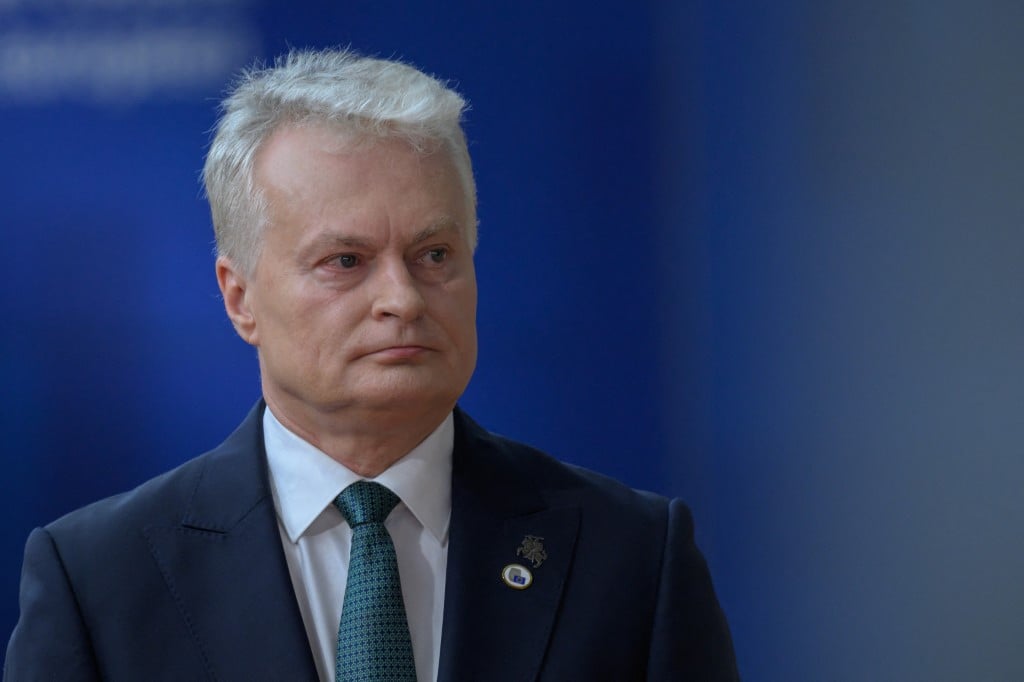
Lithuania is taking significant steps to enhance its national security by seeking integration into Western nuclear deterrence strategies aimed at countering Russian aggression. President Gitanas Nauseda announced on Friday at a press conference in Berlin that Lithuania plans to remove its constitutional ban on the deployment of nuclear weapons within its borders.
During his address, Nauseda expressed his desire for Lithuania to become an integral part of NATO’s nuclear deterrence framework. He disclosed that he has initiated a constitutional amendment to facilitate this adjustment, highlighting the urgency of aligning national defense strategies with the current geopolitical climate.
Shortly after the president’s announcement, a group of 50 legislators in Lithuania took action by submitting a formal amendment to the parliament. This legislation will require a two-time approval process, necessitating the support of at least 94 out of 141 members of parliament, with a mandatory three-month interval between votes before it can be enacted.
Lithuania’s move follows Finland’s recent decision to lift a total ban on nuclear weapons, a step taken to align with NATO’s deterrence policies after its accession to the alliance in 2023. The Finnish amendment allows for the transportation, supply, and possession of nuclear arms within the country, contingent on military needs.
Poland, another NATO member on the eastern flank, has also shown an interest in joining the United States’ “nuclear sharing” program and the “forward deterrence” initiative announced by French President Emmanuel Macron earlier this year. In contrast, neighboring countries Latvia and Estonia remain more cautious about entering into bilateral nuclear arrangements, relying instead on the guarantees provided through the North Atlantic Treaty.
As a NATO and EU member state, Lithuania shares a border with both Russia and Belarus, making its security considerations particularly pressing. Since Russia’s full-scale invasion of Ukraine in 2022, Lithuania has prioritized defense expenditures, dedicating over 5 percent of its GDP to military spending—one of the highest ratios among NATO members. The country also hosts a multinational NATO battlegroup, which includes a permanent contingent of up to 5,000 German soldiers, underscoring its commitment to collective security in the region.


