




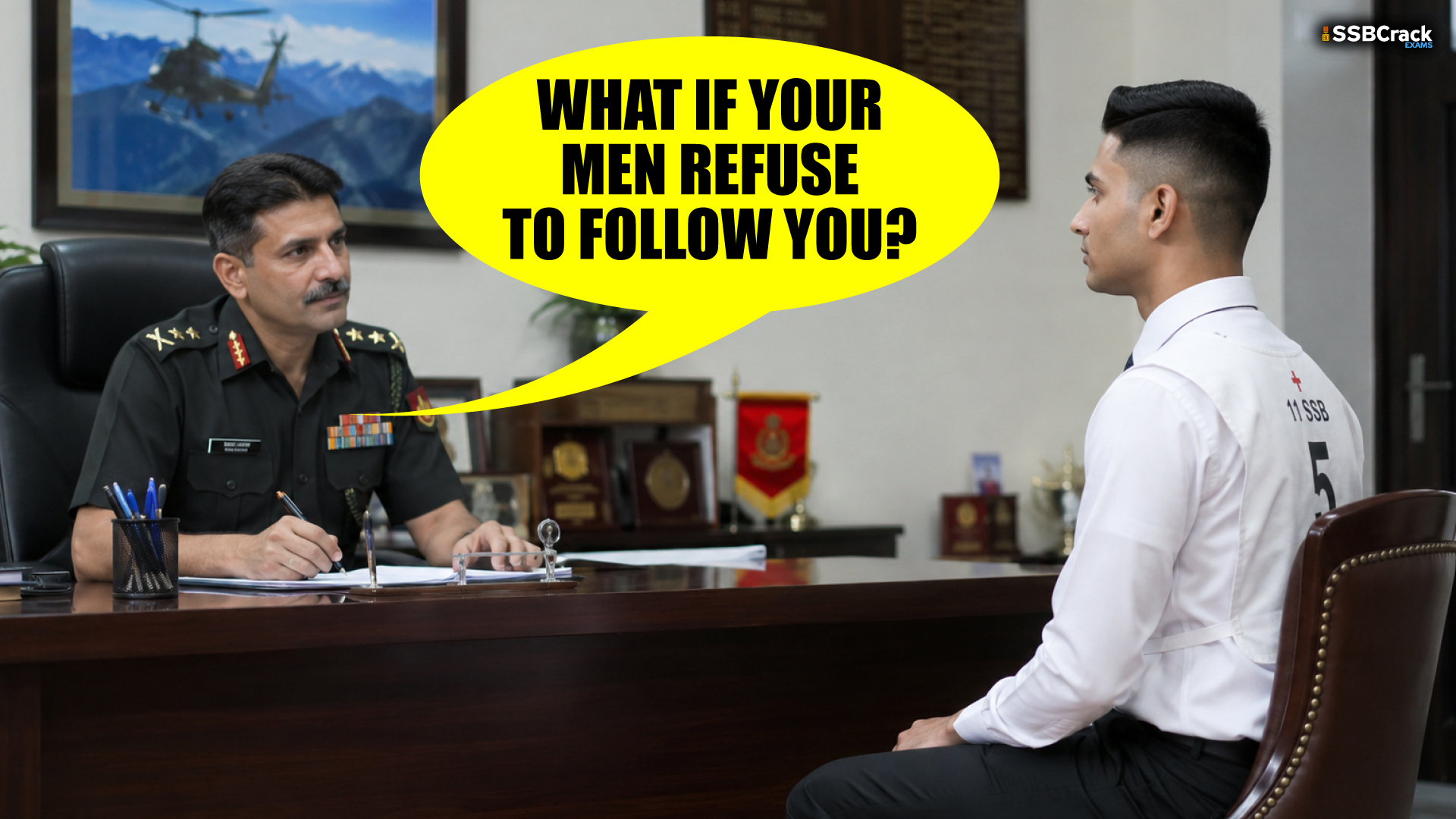
The Indian Military Academy is one of the most prestigious military institutions in the country. Candidates joining IMA are preparing for a lifelong commitment to military leadership and national service. Therefore, during the SSB Interview, the Interviewing Officer looks beyond academic qualifications and assesses whether a candidate possesses the mindset, character, and leadership potential required to become a Permanent Commissioned Officer in the Indian Army.
IMA aspirants are expected to demonstrate responsibility, courage, initiative, social adaptability, determination, and a clear understanding of what military leadership truly means.
In this article, we will discuss 20 important SSB Interview questions specifically designed for IMA candidates. We will understand why these questions are asked, how to answer them effectively, and examine sample responses that reflect the qualities expected from future Army officers.
1. Why do you want a Permanent Commission in the Indian Army?
Why it is asked
To assess long-term commitment and career motivation.
How to answer
Explain your desire for a lifelong military career.
Sample Answer
“I seek a Permanent Commission because I view the Army not merely as a job but as a profession that offers lifelong opportunities to serve the nation, lead soldiers, and continuously grow as a leader.”
2. What does the phrase ‘Lead from the Front’ mean to you?
Why it is asked
To assess leadership philosophy.
How to answer
Focus on example-setting and responsibility.
Sample Answer
“Leading from the front means setting an example through actions, sharing hardships with the team, and accepting responsibility during both success and adversity.”
3. How would you earn the trust of your soldiers?
Why it is asked
To assess leadership understanding.
How to answer
Focus on fairness, competence, and concern for subordinates.
Sample Answer
“I would earn their trust by being professionally competent, treating everyone fairly, listening to their concerns, and demonstrating integrity through my actions.”
4. What is more difficult: leading people or managing resources?
Why it is asked
To assess leadership perspective.
How to answer
Explain your reasoning logically.
Sample Answer
“Leading people is more challenging because it involves understanding human behavior, motivating individuals, building trust, and making decisions that affect morale and performance.”
5. Describe a situation where you had to make a quick decision.
Why it is asked
To assess decision-making ability.
How to answer
Provide a real example.
Sample Answer
“During a college event, a speaker failed to arrive on time. I quickly reorganized the schedule, coordinated with participants, and ensured that the program continued smoothly.”
6. What do you think soldiers expect from their officers?
Why it is asked
To assess understanding of military leadership.
How to answer
Focus on leadership and welfare.
Sample Answer
“Soldiers expect competence, fairness, courage, clear communication, and confidence that their officer will lead them responsibly.”
7. How would you motivate yourself during a difficult phase of training?
Why it is asked
To assess resilience and self-motivation.
How to answer
Explain practical strategies.
Sample Answer
“I would focus on my long-term goal, maintain a positive mindset, seek lessons from challenges, and continue working consistently despite temporary difficulties.”
8. What quality do you admire most in military leaders?
Why it is asked
To assess values and leadership preferences.
How to answer
Choose one quality and justify it.
Sample Answer
“I admire integrity because it forms the foundation of trust, credibility, and effective leadership.”
9. If your plan failed during an operation, how would you react?
Why it is asked
To assess accountability and adaptability.
How to answer
Focus on solutions.
Sample Answer
“I would quickly reassess the situation, adapt to changing circumstances, learn from the failure, and continue working toward mission accomplishment.”
10. How do you handle responsibility when the stakes are high?
Why it is asked
To assess confidence and maturity.
How to answer
Show composure and planning.
Sample Answer
“I remain focused, assess the situation carefully, prioritize tasks, and make decisions based on available information and objectives.”
11. What role does courage play in military leadership?
Why it is asked
To assess understanding of Army values.
How to answer
Include physical and moral courage.
Sample Answer
“Courage enables leaders to face danger, uncertainty, and difficult decisions while remaining committed to their duty and principles.”
12. Have you ever inspired others through your actions?
Why it is asked
To assess influencing ability.
How to answer
Provide a genuine example.
Sample Answer
“During examination preparation, I maintained a disciplined study schedule that encouraged several classmates to adopt similar habits.”
13. How would you deal with a highly skilled but undisciplined subordinate?
Why it is asked
To assess leadership judgment.
How to answer
Balance discipline and development.
Sample Answer
“I would address the disciplinary issues directly, explain expectations clearly, and help the individual align his performance with organizational standards.”
14. What is the biggest lesson failure has taught you?
Why it is asked
To assess resilience and self-awareness.
How to answer
Focus on growth.
Sample Answer
“Failure taught me that preparation, consistency, and adaptability are essential for success, and that setbacks are opportunities to improve.”
15. Why is teamwork critical in military operations?
Why it is asked
To assess understanding of military functioning.
How to answer
Connect teamwork with mission success.
Sample Answer
“Military operations depend on coordination, trust, and cooperation. Effective teamwork ensures that individual efforts contribute toward a common objective.”
16. What would you do if you were posted to a remote and challenging area?
Why it is asked
To assess commitment and adaptability.
How to answer
Demonstrate willingness to serve.
Sample Answer
“I would accept the posting positively, adapt to the environment, and focus on performing my duties to the best of my ability.”
17. What personal quality would help you succeed at IMA?
Why it is asked
To assess self-awareness.
How to answer
Choose a genuine quality.
Sample Answer
“My perseverance helps me remain committed to goals even when faced with difficulties and setbacks.”
18. How do you react when others depend on you?
Why it is asked
To assess responsibility.
How to answer
Demonstrate accountability.
Sample Answer
“When others depend on me, I become more focused and committed because I understand that my actions affect their success and well-being.”
19. What kind of legacy would you like to leave as an Army officer?
Why it is asked
To assess long-term aspirations.
How to answer
Focus on leadership and service.
Sample Answer
“I would like to be remembered as an officer who led with integrity, inspired confidence, and contributed positively to both the Army and the people under my command.”
20. What makes you suitable for the Indian Military Academy?
Why it is asked
To assess confidence and suitability.
How to answer
Connect personal qualities with military requirements.
Sample Answer
“I possess discipline, determination, adaptability, teamwork, responsibility, and a strong desire to serve. These qualities will help me meet the challenges of IMA training and military leadership.”
Common Traits Seen in Recommended IMA Candidates
They demonstrate strong commitment to military service.
They possess leadership experiences from real life.
They accept responsibility willingly.
They remain calm during pressure situations.
They show initiative and problem-solving ability.
They understand the realities of military life.
They display courage, integrity, and determination.
They combine confidence with humility.
Common Mistakes to Avoid
Treating the Army as merely a career option.
Giving memorized leadership answers.
Avoiding responsibility for failures.
Showing poor awareness of military values.
Focusing only on authority rather than leadership.
Providing unrealistic examples.
Displaying overconfidence or arrogance.
Closing Lines
The Indian Military Academy seeks individuals who possess the potential to become leaders of character, courage, and commitment. It is not looking for perfect candidates; it is looking for candidates who are willing to learn, lead, and dedicate themselves to the service of the nation.
During your SSB Interview, focus on reflecting your true personality, your experiences, your values, and your leadership potential. The qualities that make a successful officer are often demonstrated through everyday actions long before a person wears the uniform.
Prepare sincerely, learn from your experiences, and approach the interview with confidence and authenticity.
Keep striving, keep leading, and keep marching toward your dream of becoming an officer in the Indian Army.
Jai Hind!


