




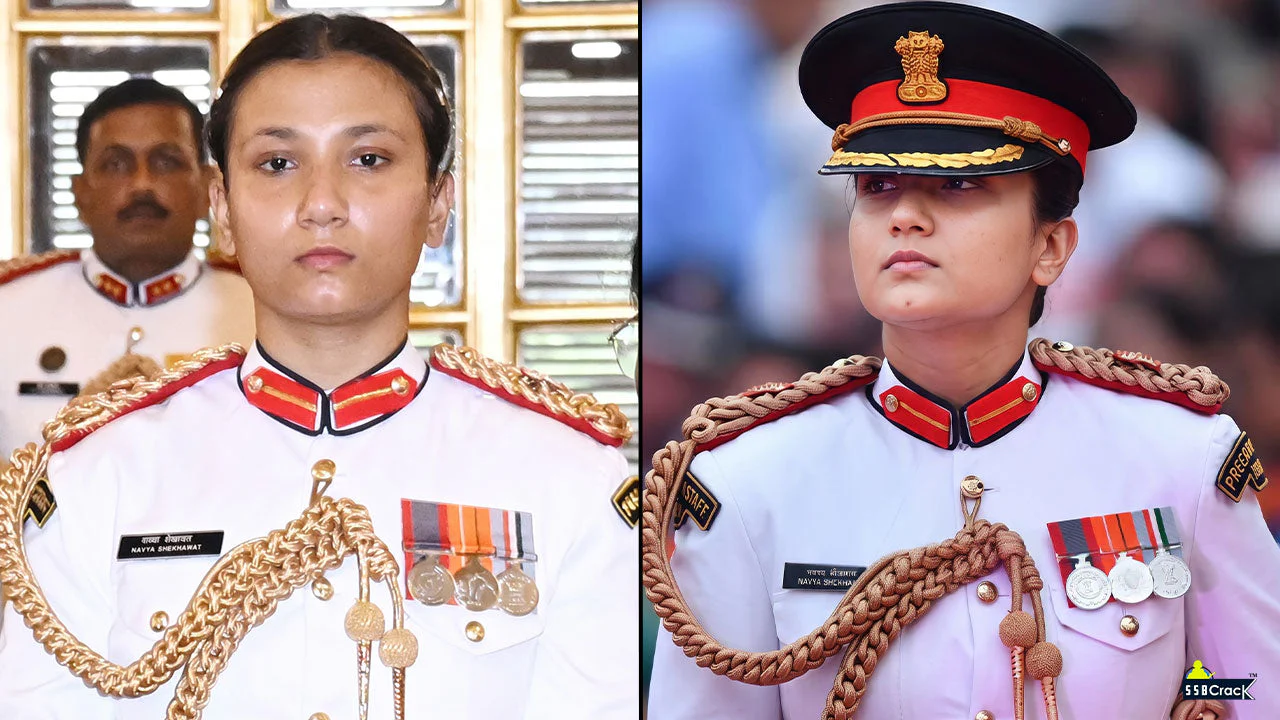
Major Navya Shekhawat has carved a significant milestone in Indian military history by becoming the first woman officer from the Indian Army to be appointed as Aide-de-Camp (ADC) to the President of India, Smt. Droupadi Murmu. This prestigious role, performed at Rashtrapati Bhavan, marks a transformative moment for the Indian Armed Forces and underscores the increasing representation of women in high-responsibility positions within the military.
A commissioned officer of the Army Service Corps, Major Shekhawat’s appointment highlights not only her personal achievement but also serves as an emblem of the evolving dynamics within the Indian military landscape. She joins an elite cadre of officers, being only the second woman overall to serve as ADC to the President, following Lieutenant Commander Yashasvi Solanki from the Indian Navy, who was the first to take on this role in May 2025.
Her journey began with the rigorous Combined Defence Services Examination, a highly competitive process overseen by the Union Public Service Commission. Having secured a position on the merit list for the Short Service Commission Women Non-Technical Course at the Officers Training Academy (OTA), Chennai, she underwent intensive training at one of India’s foremost military training institutions. The demands of OTA include physical endurance, mental fortitude, and leadership skills, all of which Major Shekhawat exemplified to emerge as a commissioned officer in the Army.
Allotted to the Army Service Corps—a vital component of military logistics—she plays a critical role in ensuring the operational efficiency of the Indian Army. The ASC is responsible for maintaining essential aspects such as supply, transport, fuel, and rations, making it integral to the success of military operations. Major Shekhawat’s swift ascent to the position of ADC is a testament to her dedication and professional excellence.
The role of ADC is one of both prestige and responsibility within the Armed Forces, involving official and ceremonial duties, including participation in national events and state ceremonies. The position requires exceptional discipline, communication skills, and a robust understanding of military protocols, serving as a representation of not just the service, but of military professionalism at its finest.
Traditionally occupied by male officers, the appointment of female officers like Lieutenant Commander Solanki and now Major Shekhawat marks a groundbreaking shift in gender representation in the Indian Armed Forces. Major Shekhawat stands as a symbol of empowerment for young aspiring women in defense, embodying the spirit of Nari Shakti in uniform as she is often seen alongside the President during significant national engagements.
The broader implications of her appointment reflect the evolving integration of women in the Indian Army. Since entering the forces via Short Service Commission in the early 1990s, women officers have expanded their roles significantly. The pivotal 2020 Supreme Court decision granting permanent commissions to women also catalyzed this transformation, leading to expanded opportunities in command and staff roles.
Major Shekhawat’s success not only underscores the importance of meritocracy in the Armed Forces but also acts as an encouraging narrative for future defense aspirants. It serves as an illustration that excellence is attainable regardless of a service branch, reaffirming that all aspects of military operations are critical for national defense.
Her journey sends a powerful message: success in the military is predicated upon hard work, discipline, leadership, and character. As she embarks on her duties at Rashtrapati Bhavan, Major Shekhawat’s story emphasizes that the Indian Army is evolving, continuously striving to embody its core values of duty, honor, and service.
In this historic moment, Major Navya Shekhawat stands as a beacon of inspiration for many young Indians. Her story serves as a reminder that with dedication and merit, anyone can achieve remarkable accomplishments, paving the way for future generations in uniform.


