




In Defence Current Affairs for 17 July 2026, we will see the latest national and international current affairs news. These important current affairs will be beneficial for your upcoming NDA, CDS, CDS OTA, AFCAT, TA, Agniveer Army, Agniveer Navy, Agniveer Air Force, Women Military Police, INET, MNS, ACC exams, SCO, PCSL, CAPF, and SSB interviews, and direct entries for Army, Navy, and Air Force like SSC Tech, TGC, JAG, NCC, TES, 10+2 Cadet. Download a PDF file about current events at the end of this article. Let us now see the Current Affairs.
Defence Current Affairs 17 July 2026
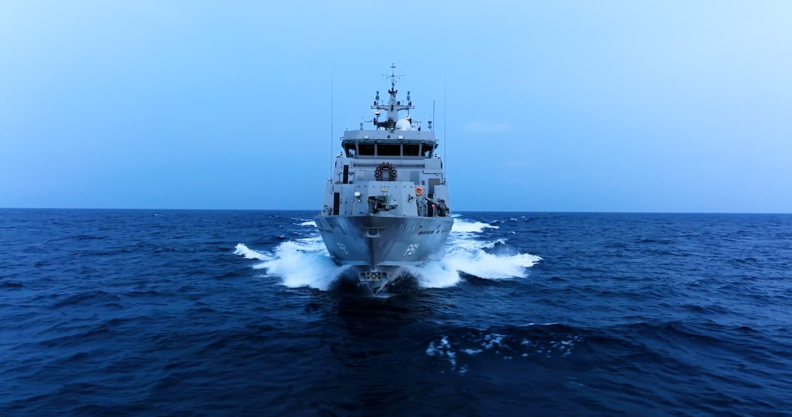
Indian Navy to Commission INS Malvan, Strengthening Coastal Defence
The Indian Navy is set to commission INS Malvan on 22 July 2026, marking another milestone in India’s indigenous naval modernization programme. The vessel is the second Mahe-class Anti-Submarine Warfare Shallow Water Craft (ASW-SWC) and has been designed to enhance the Navy’s capability to detect and neutralize submarine threats in coastal and shallow-water regions.
Built by Cochin Shipyard Limited (CSL), Kochi, INS Malvan represents India’s growing expertise in warship design and construction under the Aatmanirbhar Bharat initiative. With more than 80% indigenous content, the vessel reflects the country’s increasing self-reliance in defence manufacturing and advanced naval technology.
Although compact in size, the ship has been designed for high agility, endurance, and operational efficiency in shallow waters. These capabilities make it particularly effective for anti-submarine warfare, coastal surveillance, and maritime security missions. The induction of INS Malvan forms part of the Indian Navy’s long-term plan to modernize its fleet with advanced indigenous platforms.
The commissioning of INS Malvan further strengthens India’s coastal defence capabilities while highlighting the success of domestic shipbuilding and the nation’s commitment to achieving self-reliance in defence production.
Indian Navy to Host Operation Southern Readiness 26-2
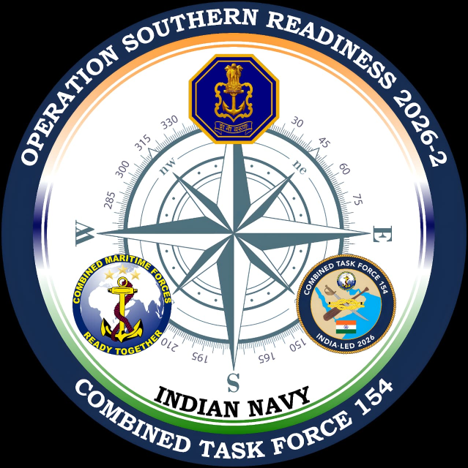
The Indian Navy will host Operation Southern Readiness 26-2 at the Southern Naval Command, Kochi, from 20 to 23 July 2026. The multinational training programme is being conducted in partnership with the Combined Maritime Forces (CMF) under the Indian Navy-led Combined Task Force 154 (CTF-154), which focuses on maritime training and capacity building.
The four-day engagement will include classroom sessions, simulator-based instruction, and practical onboard training. Participants will receive training in areas such as maritime law, maritime domain awareness, information sharing, counter-narcotics operations, force protection, asymmetric threats, maritime uncrewed systems, damage control, firefighting, boarding operations, maritime communications, and survival at sea.
The programme aims to enhance interoperability, improve professional skills, and strengthen cooperation among participating navies. By combining theoretical learning with practical experience, the exercise will promote better coordination during multinational maritime operations.
Operation Southern Readiness also showcases the Indian Navy’s advanced training infrastructure, modern simulators, and professional expertise. Hosting the event reinforces the Southern Naval Command’s position as a leading maritime training centre and strengthens India’s role in promoting regional maritime security and international naval cooperation.
Mission Aagaman: India Prepares for Its First Private Orbital Rocket Launch
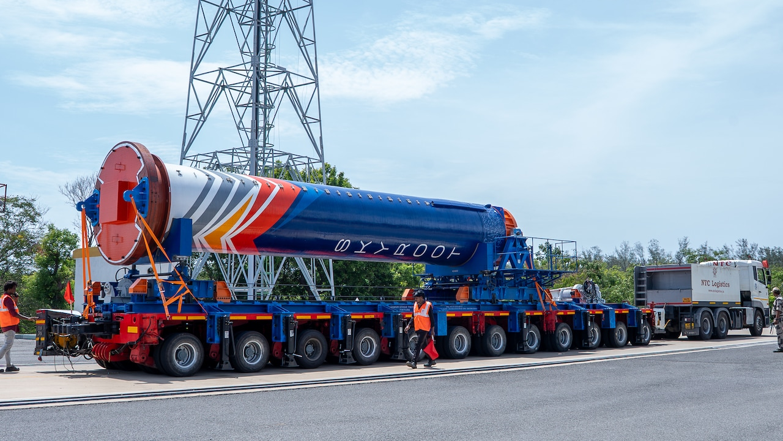
India’s private space industry is poised to achieve a historic milestone with the launch of Mission Aagaman, the maiden test flight of Skyroot Aerospace’s Vikram-1 rocket. The launch is scheduled for 18 July 2026 at 11:30 AM IST from the Satish Dhawan Space Centre, Sriharikota.
Mission Aagaman will be the first orbital launch by a privately developed Indian rocket, representing a significant advancement in India’s commercial space sector. The mission will be conducted from the First Launch Pad, which has hosted several landmark missions of the Indian Space Research Organisation (ISRO).
The Vikram-1 launch vehicle stands 24 metres tall and is built using advanced carbon composite materials that provide high strength while reducing overall weight. The rocket features a four-stage configuration, combining solid propulsion stages with a cryogenic upper stage to achieve accurate orbital insertion. It is capable of carrying payloads weighing between 350 and 480 kilograms into Low Earth Orbit (LEO).
Mission Aagaman aims to place its payload into a 450-kilometre orbit with a 60-degree inclination, making it well suited for Earth observation and remote sensing satellites. The mission is expected to open new commercial opportunities for India’s private space industry while strengthening the country’s position in the global space launch market.
The launch represents a major step in encouraging private participation in India’s rapidly expanding space sector and demonstrates the success of policy reforms aimed at promoting innovation and indigenous technological development.
Indian Army Plans Advanced Crew Gunnery Simulators for Tank Training
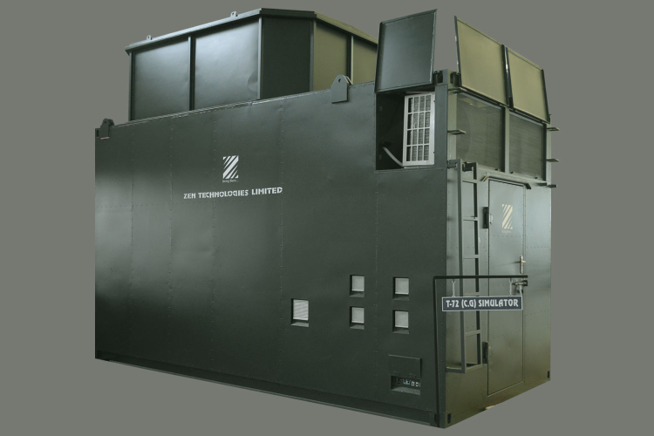
The Indian Army has initiated the procurement process for 100 Crew Gunnery Simulators (CGS) to modernize the training of armoured corps personnel. A Request for Information (RFI) has been issued for 50 simulators each for T-90 and T-72 main battle tanks.
The simulators are intended to provide realistic battlefield training while reducing operational costs and improving safety. By recreating actual combat conditions, they will enable tank crews to develop tactical and technical skills without the need for extensive live-fire exercises.
According to the Ministry of Defence, the systems must accurately replicate the gunner’s station of both the T-90 and T-72 tanks, including the 125 mm main gun, co-axial machine gun, anti-tank guided missile systems, and smoke grenade launchers. The simulators should also recreate features such as autoloader operations, recoil effects, battlefield sounds, and realistic turret interiors.
The training systems will allow soldiers to practise the complete engagement process, including target detection, identification, tracking, ranging, aiming, and firing under simulated battlefield conditions. Artificial intelligence and advanced simulation technologies are expected to improve training quality while enhancing operational preparedness.
The acquisition of these simulators reflects the Indian Army’s commitment to adopting modern training technologies that improve combat readiness and prepare personnel for future operational challenges.
Border Infrastructure Will Remain Vital in Future Technology-Driven Warfare: Rajnath Singh
Defence Minister Rajnath Singh has emphasized that border infrastructure will continue to play a decisive role in national security, even as modern warfare becomes increasingly driven by advanced technologies such as artificial intelligence, drones, cyber capabilities, and precision-guided weapons. Speaking at the Border Roads Organisation (BRO) Strategic Infrastructure Conclave, he highlighted that roads, bridges, tunnels, airfields, and other strategic infrastructure will remain indispensable for ensuring military preparedness and operational success.
Infrastructure Remains the Backbone of Military Operations
The Defence Minister noted that while future conflicts will increasingly involve technology-driven and non-contact warfare, physical infrastructure along the country’s borders will continue to be essential. Strategic assets such as roads, tunnels, ports, bridges, and airfields enable the rapid movement of troops, military equipment, and logistics, ensuring that armed forces can respond swiftly to emerging security challenges.
BRO’s Contribution to National Security
Rajnath Singh praised the Border Roads Organisation (BRO) for its remarkable contribution to strengthening India’s border infrastructure. He commended the organisation for adopting advanced engineering techniques and modern technologies to construct high-quality roads, tunnels, bridges, and other strategic projects in some of the country’s most difficult terrains. These projects have significantly enhanced connectivity in border regions while improving the operational capabilities of the armed forces.
Infrastructure for Future Generations
The Defence Minister described the ongoing infrastructure projects as long-term national assets that will not only strengthen India’s defence preparedness but also contribute to economic growth and regional development. He remarked that the strategic infrastructure being created today would influence the country’s progress and security for the next one or two centuries. Improved connectivity in border areas is expected to benefit local communities by promoting tourism, trade, employment, and access to essential services.
Adapting to Evolving Warfare
Highlighting the changing character of warfare, Rajnath Singh observed that modern conflicts increasingly involve advanced technologies, including autonomous systems, cyber warfare, and precision weapons. However, he stressed that technological superiority alone cannot guarantee success without a strong physical infrastructure capable of supporting military operations. Robust logistics networks remain essential for maintaining operational readiness and sustaining forces during prolonged engagements.
Strengthening India’s Strategic Preparedness
India has significantly accelerated the development of border infrastructure in recent years to improve connectivity and enhance national security along its frontiers. These efforts align with the government’s broader vision of strengthening defence preparedness while supporting economic development in remote border regions. The continued expansion of strategic infrastructure is expected to improve mobility, increase operational efficiency, and reinforce India’s ability to respond effectively to future security challenges.

Review Questions
- INS Malvan, scheduled to be commissioned on 22 July 2026, belongs to which class
of warships?
A) Nilgiri-class Frigate
B) Visakhapatnam-class Destroyer
C) Mahe-class Anti-Submarine Warfare Shallow Water Craft (ASW-SWC)
D) Kamorta-class Corvette
Answer: C) Mahe-class Anti-Submarine Warfare Shallow Water Craft (ASW-SWC) - Operation Southern Readiness 26-2 will be conducted by the Indian Navy in
partnership with:
A) ASEAN Defence Ministers’ Meeting (ADMM)
B) Combined Maritime Forces (CMF) under CTF-154
C) QUAD Maritime Group
D) Indian Ocean Rim Association (IORA)
Answer: B) Combined Maritime Forces (CMF) under CTF-154 - Mission Aagaman is the maiden test flight of which privately developed Indian
rocket?
A) SSLV
B) Vikram-1
C) Agnibaan SOrTeD
D) PSLV-XL
Answer: B) Vikram-1 - Mission Aagaman is scheduled to launch from:
A) Dr. A.P.J. Abdul Kalam Island, Odisha
B) Satish Dhawan Space Centre, Sriharikota
C) Thumba Equatorial Rocket Launching Station, Kerala
D) ISRO Propulsion Complex, Mahendragiri
Answer: B) Satish Dhawan Space Centre, Sriharikota - The Indian Army has issued an RFI for procuring 100 Crew Gunnery Simulators
primarily for which tanks?
A) Arjun Mk-1A and Zorawar
B) T-90 and T-72
C) BMP-2 and Arjun Mk-1A
D) T-90 and K9 Vajra-T
Answer: B) T-90 and T-72 - ‘Konkan – Naval Exercise’ Conducted b/w India
A. Singapore
B. Oman
C. Indonesia
D. United Kingdom
ANSWER: D - Defence Industrial Corridors Was Inaugurated In
A. 2018
B. 2021
C. 2022
D. 2016
ANSWER: A - The Karakorams Range covers parts of
A. Afghanistan, China, Indonesia
B. Afghanistan, China, India
C. Afghanistan, China, India, Pakistan, and Tajikistan
D. None of the above
ANSWER: C - Army War College Is In
A. Mhow
B. New Delhi
C. Noida
D. Nagpur
ANSWER: A - Sarvatra Vijay Is The Motto Of
A. RAJPUT REGIMENT
B. DOGRA REGIMENT
C. SIKH REGIMENT
D. None of the above
ANSWER: A - Where Is The Training Command of The IAF?
A. Bengaluru
B. Vishakhapatnam
C. Pune
D. Mumbai
ANSWER: A - Exercise Cope India Conducted b/w
A. USA
B. Russia
C. Israel
D. Japan
ANSWER: A - “Kartavyam Anvatma” (Duty before death) Is The Motto Of
A. RAJPUT REGIMENT
B. DOGRA REGIMENT
C. SIKH REGIMENT
D. None of the above
ANSWER: B - The Cheetah Is A
A. Helicopter
B. Machine Gun
C. UAV
D. Fighter Jet
ANSWER: A - Which of the following is NOT a landlocked country?
A. Laos
B. Serbia
C. Ethiopia
D. Cambodia
ANSWER: D - “THE ROOM ON THE ROOF ” Book Written By
A. Ruskin Bond
B. Satyajit Ray
C. Manohar Malgonkar
D. Nirad C. Chaudhuri
ANSWER: A - Exercise Lamitiye Conducted b/w India &
A. Qatar
B. Oman
C. UAE
D. Seychelles
ANSWER: D - Rashtriya Raksha University Is In
A. Gandhinagar
B. Mumbai
C. New Delhi
D. Chennai
ANSWER: A - HSTDV Stands For
A. Hypersonic Technology Vehicle
B. Hypersonic Technology Demonstrator Vehicle
C. Hypersonic Technology Detonator Vehicle
D. None of the above
ANSWER: B - Joint Ex B/w The India and Singapore Is Called:
A. Bold Kurukshetra
B. SLINEX
C. Indra
D. Yudha Abhyas
ANSWER: A
ALSO READ:
- Latest Daily Current Affairs and Defence Updates
- Latest Daily Current Affairs June 2026[DOWNLOAD PDF]
- Latest Daily Current Affairs May 2026[DOWNLOAD PDF]
- Latest Daily Current Affairs April 2026[DOWNLOAD PDF]
- Latest Daily Current Affairs March 2026[DOWNLOAD PDF]
- Latest Daily Current Affairs February 2026[DOWNLOAD PDF]
- Latest Daily Current Affairs January 2026[DOWNLOAD PDF]
- Latest Daily Current Affairs November 2025[DOWNLOAD PDF]
- Latest Daily Current Affairs October 2025[DOWNLOAD PDF]
- Latest Daily Current Affairs August 2025[DOWNLOAD PDF]
- Latest Daily Current Affairs July 2025[DOWNLOAD PDF]
- Monthly Defence Current Affairs June 2025 [DOWNLOAD PDF]
- Monthly Defence Current Affairs May 2025 [DOWNLOAD PDF]


