




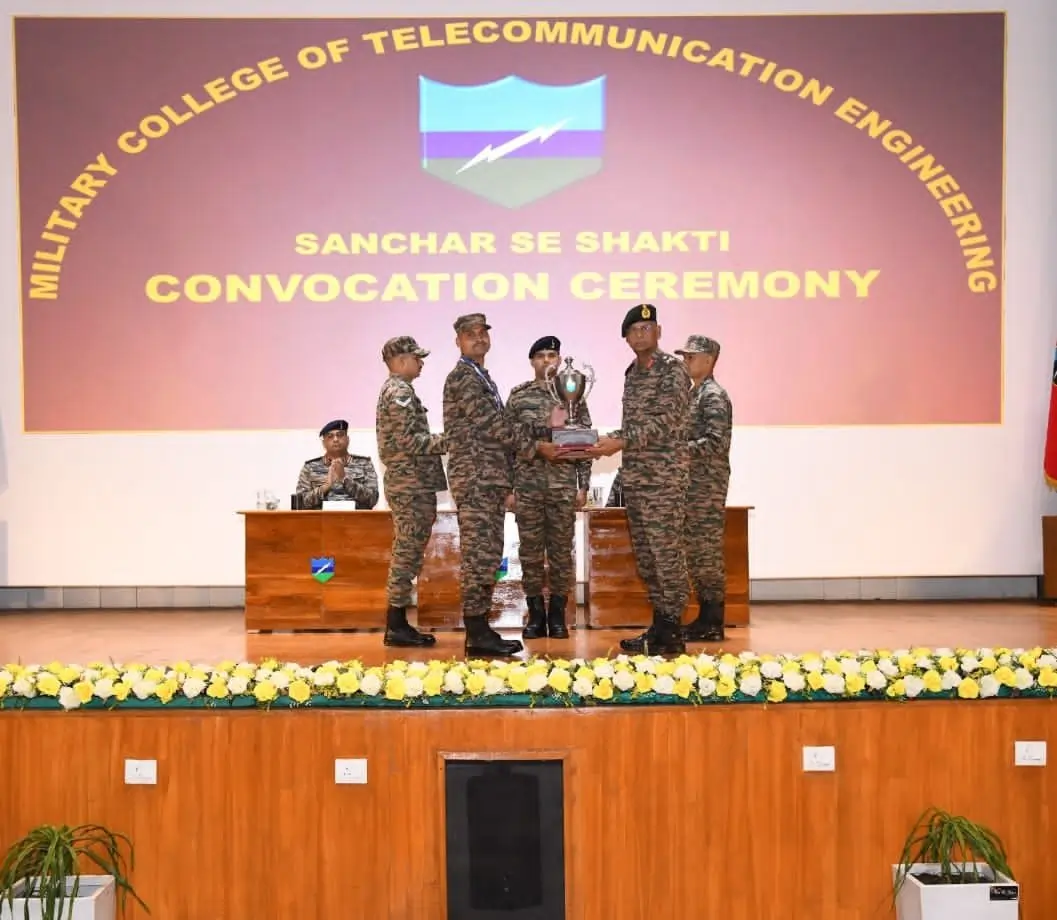
Non-Commissioned Officers (NCOs) of the Corps of Signals proudly graduated with a Diploma in Information Technology and Telecommunications from the Military College of Telecommunication Engineering (MCTE) in Mhow on July 17, 2026. This milestone underscores the Indian Army’s commitment to enhancing its technological capabilities and cultivating future-ready military professionals. The specialized program embodies the Army’s dedication to equipping its personnel with advanced technical skills necessary for navigating the complexities of modern warfare.
The graduation ceremony showcased the successful conclusion of an intensive training curriculum aimed at bolstering the competencies of NCOs in essential domains, including communications, information technology, and telecommunications. With military operations increasingly dependent on advanced communication networks and secure information systems, it has become essential for personnel to receive specialized technical education to maintain operational superiority in various conflict environments.
The MCTE stands as a premier institution for military communications and information technology training within the Indian Army. It plays a critical role in preparing officers and soldiers to integrate contemporary technological advancements into military operations effectively, thereby fostering a culture of innovation and adaptability among the Armed Forces.
The Diploma in Information Technology and Telecommunications provides personnel with a deep understanding of modern communication systems and digital technologies, as well as specialized military applications pertinent to operational environments. The curriculum expertly combines theoretical knowledge and practical skills to prepare graduates for the technological challenges posed by multidomain warfare, where advanced communication systems, cyber capabilities, and data-driven decision-making are pivotal.
During the valedictory ceremony, Major General Gautam Mahajan, SM, Deputy Commandant of MCTE, congratulated the graduates for their diligence and progress in professional development. He urged them to keep pace with the rapid evolution of technologies in communications and information technology, stressing the significance of lifelong learning to sustain operational efficacy in a dynamic security landscape.
Maj Gen Mahajan highlighted that future military leaders and specialists must possess not only operational expertise but also the intellectual flexibility to comprehend and utilize emergent technologies across varied operational scenarios. He reiterated the essential role of the Corps of Signals in ensuring mission success through reliable and advanced communication capabilities, emphasizing its status as the backbone of the Indian Army’s communications infrastructure.
The graduation of these NCOs reflects the broader goal of the Indian Army to forge a technologically empowered and future-ready force capable of responding adeptly to evolving security challenges. Investments in specialized military education and training are central to the Army’s modernization initiatives and its vision of becoming an agile, proficient fighting force.
Recognizing that technological superiority is increasingly pivotal in contemporary conflicts, the Indian Army affirms its commitment to professional military education. Institutions like MCTE play a vital role in developing the necessary human capital to leverage emerging technologies in support of national security objectives.
The successful completion of the Diploma in Information Technology and Telecommunications not only boosts the individual skills of the graduates but also enhances the operational capacities of the Corps of Signals and the Indian Army as a whole. The expertise they acquire will be instrumental in upholding mission-critical communication networks and facilitating integrated military operations across diverse environments.
As the Indian Army advances in its transformative journey toward becoming a technologically adept and future-ready force, these graduates stand prepared to significantly contribute to safeguarding the nation’s security interests through professional excellence and unwavering dedication. Their accomplishments highlight the vital importance of specialized military education in readying personnel for the challenges and opportunities of future battlefields.


