




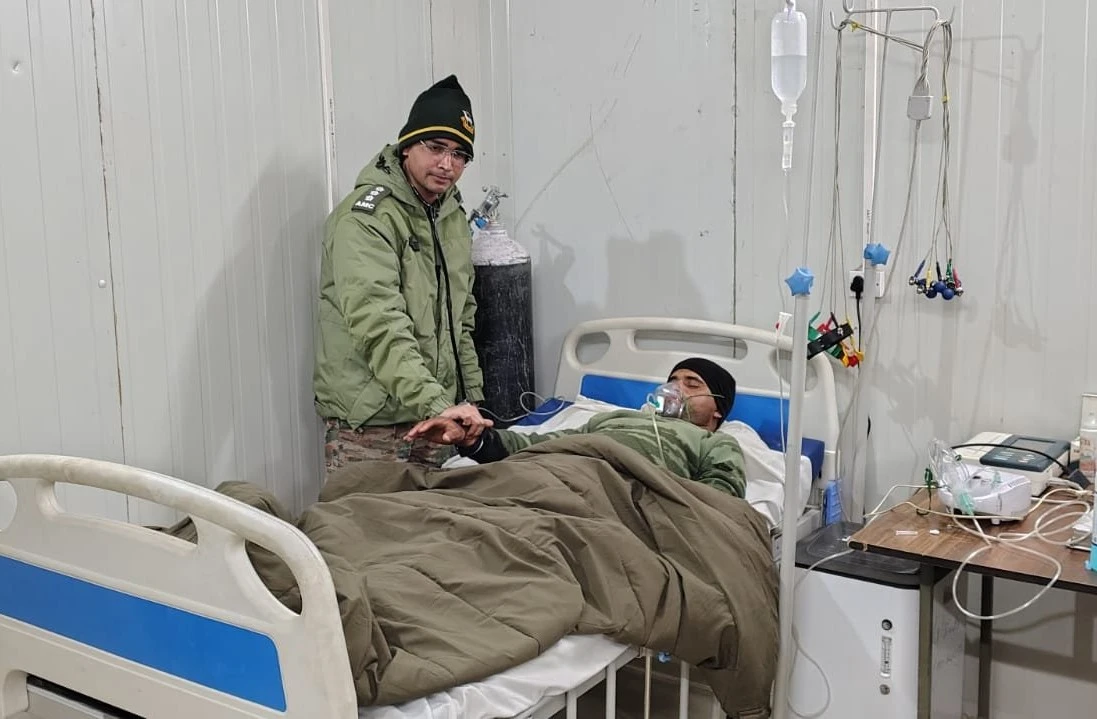
In a remarkable display of bravery and service, the Indian Army’s “Ibex Healers” have successfully rescued and treated a 28-year-old Bakarwal herder facing a severe medical emergency at an elevation of nearly 16,000 feet in the remote Himalayan region. This rescue took place amidst extremely challenging conditions characterized by treacherous terrain, harsh weather, and dangerously low oxygen levels, making even the simplest movements a daunting task.
The rescue mission was initiated after medical personnel received urgent information regarding the critically ill civilian. Upon assessment, it was determined that the young herder was suffering from Acute Mountain Sickness (AMS), which was further complicated by Moderate High Altitude Pulmonary Oedema (HAPO). This condition, attributed to prolonged exposure to high altitudes, results in fluid accumulation in the lungs, significantly impairing the ability to breathe and necessitating immediate medical attention.
Swiftly recognizing the life-threatening nature of the situation, the Ibex Healers administrated oxygen therapy and other essential treatments aimed at stabilizing the patient. Their rapid response was crucial, as they proceeded to orchestrate an urgent evacuation from the high-altitude site, ensuring that the herder received timely care before his condition could worsen.
Operating in such extreme environments poses unique challenges to both patients and rescuers. Low oxygen levels, freezing temperatures, and difficult terrains dramatically heighten the risks associated with medical emergencies, underscoring the enormity of the Indian Army’s timely intervention in this instance.
This successful rescue operation highlights the Indian Army’s humanitarian role in remote border areas, where military personnel often serve as the primary and sometimes sole providers of emergency medical assistance to local communities and nomadic populations. The Bakarwal community, known for its seasonal migrations across the Himalayan mountains with livestock, regularly navigates high-altitude terrains where access to civilian healthcare is exceedingly limited. In these contexts, forward medical teams of the Indian Army play an indispensable role, providing emergency healthcare and potentially saving lives.
The operation exemplifies the Army’s unwavering commitment to not only defending the nation’s borders but also safeguarding the lives of civilians in some of the most inhospitable regions of the world. The timely intervention by the Ibex Healers turned a critical health crisis into a beacon of hope, reinforcing the notion that at India’s highest frontiers, the Army is dedicated to protecting both the nation and the individuals who depend on its presence for survival.


