




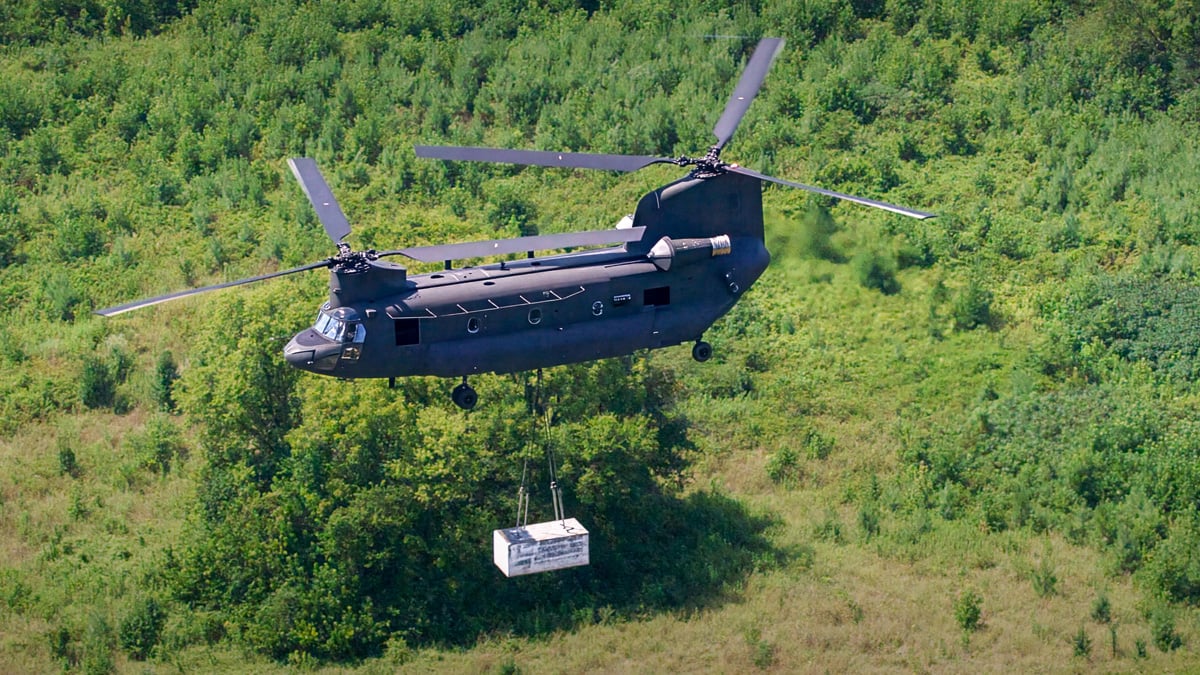
For over 60 years, the CH-47 Chinook has solidified its reputation as one of the world’s preeminent heavy-lift helicopters, widely recognized for its distinctive tandem-rotor design. This aircraft has served pivotal roles in military transport, offering capabilities that extend from troop movements to disaster relief operations. Its ability to function in challenging environments has cemented its status as a key asset for armed forces globally.
Originally designed for the U.S. Army, the Chinook boasts a generous cargo capacity and an external sling-load feature, making it one of the most versatile helicopters in service. It was developed in response to the Army’s need for an aircraft capable of carrying larger payloads than its predecessors, allowing for the rapid transportation of personnel and equipment across the battlefield. The CH-47 Chinook entered service in 1962 and quickly proved invaluable during the Vietnam War by facilitating the movement of troops, artillery, and supplies.
The Chinook has undergone several iterations since its inception, with major variants including the CH-47D, which upgrades the aircraft with enhanced engines and avionics, and the current standard CH-47F model that incorporates advanced systems for better reliability and operational capability. The helicopter’s high-speed performance, significant lifting ability, and operational flexibility make it a critical component of modern military logistics and combat operations.
Globally, the Chinook is utilized by multiple countries, including the U.S., the UK, and several NATO allies. The Royal Air Force operates the largest fleet outside the U.S., participating in missions across various military theaters, including notable engagements in Iraq and Afghanistan. One particular airframe, named Bravo November, gained fame for being the only heavy-lift helicopter to remain operational during the Falklands War after a direct attack.
Despite its extensive history, questions about the Chinook’s relevance in contemporary combat environments have arisen. As military technology evolves, so too do the requirements for air assets. In response, several upgraded and specialized variants have been deployed, including the MH-47G for special operations, which features advanced navigation and aerial refueling capabilities.
The latest variant, the CH-47F Block II, aims to enhance the Chinook’s performance even further. This iteration includes improvements to its drivetrain, a reinforced airframe, and a redesigned fuel system, resulting in increased lift capacity and extended mission radius. With the first deliveries of this upgraded model rolling out, the U.S. Army plans to maintain the Chinook’s operational relevance well into the future.
Looking forward, Boeing is exploring further enhancements for the Block II, including autonomy features and advanced cockpit technologies. These developments will ensure that the Chinook can adapt to emerging challenges such as drone threats and advanced air-defense systems. With no immediate successor on the horizon and current projects slated for the mid-2030s, the Chinook is expected to remain a vital part of military operations beyond 2060, representing a reliable bridge between current capabilities and future innovations.


