





In Defence Current Affairs for 07 August 2026, we will see the latest national and international current affairs news. These important current affairs will be beneficial for your upcoming NDA, CDS, CDS OTA, AFCAT, TA, Agniveer Army, Agniveer Navy, Agniveer Air Force, Women Military Police, INET, MNS, ACC exams, SCO, PCSL, CAPF, and SSB interviews, and direct entries for Army, Navy, and Air Force like SSC Tech, TGC, JAG, NCC, TES, 10+2 Cadet. Download a PDF file about current events at the end of this article. Let us now see the Current Affairs.
Defence Current Affairs 07 August 2026
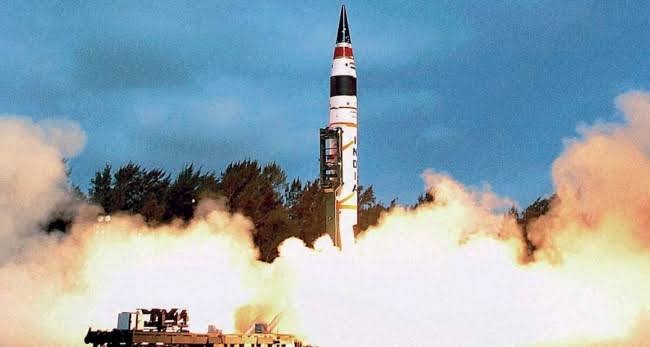
Agni-4 Ballistic Missile Successfully Test-Fired
India successfully conducted the test launch of the Agni-4 Medium-Range Ballistic Missile (MRBM) from the Integrated Test Range (ITR), Chandipur, Odisha, on 6 August 2026. The test was carried out under the supervision of the Strategic Forces Command (SFC) and successfully validated all operational and technical parameters. The successful launch further strengthens India’s strategic deterrence capability.
Background
The Defence Research and Development Organisation (DRDO) initiated the Agni-4 programme in 2007 as part of India’s long-range missile development efforts. Initially conceived as a 5,000-km class missile project, it was later developed as an upgraded version of the Agni-II Prime with significant technological improvements.
Key Highlights
- Successfully tested from ITR Chandipur, Odisha.
- Conducted under the Strategic Forces Command.
- Two-stage solid-fuelled ballistic missile.
- Strike range of approximately 4,000 km.
- Capable of carrying nuclear and conventional payloads.
- Equipped with advanced guidance, navigation and thrust vector control systems.
- Features a maraging steel first stage and carbon-fibre second stage.
Significance
The successful test demonstrates India’s growing indigenous missile capability and enhances the country’s strategic deterrence against long-range threats.
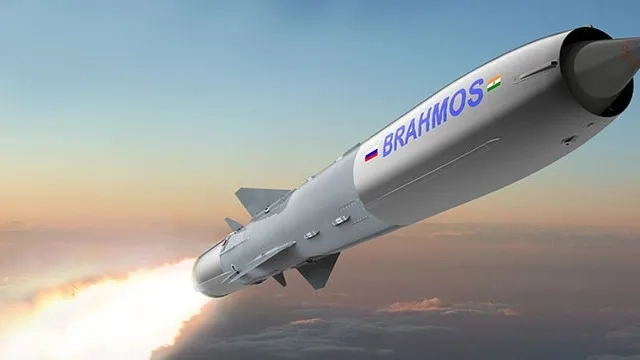
Indian Army to Procure 150 Extended-Range BrahMos Missiles
The Indian Army is preparing to procure 150 Extended-Range (ER) BrahMos supersonic cruise missiles, significantly boosting its long-range precision strike capability. The proposed acquisition, estimated to be worth nearly ₹10,000 crore, is expected to become one of India’s largest missile procurement programmes.
Background
The BrahMos ER is an upgraded version of the existing BrahMos cruise missile with an extended strike range, enabling the armed forces to engage targets located much deeper inside hostile territory.
Key Highlights
- Planned procurement of 150 BrahMos ER missiles.
- Estimated project cost: ₹10,000 crore.
- Agreement expected later this year.
- Induction likely within four to five years after signing.
- Improved strike range over the existing BrahMos missile.
- Supports India’s Atmanirbhar Bharat initiative.
Significance
The acquisition will substantially improve India’s conventional deterrence capability while promoting indigenous defence manufacturing.
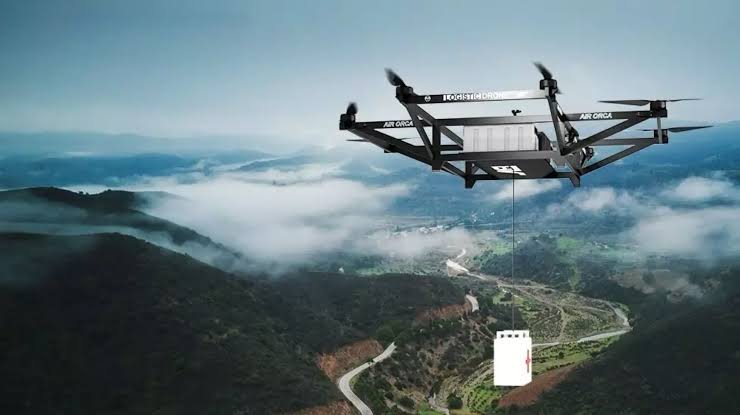
Indian Army Plans Record Procurement of 2,715 Logistic Drones
The Ministry of Defence has initiated the process to procure 2,715 logistic drones for the Indian Army. The drones will support rapid transportation of supplies such as food, ammunition, medicines and equipment to soldiers deployed in remote border areas.
Background
Modern military logistics increasingly depend on unmanned aerial systems capable of delivering supplies quickly in difficult terrain where conventional transport is challenging.
Key Highlights
- Procurement of 2,715 logistic drones.
- Largest single procurement of military logistic drones in India.
- Designed for operations along the China and Pakistan borders.
- Three operational altitude categories:
- Up to 6,000 ft
- 6,000–12,000 ft
- 12,000–20,000 ft
- Equipped with GPS, LIDAR, thermal sensors and day cameras.
- Designed to operate in temperatures ranging from –30°C to +50°C.
Significance
The project will improve logistics support, reduce risks to soldiers, and enhance operational efficiency in high-altitude and remote regions.
Twenty Indian LEO Satellites Face Higher Collision Risk
The Government informed the Lok Sabha that 20 out of India’s 22 active Low Earth Orbit (LEO) satellites face an increased risk of collision due to the growing number of satellites and space debris in orbit.
Background
Low Earth Orbit (LEO) extends up to approximately 2,000 km above Earth’s surface and is widely used for Earth observation, communication, navigation and scientific missions.
Key Highlights
- 20 of India’s 22 LEO satellites face higher collision risk.
- Statement made by Dr. Jitendra Singh in Parliament.
- Rising satellite launches have increased orbital congestion.
- Space debris continues to grow rapidly.
- Greater emphasis on space traffic management.
Significance
The development highlights the need for international cooperation in space traffic management and sustainable utilisation of outer space.
Space Debris: A Growing Challenge for Space Operations
The increasing amount of space debris has become one of the biggest threats to satellites operating in Earth orbit. Even tiny debris fragments travel at extremely high speeds and can severely damage operational spacecraft.
Background
Space debris includes non-functional satellites, abandoned rocket stages and fragments produced by satellite collisions or explosions.
Key Highlights
- Debris travels at extremely high orbital velocities.
- Even small fragments can destroy operational satellites.
- Collision events generate additional debris.
- Raises risks for communication, navigation and scientific satellites.
Significance
Effective debris mitigation measures are essential for ensuring the long-term sustainability of space activities.
Increasing Satellite Constellations Create Challenges in Low Earth Orbit
The rapid deployment of large satellite constellations has significantly increased congestion in Low Earth Orbit (LEO). Although no nation owns orbital space, the growing number of satellites makes orbital management increasingly complex.
Background
The Outer Space Treaty prohibits countries from claiming sovereignty over outer space. However, practical limitations such as orbital slots, radio frequencies and collision avoidance have become increasingly important.
Key Highlights
- LEO extends between approximately 160 km and 2,000 km.
- Thousands of active satellites currently operate in LEO.
- Millions of tiny debris fragments remain untracked.
- Large satellite constellations increase operational complexity.
- Countries require international coordination for safe orbital operations.
Significance
Efficient space traffic management and international cooperation are becoming essential for future satellite operations.

Two Strategic Satellites Await Government Approval for Launch
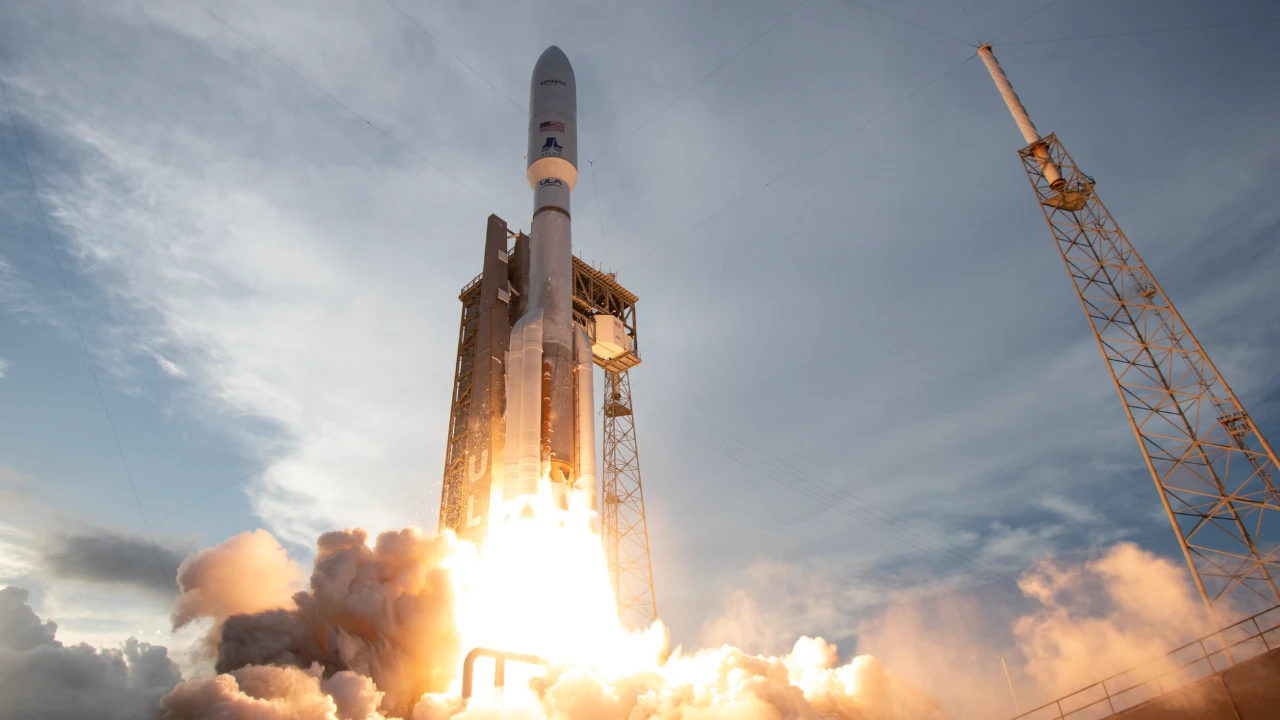
Two strategically important Indian satellites are fully prepared for launch but are awaiting final approval from the Government before liftoff. Once launched, these satellites are expected to strengthen India’s surveillance and national security capabilities.
Background
India has steadily expanded its satellite infrastructure for communication, Earth observation, navigation, disaster management and defence applications.
Key Highlights
- Two strategic satellites are ready for launch.
- Awaiting final Government approval.
- ISRO is technically prepared for the mission.
- Satellites will support surveillance and intelligence gathering.
- Expected to improve border monitoring and maritime domain awareness.
Significance
The mission will further strengthen India’s indigenous space capabilities and enhance strategic surveillance in support of national security.
Review Questions
- Agni-4 ballistic missile was successfully test-fired from which test range?
A) Pokhran Test Range, Rajasthan
B) Abdul Kalam Island, Odisha
C) Integrated Test Range (ITR), Chandipur, Odisha
D) Sriharikota, Andhra Pradesh
Answer: C) Integrated Test Range (ITR), Chandipur, Odisha - The Agni-4 ballistic missile has a maximum strike range of approximately:
A) 2,000 km
B) 2,500 km
C) 3,500 km
D) 4,000 km
Answer: D) 4,000 km - The Indian Army plans to procure how many Extended-Range (ER) BrahMos
missiles?
A) 100
B) 120
C) 150
D) 200
Answer: C) 150 - The Ministry of Defence has issued an RFI to procure how many logistic drones for
the Indian Army?
A) 1,500
B) 2,000
C) 2,500
D) 2,715
Answer: D) 2,715 - According to the statement in the Lok Sabha, how many of India’s active Low
Earth Orbit (LEO) satellites are at a higher risk of collision?
A) 10 out of 22
B) 15 out of 22
C) 18 out of 22
D) 20 out of 22
Answer: D) 20 out of 22 - Which treaty states that no country can claim ownership of outer space or an
orbit?
A) Moon Agreement
B) Antarctic Treaty
C) Missile Technology Control Regime (MTCR)
D) Outer Space Treaty
Answer: D) Outer Space Treaty - Which of the following statements is/are correct? 1. Agni-4 is capable of carrying both nuclear and conventional payloads. 2. The Indian Army plans to procure 2,715 logistic drones. 3. Two strategic Indian satellites are ready for launch but are awaiting
government approval.
A) 1 only
B) 1 and 2 only
C) 2 and 3 only
D) 1, 2 and 3
Answer: D) 1, 2 and 3 - Hambantota Port Is In
A. Indonesia
B. Sri Lanka
C. India
D. China
ANSWER: B - The Indian Government Plans To Construct A 2,500-metre-long Airstrip On
Minicoy Island In
A. Goa
B. Mumbai
C. Lakshadweep
D. Kochi
ANSWER: C - Pakyong Airport is located in –
A. Sikkim
B. Assam
C. Arunachal Pradesh
D. Nagaland
ANSWER: A - Which port is also known as the New Mangalore Port?
A. Mormugao Port
B. Panambur Port
C. Kandla Port
D. Tuticorin Port
ANSWER: B - Port Blair Is Located on Which Island?
A. The Little Andaman
B. The Great Nicobar
C. The South Andaman
D. The North Andaman
ANSWER: C - Author of the Book ‘Kerala: God’s Own Country’
A. Shashi Tharoor
B. Jeet Thayil
C. Sudha Murthy
D. Thakazhi Sivasankara Pillai
ANSWER: A - AUSINDEX Ex Conducts B/W
A. India & Indonesia
B. India & Australia
C. India & Sri Lanka
D. India & Thailand
ANSWER: B - “Poverty and Un-British Rule in India” Is Written By
A. Mahadevi Verma
B. Premchand
C. Dadabhai Naoroji
D. Ratan Tata
ANSWER: C - Havana Is the Capital Of
A. Cuba
B. Qatar
C. UAE
D. Cyprus
ANSWER: A - Who Was the Prime Minister of India During Indo-PAK War In 1965?
A. Jawaharlal Nehru
B. Indira Gandhi
C. Lal Bahadur Shastri
D. Rajiv Gandhi
ANSWER: C - Who Was the PM Of India During The Indo-Pak War In 1999?
A. Atal Bihari Vajpayee
B. Indira Gandhi
C. Lal Bahadur Shastri
D. Rajiv Gandhi
ANSWER: A - Ex ‘Jal Prahar’ Conducted In
A. Pune
B. Vishakhapatnam
C. Mumbai
D. Kakinada
ANSWER: D - Current DG of The ICG Is
A. VS Pathania
B. Rakesh Pal
C. R Hari Kumar
D. Paramesh Sivamani
ANSWER: D
ALSO READ:
- Latest Daily Current Affairs and Defence Updates
- Latest Daily Current Affairs July 2026[DOWNLOAD PDF]
- Latest Daily Current Affairs June 2026[DOWNLOAD PDF]
- Latest Daily Current Affairs May 2026[DOWNLOAD PDF]
- Latest Daily Current Affairs April 2026[DOWNLOAD PDF]
- Latest Daily Current Affairs March 2026[DOWNLOAD PDF]
- Latest Daily Current Affairs February 2026[DOWNLOAD PDF]
- Latest Daily Current Affairs January 2026[DOWNLOAD PDF]
- Latest Daily Current Affairs November 2025[DOWNLOAD PDF]
- Latest Daily Current Affairs October 2025[DOWNLOAD PDF]
- Latest Daily Current Affairs August 2025[DOWNLOAD PDF]
- Latest Daily Current Affairs July 2025[DOWNLOAD PDF]


