





In Current Affairs for 20 August 2026, we will see the latest national and international current affairs news. These important current affairs will be beneficial for your upcoming NDA, CDS, CDS OTA, AFCAT, TA, Agniveer Army, Agniveer Navy, Agniveer Air Force, Women Military Police, INET, MNS, ACC exams, SCO, PCSL, CAPF, and SSB interviews, and direct entries for Army, Navy, and Air Force like SSC Tech, TGC, JAG, NCC, TES, 10+2 Cadet. Download a PDF file about current events at the end of this article. Let us now see the Current Affairs.
Current Affairs 20 August 2026
Akshay Urja Day 2026
Indian Akshay Urja Day is observed on 20 August every year to create awareness about renewable energy and encourage the adoption of clean and sustainable sources of power. The term “Akshay Urja” literally refers to inexhaustible or renewable energy.
Renewable energy comes from naturally replenishing sources and includes solar, wind, hydroelectric, biomass and geothermal energy.
Objectives of Akshay Urja Day
The major objectives of the observance include:
- Creating awareness about renewable energy sources.
- Encouraging the use of clean and sustainable energy.
- Highlighting the importance of energy conservation.
- Promoting awareness about developments in renewable-energy technology.
- Educating students and young people about sustainable energy.
With the increasing importance of clean energy and energy security, renewable sources have become an important component of India’s long-term energy strategy.
Exam Facts
Day: Indian Akshay Urja Day
Date: 20 August
Meaning of Akshay Urja: Inexhaustible/Renewable Energy
Major sources: Solar, wind, hydro, biomass and geothermal

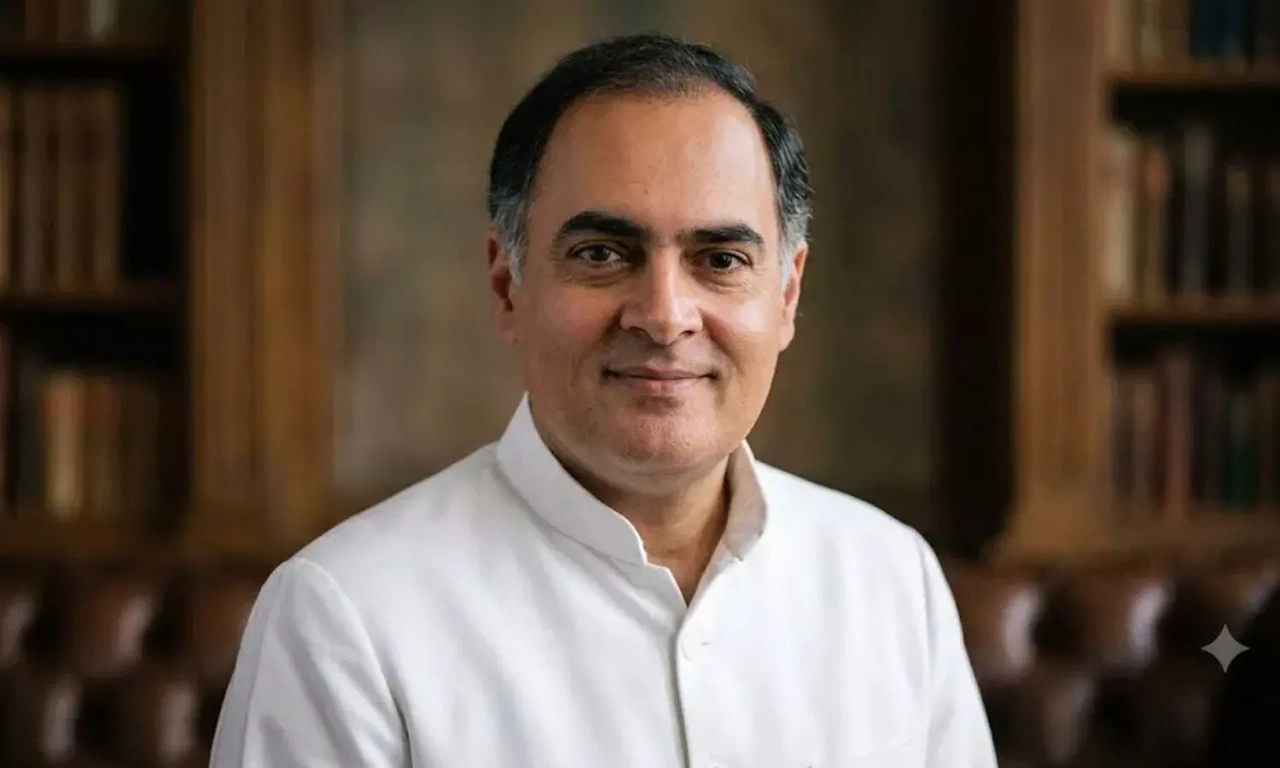
Sadbhavana Diwas 2026: Remembering Rajiv Gandhi
Sadbhavana Diwas is observed annually on 20 August, the birth anniversary of former Indian Prime Minister Rajiv Gandhi.
The day promotes the ideals of peace, national unity and harmony among people belonging to different religions and communities.
Rajiv Gandhi’s Political Journey
Rajiv Gandhi initially did not pursue a political career. He began his professional life as a pilot before becoming increasingly involved in politics following the death of his younger brother in 1980.
He subsequently entered electoral politics and became a member of the Lok Sabha.
Following the assassination of his mother, Prime Minister Indira Gandhi, on 31 October 1984, Rajiv Gandhi became Prime Minister of India.
At the age of 40, he became the youngest person to hold the office of Prime Minister of India at that time.
Significance of Sadbhavana Diwas
The observance seeks to promote:
- National integration
- Communal harmony
- Peace
- Mutual understanding
- Brotherhood among different communities
Exam Facts
Day: Sadbhavana Diwas
Date: 20 August
Associated with: Rajiv Gandhi
Born: 20 August 1944
Father: Feroze Gandhi
Mother: Indira Gandhi
NH-22 Four-Laning Project: Muzaffarpur–Sonbarsa Corridor
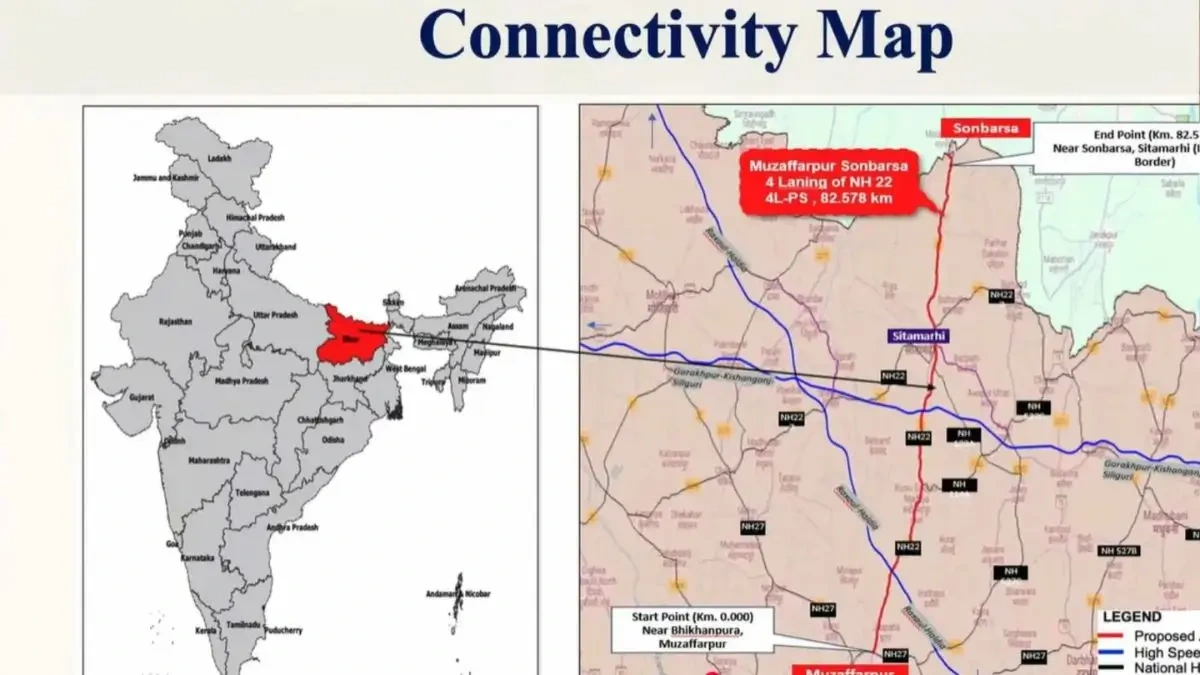
The Cabinet Committee on Economic Affairs, chaired by Prime Minister Narendra Modi, has sanctioned the four-laning of an important section of NH-22 in Bihar.
The project involves upgrading the Muzaffarpur–Sonbarsa stretch of NH-22.
Project Details
The proposed four-lane corridor will cover approximately 82.578 km.
The estimated project cost is ₹3,590.73 crore, and the project will be implemented through the Hybrid Annuity Mode (HAM).
Major Infrastructure Components
The project will include:
- 7 major bridges
- 3 Railway Over Bridges (ROBs)
- 2 flyovers
- A 340-metre major bridge over the Bagmati River
The two flyovers will have lengths of approximately 1,170 metres and 270 metres.
Expected Benefits
The upgraded highway is expected to improve road connectivity and potentially reduce:
- Travel time
- Traffic congestion
- Fuel consumption
- Transportation and operational costs
Better connectivity is also expected to facilitate the movement of agricultural products and other goods.
The corridor will improve access to important religious and cultural destinations, including Punaura Dham, Mata Janki Temple and Baba Garibnath Temple, while connecting the region more effectively with Bihar’s wider highway network.
Exam Facts
Highway: NH-22
Project: Muzaffarpur–Sonbarsa Four-Laning
Length: 82.578 km
Cost: ₹3,590.73 crore
Mode: Hybrid Annuity Mode (HAM)
Important river: Bagmati
Major bridge: 340 metres
Scientists Discover Mega-Earth GJ 523b
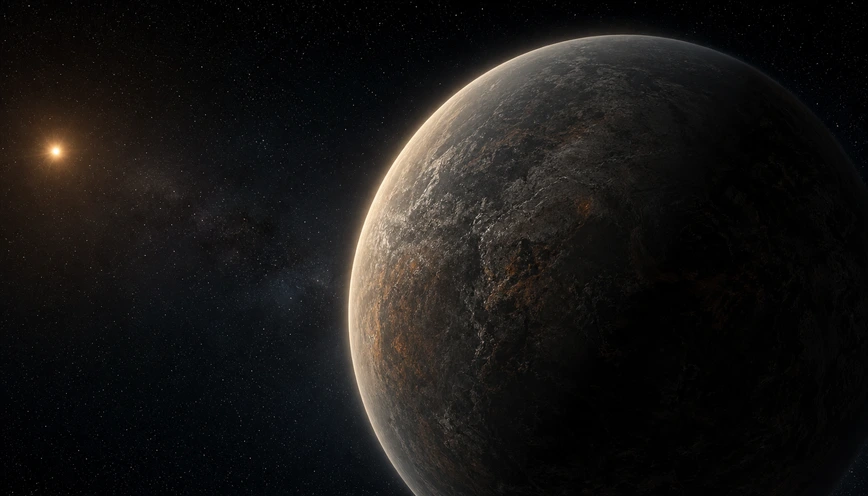
Scientists have identified GJ 523b, an exoplanet classified as a “mega-Earth” because of its unusually large size, high mass and substantial density.
An exoplanet is a planet that revolves around a star outside our Solar System.
Characteristics of GJ 523b
According to the provided information, GJ 523b has:
- Radius: About 2.55 times Earth’s radius
- Mass: Approximately 23.5 Earth masses
- Density: About 7.8 g/cm³
- Orbital period: 17.75 days
- Equilibrium temperature: Approximately 538 K
The planet revolves around a mid-K dwarf star.
What Is a Mega-Earth?
A mega-Earth is described as a class of rocky exoplanets that are considerably larger and more massive than Earth while retaining a relatively high density.
The provided criteria identify a mega-Earth as having a radius of at least 2.1 times Earth’s radius and a density of at least 5.5 g/cm³.
How Was It Studied?
Scientists used two major observational techniques:
Transit observations: Data from NASA’s Transiting Exoplanet Survey Satellite (TESS) helped identify the planet as it passed in front of its host star.
Radial velocity measurements: The NEID spectrograph installed on the WIYN 3.5-metre Telescope in Arizona provided measurements of the star’s motion caused by the planet’s gravitational influence.
GJ 523b belongs to a planetary system estimated to be approximately 169 million years old.
Why Is It Interesting?
The planet’s large rocky mass is particularly interesting because a rocky body of such mass might normally be expected to accumulate a substantial gaseous envelope and develop into a gas giant.
Exam Facts
Planet: GJ 523b
Type: Mega-Earth
Mass: 23.5 Earth masses
Radius: 2.55 Earth radii
Orbital period: 17.75 days
Mission: TESS
Spectrograph: NEID
Host star: Mid-K dwarf
India Demonstrates Indigenous Rotating Detonation Engine Technology
Indian defence start-up D-Propulse has successfully demonstrated an indigenous 5 kN air-breathing Rotating Detonation Engine (RDE) at a DRDO facility in Hyderabad.
The demonstration reportedly achieved Technology Readiness Level-5 (TRL-5), representing an important step in the development of advanced air-breathing propulsion technology.
What Is a Rotating Detonation Engine?
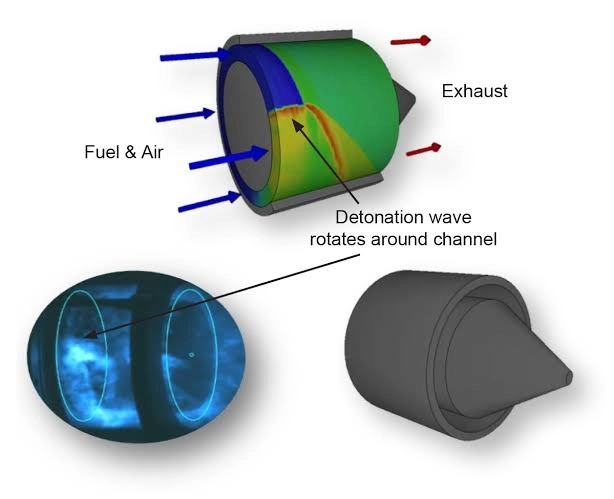
A Rotating Detonation Engine is an advanced propulsion technology that uses continuously rotating supersonic detonation waves to release energy.
Compared with conventional combustion systems, RDE technology has the potential to provide greater thermodynamic efficiency and a more compact combustion system.
Conventional Combustion vs Detonation
In a conventional combustor, the flame front travels at subsonic speed and combustion generally occurs under relatively constant-pressure conditions.
In a detonation-based system, the combustion process is associated with a supersonic shock wave. The shock compresses the unburned fuel-air mixture before combustion, potentially enabling more efficient conversion of chemical energy into pressure and thrust.
Potential Advantages
RDE technology can potentially offer:
- Higher thermodynamic efficiency
- More compact combustion chambers
- Improved propulsion performance
- Reduced fuel requirements
- Greater payload potential
The provided information states that RDEs can offer approximately 10–25% higher thermodynamic efficiency than traditional rocket engines.
A 20% increase in thermodynamic efficiency could translate into roughly 17% lower fuel requirements, potentially helping reduce launch costs or allowing a vehicle to carry greater payloads.
Significance for India
The successful demonstration of an indigenous RDE represents progress in India’s efforts to develop advanced propulsion technologies domestically.
Such technologies have potential relevance to future aerospace and defence propulsion systems.
Review Questions
1. Indian Akshay Urja Day is observed every year on:
A) 15 August
B) 19 August
C) 20 August
D) 22 August
Answer: C) 20 August
2. The term “Akshay Urja” refers to:
A) Nuclear energy
B) Inexhaustible energy
C) Thermal energy
D) Fossil-fuel energy
Answer: B) Inexhaustible energy
3. Sadbhavana Diwas is associated with the birth anniversary of:
A) Jawaharlal Nehru
B) Rajiv Gandhi
C) Indira Gandhi
D) Sardar Vallabhbhai Patel
Answer: B) Rajiv Gandhi
4. What is the sanctioned length of the NH-22 four-laning project between Muzaffarpur and Sonbarsa?
A) 72.578 km
B) 82.578 km
C) 92.578 km
D) 102.578 km
Answer: B) 82.578 km
5. What is the estimated cost of the NH-22 Muzaffarpur–Sonbarsa four-laning project?
A) ₹2,590.73 crore
B) ₹3,090.73 crore
C) ₹3,590.73 crore
D) ₹4,590.73 crore
Answer: C) ₹3,590.73 crore
6. Which exoplanet has been identified as a “mega-Earth”?
A) GJ 523b
B) Kepler-22b
C) Proxima b
D) TOI-700 d
Answer: A) GJ 523b
7. Which NASA mission provided transit observations of GJ 523b?
A) James Webb Space Telescope
B) TESS
C) Hubble Space Telescope
D) Chandra X-ray Observatory
Answer: B) TESS
8. GJ 523b has approximately how many times Earth’s mass?
A) 12.5 times
B) 18.5 times
C) 23.5 times
D) 28.5 times
Answer: C) 23.5 times
9. Which Indian defence start-up demonstrated a 5 kN indigenous air-breathing Rotating Detonation Engine?
A) Agnikul Cosmos
B) Skyroot Aerospace
C) D-Propulse
D) Bellatrix Aerospace
Answer: C) D-Propulse
10. The indigenous Rotating Detonation Engine demonstrated by D-Propulse achieved which Technology Readiness Level?
A) TRL-3
B) TRL-4
C) TRL-5
D) TRL-6
Answer: C) TRL-5


