





In Current Affairs for 13 August 2026, we will see the latest national and international current affairs news. These important current affairs will be beneficial for your upcoming NDA, CDS, CDS OTA, AFCAT, TA, Agniveer Army, Agniveer Navy, Agniveer Air Force, Women Military Police, INET, MNS, ACC exams, SCO, PCSL, CAPF, and SSB interviews, and direct entries for Army, Navy, and Air Force like SSC Tech, TGC, JAG, NCC, TES, 10+2 Cadet. Download a PDF file about current events at the end of this article. Let us now see the Current Affairs.
Current Affairs 13 August 2026
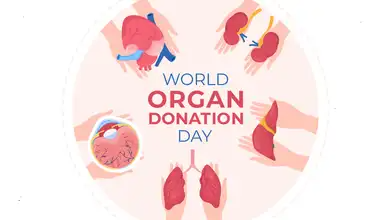
World Organ Donation Day 2026
World Organ Donation Day is observed every year on 13 August to spread awareness about organ donation and address misconceptions surrounding organ transplantation.
The history of modern transplantation includes several important milestones. One of the most significant was the 1954 kidney transplant, in which Ronald Lee Herrick donated a kidney to his identical twin brother, Richard Herrick. The operation was performed by Dr Joseph Murray.
Dr Murray later shared the 1990 Nobel Prize in Physiology or Medicine with E. Donnall Thomas for discoveries related to organ and cell transplantation in the treatment of human diseases.
Living donors can, in certain circumstances, donate organs or parts of organs such as one kidney, part of the liver, part of the pancreas, part of the intestine and sometimes part of a lung.
Exam Points
- Date: 13 August
- Purpose: Awareness about organ donation
- First successful kidney transplant: 1954
- Donor: Ronald Lee Herrick
- Recipient: Richard Herrick
- Surgeon: Dr Joseph Murray
- Nobel Prize: 1990
Andhra Pradesh Signs Pact for Lithium and Gallium Exploration
The Andhra Pradesh Department of Mines and Geology signed an MoU with the CSIR-National Geophysical Research Institute (CSIR-NGRI) on 12 August 2026 for exploring lithium and gallium deposits in the Kadapa Basin.
The agreement was signed in Vijayawada in the presence of Andhra Pradesh Chief Minister N. Chandrababu Naidu and Mines Minister Kollu Ravindra.
Lithium is an important material used in rechargeable batteries, ceramics, lubricants and alloys, while gallium is used in semiconductors, LEDs, integrated circuits and solar-related technologies. Both are considered critical minerals because of their strategic industrial applications and limited supply chains.
The geological survey will focus on the Vempalle and Thummalapalle areas. Preliminary studies indicated lithium concentrations of up to 1,000 parts per million and gallium concentrations of up to 250 parts per million.
The project has a budget of ₹140 crore, which will be fully funded by the National Mineral Exploration Trust (NMET).
Exam Points
- State: Andhra Pradesh
- Region: Kadapa Basin
- Minerals: Lithium and Gallium
- Partner organisation: CSIR-NGRI
- Budget: ₹140 crore
- Funding: National Mineral Exploration Trust
Gujarat to Get Asia’s First Desert-Themed Night Safari
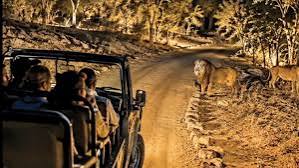
Gujarat has received approval for a Desert Zoological Park and Night Safari at Juna Deesa in Banaskantha district.
The project has been approved by the Central Zoo Authority and is planned over approximately 103 hectares of government land. It is proposed as Asia’s first desert-themed drive-through night safari.
The estimated cost of the project is ₹542.14 crore. The park is expected to house around 2,700 animals and birds belonging to nearly 83 species, including native, exotic and avian species.
The design will include a separate day zoo and five dedicated night-safari enclosures. The night safari concept will allow visitors to observe nocturnal species after sunset in controlled habitats.
Exam Points
- Location: Juna Deesa, Banaskantha, Gujarat
- Project: Desert Zoological Park & Night Safari
- Special feature: Asia’s first desert-themed drive-through night safari
- Area: About 103 hectares
- Estimated cost: ₹542.14 crore
- Expected animals/birds: Around 2,700
- Species: Nearly 83
BHASHINI and NITI Aayog Sign AI Partnership
The Digital India BHASHINI Division and NITI Aayog signed a Statement of Intent in New Delhi on 12 August 2026 to promote multilingual and voice-first artificial intelligence for public governance.
The partnership aims to use BHASHINI’s language-technology APIs and reference applications across NITI Aayog’s digital platforms and communication systems.
BHASHINI operates under the Ministry of Electronics and Information Technology (MeitY). It is India’s national language-technology mission and supports services such as machine translation, speech-to-text and text-to-speech.
The initiative is particularly important for expanding access to digital public services across India’s diverse linguistic landscape.
The collaboration includes five flagship sub-programmes:
- BHASHINI Udyat
- BHASHINI Mitra
- BHASHINI App Mitra
- BHASHINI Sahayogi
- BHASHINI Pravakta
BHASHINI Sahayogi uses Bhasha Daan to encourage citizens and officials to contribute multilingual data, while BHASHINI Pravakta focuses on training and technical support for local adoption of AI-based language tools.
Exam Points
- Organisations: BHASHINI Division + NITI Aayog
- Agreement: Statement of Intent
- Focus: Multilingual, voice-first AI
- Ministry: MeitY
- Technology: Machine translation, speech-to-text, text-to-speech
- Data initiative: Bhasha Daan
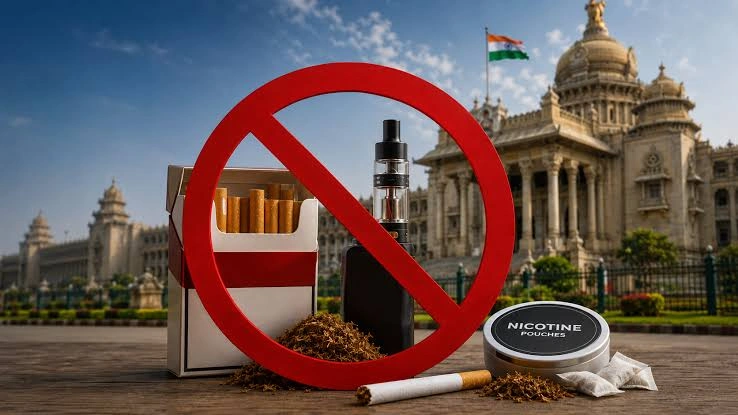
Karnataka Bans Tobacco and Nicotine Products
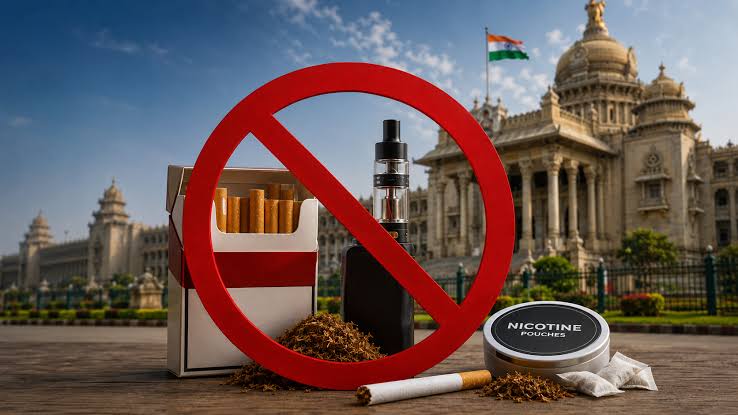
The Karnataka government has prohibited the manufacture, storage, distribution, transportation and sale of products containing tobacco and nicotine.
The restriction covers gutkha, pan masala and related tobacco/nicotine products, including products sold separately in a manner that allows consumers to mix them.
The statewide notification has been issued for one year under Section 30(2)(a) of the Food Safety and Standards Act, 2006.
This provision empowers the Commissioner of Food Safety to prohibit the manufacture, storage, distribution or sale of food articles when considered necessary in the interest of public health.
Following the notification, Food Safety Officers have begun inspection drives across Karnataka. Residents have also been encouraged to report illegal manufacturing, distribution or sale of prohibited products.
Review Questions
1. World Organ Donation Day is observed every year on:
A) 10 August
B) 12 August
C) 13 August
D) 15 August
Answer: C) 13 August
2. The first successful kidney transplant mentioned in the article took place in:
A) 1948
B) 1950
C) 1954
D) 1960
Answer: C) 1954
3. Who donated the kidney to his identical twin brother in the landmark 1954 transplant?
A) Dr Joseph Murray
B) E. Donnall Thomas
C) Ronald Lee Herrick
D) Richard Herrick
Answer: C) Ronald Lee Herrick
4. Lithium and gallium exploration in Andhra Pradesh is being undertaken in which region?
A) Krishna Basin
B) Godavari Basin
C) Kadapa Basin
D) Mahanadi Basin
Answer: C) Kadapa Basin
5. Which organisation has partnered with the Andhra Pradesh Department of Mines and Geology for lithium and gallium exploration?
A) ISRO
B) DRDO
C) CSIR-NGRI
D) Geological Survey of India
Answer: C) CSIR-NGRI
6. The proposed Desert Zoological Park and Night Safari will be established at:
A) Gir, Gujarat
B) Kutch, Gujarat
C) Juna Deesa, Banaskantha
D) Vadodara, Gujarat
Answer: C) Juna Deesa, Banaskantha
7. BHASHINI functions under which Union Ministry?
A) Ministry of Home Affairs
B) Ministry of Education
C) Ministry of Science and Technology
D) Ministry of Electronics and Information Technology
Answer: D) Ministry of Electronics and Information Technology
8. BHASHINI primarily focuses on:
A) Defence manufacturing
B) Financial inclusion
C) Indian language technologies and multilingual AI
D) Agricultural research
Answer: C) Indian language technologies and multilingual AI
9. Karnataka’s restriction on tobacco and nicotine products has been issued for a period of:
A) Six months
B) One year
C) Two years
D) Five years
Answer: B) One year
10. Karnataka’s prohibition on tobacco and nicotine products has been issued under which provision?
A) Section 14 of the Environment Protection Act
B) Section 21 of the NDPS Act
C) Section 30(2)(a) of the Food Safety and Standards Act, 2006
D) Section 144 of the CrPC
Answer: C) Section 30(2)(a) of the Food Safety and Standards Act, 2006


