





In Defence Current Affairs for 08 September 2026, we will see the latest national and international current affairs news. These important current affairs will be beneficial for your upcoming NDA, CDS, CDS OTA, AFCAT, TA, Agniveer Army, Agniveer Navy, Agniveer Air Force, Women Military Police, INET, MNS, ACC exams, SCO, PCSL, CAPF, and SSB interviews, and direct entries for Army, Navy, and Air Force like SSC Tech, TGC, JAG, NCC, TES, 10+2 Cadet. Download a PDF file about current events at the end of this article. Let us now see the Current Affairs.
Defence Current Affairs 08 September 2026
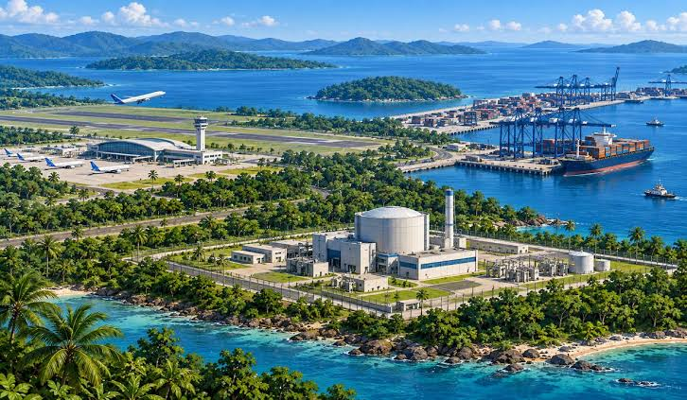
Andaman & Nicobar Islands May Get Small Nuclear Reactors
- India is exploring the possibility of deploying Small Modular Reactors (SMRs) in the strategically important Andaman and Nicobar Islands, as electricity demand is expected to rise with the expansion of major infrastructure projects in the region.
- Scientists associated with the Bhabha Atomic Research Centre (BARC) are assessing potential locations across the Union Territory for such reactors. A team from the Department of Atomic Energy (DAE) is undertaking site assessments across all three districts between September 4 and 8, 2026, according to the report.
- Why are nuclear reactors being considered?
- The proposed reactors are primarily linked to the anticipated growth in the islands’ electricity requirements. The Great Nicobar region, in particular, is expected to see substantial infrastructure development, which could significantly increase its demand for reliable power.
- Small Modular Reactors could provide a dependable source of electricity for remote island locations while reducing dependence on conventional fuel-based power generation.
- India is also developing indigenous small-reactor technologies as part of its broader nuclear-energy expansion. BARC’s nuclear research activities include reactor technology and the development of advanced nuclear systems.
- What are Small Modular Reactors?
- Small Modular Reactors (SMRs) are compact nuclear reactors designed to generate electricity on a smaller scale than conventional large nuclear power plants.
- Their modular design can potentially make them suitable for locations where building a large conventional nuclear plant may be difficult. For geographically isolated regions such as islands, a compact and reliable electricity source can have particular advantages.
- However, the proposed Andaman and Nicobar project is presently at the site-assessment and planning stage; the reported surveys do not mean that reactors have already been approved or constructed.
- Strategic Importance of Andaman and Nicobar Islands
- The Andaman and Nicobar Islands occupy an important position in the Indian Ocean region, particularly because of their proximity to the Strait of Malacca, one of the world’s major maritime chokepoints.
- The islands therefore have significance not only for civilian infrastructure but also for India’s maritime-security strategy.
- The Great Nicobar area is particularly important because of its location near major sea routes. India is simultaneously pursuing major infrastructure development in the region, including projects aimed at improving connectivity and maritime capabilities.
- The islands also host important military infrastructure, including INS Baaz, a naval air station near Campbell Bay on Great Nicobar.
- China Factor
- The proposal comes against the backdrop of China’s expanding presence in the Indian Ocean region.
- The Andaman and Nicobar chain gives India a strategically advantageous position near the western approaches to the Strait of Malacca. Greater infrastructure and energy availability could support India’s ability to maintain a sustained presence in this strategically important part of the Indian Ocean.
- The development should therefore be viewed in two interconnected contexts:
- Energy Security: Providing reliable electricity for rapidly expanding infrastructure.
- Strategic Security: Strengthening India’s ability to develop and sustain infrastructure in a geopolitically important maritime region.
- The latest reporting specifically links the nuclear-power exploration with concerns surrounding China’s growing presence in the Indian Ocean.
- Great Nicobar: A Major Infrastructure Focus
- Great Nicobar has emerged as an important focus of India’s infrastructure plans.
- The planned development of the region involves major infrastructure intended to improve connectivity and maritime capabilities. Such projects are expected to increase electricity requirements considerably.
- Consequently, ensuring a stable and dependable power supply will be an important component of the region’s long-term development.
- Nuclear power is being considered as one possible solution, particularly because SMRs can potentially be deployed in locations requiring relatively compact generating facilities.
- Role of BARC
- The Bhabha Atomic Research Centre (BARC) is India’s premier nuclear research institution and operates under the Department of Atomic Energy.
- Its research covers areas including:
- Nuclear reactor technology
- Nuclear fuel-cycle technologies
- Nuclear science
- Materials science
- Radiation monitoring
- Nuclear applications
- Advanced reactor systems
- BARC’s existing research portfolio includes several types of research reactors and work on advanced reactor technologies.
- Why This Development Matters
- The proposed deployment of SMRs in the Andaman and Nicobar Islands could have significance beyond electricity generation.
- 1. Energy Independence
- The islands are geographically separated from mainland India. Local nuclear generation could provide a dependable source of electricity without relying as heavily on fuel transportation.
- 2. Infrastructure Development
- Reliable power would support the expansion of civilian and strategic infrastructure, particularly in Great Nicobar.
- 3. Strategic Presence
- Improved infrastructure can strengthen India’s ability to maintain a sustained presence in the strategically important eastern Indian Ocean.
- 4. Nuclear Technology
- The initiative could provide an additional application for India’s emerging Small Modular Reactor technology.
- 5. Maritime Security
- The location of the islands near the Strait of Malacca gives them considerable importance for India’s maritime-security architecture.
DAC Approves Defence Acquisition Proposals Worth Around ₹1.10 Lakh Crore
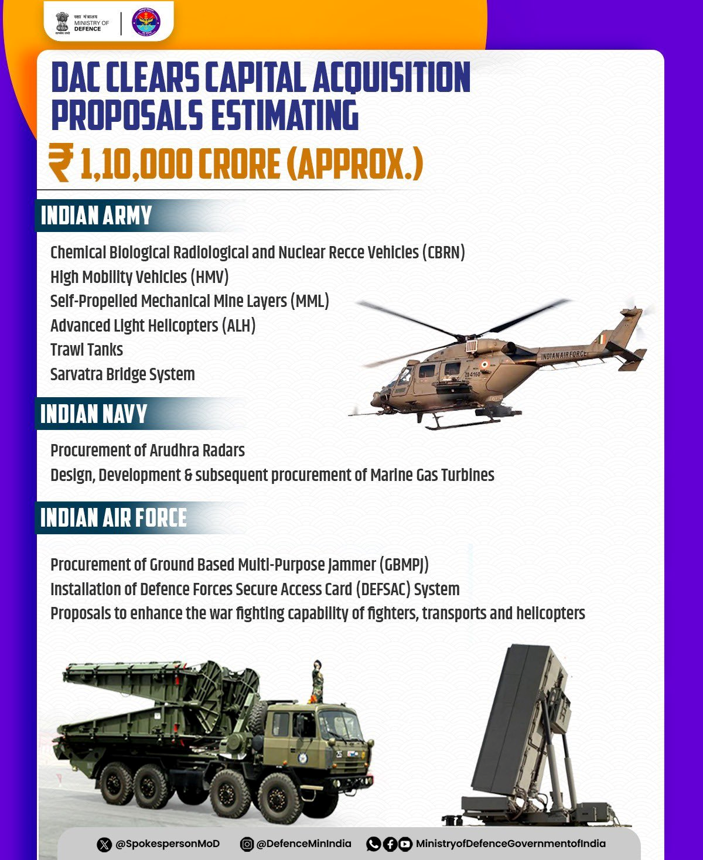
The Defence Acquisition Council (DAC), chaired by Defence Minister Rajnath Singh, granted Acceptance of Necessity (AoN) for several defence procurement proposals on 7 September 2026.
The proposals have an estimated combined value of approximately ₹1.10 lakh crore. The AoN represents in-principle administrative approval for moving forward with the acquisition process.
A major highlight of the approvals is the strong emphasis on domestic defence manufacturing. Around 98% of the total procurement value is expected to be sourced from Indian industry.
Indian Army
For the Indian Army, the DAC approved proposals covering several systems aimed at improving mobility, survivability and operational effectiveness. These include:
- Chemical, Biological, Radiological and Nuclear (CBRN) Reconnaissance Vehicles
- High Mobility Vehicles (HMVs)
- Self-Propelled Mechanical Mine Layers (MMLs)
- Advanced Light Helicopters (ALHs)
- Trawl Tanks
- Sarvatra Bridge Systems
The CBRN reconnaissance vehicles will be used to detect, identify, monitor and mark areas affected by hazardous CBRN agents.
The High Mobility Vehicles are intended to improve transportation, logistics and mobility, particularly in difficult terrain. Meanwhile, the Self-Propelled Mechanical Mine Layers will provide rapid and responsive mine-laying capability.
The proposed Advanced Light Helicopters will support complex missions across different terrains and operational conditions for the Army and Air Force.
Trawl Tanks and Sarvatra Bridge Systems will help combat formations establish crossings across challenging terrain during military operations.
Indian Navy to Receive Advanced Radars and Indigenous Marine Gas Turbines
For the Indian Navy, the DAC granted AoN for the acquisition of Arudhra Radars and for the design, development and subsequent procurement of Marine Gas Turbines (MGTs).
The Arudhra Radar is intended to replace existing Air Route Surveillance Radars deployed at various Naval Air Stations.
Marine Gas Turbines are important components of warship propulsion systems. Their indigenous development and procurement are expected to reduce the Navy’s dependence on foreign suppliers.
This move also supports India’s broader objective of strengthening domestic defence technology and reducing reliance on imported critical systems.
Indian Air Force to Strengthen Electronic Warfare and Security Systems
Several proposals were also cleared for the Indian Air Force (IAF) to enhance the operational capabilities of its fighter aircraft, transport aircraft and helicopters.
The DAC also approved procurement of the Ground-Based Multi-Purpose Jammer (GBMPJ).
The GBMPJ is designed to provide effective electronic jamming against adversary radar systems, thereby strengthening the electronic warfare capabilities of the armed forces.
Another important approval involves the Defence Forces Secure Access Card (DEFSAC) System.
The DEFSAC system is planned to replace traditional paper-based identity cards, passes and permits with an interoperable Radio Frequency Identification (RFID)-based smart-card system.
Key Point
The DAC’s latest approvals combine conventional military platforms with advanced electronic warfare, surveillance, mobility and secure-access technologies.
Centre Extends Ceasefire Agreement with NSCN-K (Niki)
The Central Government and NSCN-K (Niki) have agreed to extend their ceasefire arrangement for another year.
The agreement was signed by representatives of the NSCN-K (Niki) Ceasefire Supervisory Board (CFSB) and the Ministry of Home Affairs (MHA).
The primary objective of the agreement is to support efforts towards achieving lasting peace in Nagaland with the participation of the Naga people.
The ceasefire is governed by mutually agreed ground rules. Both parties are required to follow these rules for the truce to remain in force.
The agreement also allows both sides to periodically review and modify the ground rules through mutual consultation.
The Central Government initially entered into a ceasefire agreement with NSCN-K (Niki) in 2021. The latest extension will continue the ceasefire until 7 September 2027.
Exam Facts
- Organisation: NSCN-K (Niki)
- Issue: Ceasefire extension
- New validity: Until 7 September 2027
- Original ceasefire: 2021
- Region: Nagaland
- Nodal ministry involved: Ministry of Home Affairs
Tata Boeing Aerospace Delivers 400th Apache Fuselage
Tata Boeing Aerospace Limited (TBAL) has achieved an important milestone in India’s aerospace manufacturing sector by delivering its 400th fuselage for the AH-64E Apache attack helicopter.
The fuselage was manufactured at TBAL’s approximately 52,000-square-metre facility in Hyderabad.
TBAL is a joint venture between Boeing and Tata Advanced Systems Limited (TASL). The company manufactures Apache fuselages entirely in India, which are subsequently incorporated into complete Apache helicopters supplied to customers internationally.
The company’s production network includes deliveries for the US Army as well as the six Apache helicopters supplied to the Indian Army in 2025.
The Indian Air Force operates 22 AH-64E Apache helicopters.
Building India’s Aerospace Manufacturing Capability
Established in 2016, TBAL employs more than 750 engineers and technicians. Its manufacturing operations use technologies such as robotics, automation and advanced aerospace production systems.
The 400th fuselage milestone highlights the increasing role of Indian companies in international aerospace and defence supply chains.

India Moves Towards Javelin Missile Co-Production
In another significant defence-industrial development, Tata Advanced Systems Limited signed an MoU with the Javelin Joint Venture, a partnership between Raytheon and Lockheed Martin, for exploring the co-production of Javelin All Up Round (AUR) missiles in India.
TASL was selected as the prime Indian partner after an assessment of companies based on their technical capabilities and expertise.
The proposed arrangement includes exploring the establishment of a dedicated facility in India for final assembly and integration, along with local manufacturing of components.
Under the proposed supply chain, sub-assembly kits would be manufactured at Lockheed Martin’s facility in Troy, Alabama, while guidance electronics units would be produced at Raytheon’s facility in Tucson, Arizona.
These components could then be sent to India for final assembly and integration.
The initiative is expected to strengthen India’s defence manufacturing ecosystem, generate high-skilled employment and deepen cooperation between Indian and US defence industries.
China Expands Lop Nur Facility for Next-Generation Fighter Testing
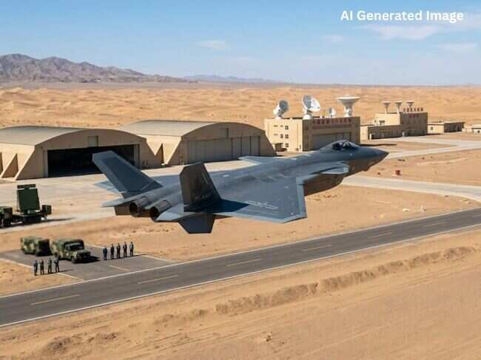
China is reportedly expanding a major flight-test facility at Lop Nur in Xinjiang, with the objective of supporting the development and evaluation of next-generation military aircraft.
Satellite imagery reportedly shows the construction of four large hangars, new taxiways, a circular area that may support engine testing or aircraft turnaround, and possible fuel-storage infrastructure.
The development comes as China continues work on multiple advanced combat-aircraft programmes.
According to the source material, construction at the facility began around August 2025, around the time a tailless aircraft believed to be China’s J-36 sixth-generation fighter was first observed at the site.
By February 2026, the facility had reportedly gained approximately 60,000 square feet of additional hangar space and more than 300,000 square feet of other infrastructure, substantially increasing the overall size of the base.
The expanded installation may provide additional space for testing, evaluation and personnel support, allowing different aircraft programmes to be conducted simultaneously.
Why Lop Nur Matters
The Lop Nur area is located in a remote and sparsely populated part of Xinjiang. Such geography can provide greater isolation for experimental flight testing and reduce routine observation from heavily populated areas.
The expanded infrastructure could also reduce pressure on China’s existing flight-test facilities and enable multiple aircraft-development programmes to progress at the same time.
The development is taking place against the backdrop of an increasingly competitive race between China and the United States in advanced air power, including aircraft designed to operate alongside drones, sophisticated sensors and long-range weapons.
According to the supplied material, China has not officially released detailed mission profiles, specifications or formal designations for aircraft referred to as the J-36 or J-XDS/J-50.
Review Questions
- The Defence Acquisition Council (DAC) approved acquisition proposals worth
approximately how much on 7 September 2026?
A) ₹75,000 crore
B) ₹90,000 crore
C) ₹1.10 lakh crore
D) ₹1.50 lakh crore
Answer: C) ₹1.10 lakh crore - Approximately what percentage of the total DAC-approved procurements is
expected to be sourced from Indian industry?
A) 75%
B) 85%
C) 90%
D) 98%
Answer: D) 98% - The ceasefire between the Central Government and NSCN-K (Niki) has been
extended until:
A) 7 September 2026
B) 31 December 2026
C) 7 September 2027
D) 15 August 2027
Answer: C) 7 September 2027 - Tata Boeing Aerospace Limited (TBAL) delivered its 400th fuselage for which
helicopter?
A) AH-64E Apache
B) CH-47F Chinook
C) ALH Dhruv
D) Light Combat Helicopter
Answer: A) AH-64E Apache - Which Indian company has partnered with the Javelin Joint Venture to explore co
production of Javelin missiles in India?
A) Hindustan Aeronautics Limited
B) Bharat Dynamics Limited
C) Tata Advanced Systems Limited
D) Bharat Electronics Limited
Answer: C) Tata Advanced Systems Limited - China’s Lop Nur flight-test facility, reportedly being expanded for next-generation
military aircraft, is in which region?
A) Tibet
B) Xinjiang
C) Inner Mongolia
D) Sichuan
Answer: B) Xinjiang - Which organisation is assessing potential sites for Small Modular Reactors in the
Andaman and Nicobar Islands?
A. DRDO
B. ISRO
C. BARC
D. NPCIL
Answer: C. BARC - The proposed Small Modular Reactors are primarily being considered to meet the
growing power requirements associated with which major project?
A. Sagarmala Project
B. Great Nicobar Project
C. Bharatmala Project
D. Golden Quadrilateral
Answer: B. Great Nicobar Project - Which strategically important Indian naval air station is located at Campbell Bay in
Great Nicobar?
A. INS Rajali
B. INS Baaz
C. INS Kadamba
D. INS Hansa
Answer: B. INS Baaz - Marine Engineering Training Establishment of the Indian Navy located at
A. Noida
B. Kochi
C. Pune
D. Wayanad
ANSWER: C - Where Is The Hq Of The Southern Western Command of The Indian Army?
A. Jaipur
B. Jabalpur
C. Pune
D. Mumbai
ANSWER: A - Sea Dragon Exercise Hosted By
A. USA
B. Sweden
C. France
D. None of the above
ANSWER: A - India Purchased C 130 J from
A. USA
B. Sweden
C. France
D. None of the above
ANSWER: A - College of Military Engineering (CME) Is Located At
A. Pune
B. Kamptee
C. Mumbai
D. Noida
ANSWER: A - Which Country Ranked Third Highest In The World Defence Expenditure?
A. Australia
B. USA
C. France
D. Bharat
ANSWER: D - Regimental Center Of PUNJAB REGIMENT Is In
A. Balasore, Odisha
B. Chennai, T.N.
C. Trombay, M.H.
D. Ramgarh Cantonment, Jharkhand
ANSWER: D - India Purchased IAI Searcher UAV from
A. USA
B. Sweden
C. France
D. Israel
ANSWER: D - KHARTOUM Is The Capital Of
A. Spain
B. Sri Lanka
C. Suriname
D. Sudan
ANSWER: D - HELINA Missile Has A Maximum Range Of
A. 7 kilometres
B. 8 kilometres
C. 9 kilometres
D. 10 kilometres
ANSWER: A - Joint Exercises B/w The India And France Is Called:
A. Yama
B. SLINEX
C. Indra
D. GARUDA
ANSWER: D
ALSO READ:
- Latest Daily Current Affairs and Defence Updates
- Latest Daily Current Affairs August 2026[DOWNLOAD PDF]
- Latest Daily Current Affairs July 2026[DOWNLOAD PDF]
- Latest Daily Current Affairs June 2026[DOWNLOAD PDF]
- Latest Daily Current Affairs May 2026[DOWNLOAD PDF]
- Latest Daily Current Affairs April 2026[DOWNLOAD PDF]
- Latest Daily Current Affairs March 2026[DOWNLOAD PDF]
- Latest Daily Current Affairs February 2026[DOWNLOAD PDF]
- Latest Daily Current Affairs January 2026[DOWNLOAD PDF]
- Latest Daily Current Affairs November 2025[DOWNLOAD PDF]
- Latest Daily Current Affairs October 2025[DOWNLOAD PDF]
- Latest Daily Current Affairs August 2025[DOWNLOAD PDF]
- Latest Daily Current Affairs July 2025[DOWNLOAD PDF]


